MAY 8: Economic Pressure, Fragile Ceasefires, Strategic Competition

– 10 min read

“Canada's youth are Canada's future. By funding accessible, culturally safe supports and community care, we give young people the tools to thrive, contribute, and lead Canada forward with resilience and hope.”
— Marjorie Michel
The statement came as Canada announced new nationwide investments in youth mental health services, reflecting a growing recognition that mental health access is increasingly being treated not only as a healthcare issue — but as long-term social and economic infrastructure.
Today’s developments reveal a country balancing economic pressure, technological transformation, institutional conflict, and military escalation simultaneously.
A panel of three federal judges ruled that President Trump had illegally used a 1974 law to impose the latest round of 10 percent tariffs earlier this year.
The ruling follows a previous Supreme Court decision striking down another set of tariffs and could have major implications:
The broader issue is no longer just trade policy — it is increasingly about the limits of executive economic power.
Treasury Secretary Scott Bessent convened the Financial Stability Oversight Council to review growing risks across financial systems.
Discussions focused on:
The emphasis on stablecoin liquidity and reserves signals how digital assets are moving from speculative territory into core financial stability discussions.
Reports emerged that President Trump approved the removal of FDA Commissioner Dr. Marty Makary.
Makary had aligned with elements of the MAHA movement but reportedly faced internal resistance over:
Separately, health experts stated they are not highly concerned about widespread hantavirus transmission, but warned that the United States remains underprepared for a future pandemic response.
The Pentagon continues accelerating its technological transformation.
Key developments include:
At the same time, concerns about military oversight continue:
The broader trend is increasingly clear: rapid modernization is occurring alongside growing questions about infrastructure readiness and accountability.
Canada’s announcements today centered on resilience — social, economic, housing, migration, and infrastructure resilience.
On National Child and Youth Mental Health Day, the federal government announced:
The initiative also includes the development of Canada’s first national clinical guidelines for:
This is part of Canada’s broader $500 million Youth Mental Health Fund, the country’s largest-ever investment in youth mental health.
Canada announced nearly $6 million in combined funding to construct housing for vulnerable children in Halifax.
The homes will support children under provincial care while long-term family placements are sought.
Officials emphasized:
The project forms part of Canada’s broader housing strategy aimed at addressing affordability, homelessness, and vulnerable populations simultaneously.
The Spring Economic Update continues to focus heavily on housing construction capacity.
Key measures include:
The government also plans to modernize building regulations and accelerate modular housing approvals to speed up construction nationwide.
At the UN International Migration Review Forum in New York, Canada reaffirmed support for safe and orderly migration systems.
New commitments include:
Canada framed migration as both a humanitarian and economic issue tied to long-term demographic and workforce needs.
Canada proposed a historic $957.8 million investment into small craft harbours over five years.
The funding will support:
The government described small craft harbours as “the working backbone” of coastal communities.
Additional funding was announced for agricultural clean technology projects through the MaRS Discovery District.
The goal:
Prime Minister Mark Carney also held calls with:
Discussions focused on:
Carney condemned both Hezbollah attacks on Israel and Israel’s illegal invasion of Lebanon, while reaffirming support for Lebanese sovereignty and humanitarian assistance.
The UN warned today that violence in Haiti continues to escalate, with gangs expanding beyond Port-au-Prince and civilians increasingly trapped between armed groups and security operations.
The UN also warned that aid cuts threaten stability in the Central African Republic.
Meanwhile, WHO reported new evidence showing malaria vaccination is significantly reducing child deaths in Africa, highlighting one of the clearest positive public health developments in recent years.
WHO stressed today that the risk of wider hantavirus transmission remains “absolutely low.”
The announcement followed concerns surrounding the cruise ship outbreak that has already caused multiple deaths.
A flight attendant who had contact with one of the infected passengers later tested negative.
Argentine investigators now believe the original infection may have occurred during a bird-watching excursion before boarding the ship.
The situation continues to be monitored internationally, but health officials emphasized that hantavirus generally requires prolonged close exposure for transmission.
The ceasefire between the United States and Iran remains increasingly fragile.
Today:
Both Washington and Tehran accuse the other of violating the ceasefire.
Despite renewed attacks:
Trump described recent strikes as a “love tap” while simultaneously warning that larger bombing campaigns could follow if negotiations fail.
Iran, meanwhile, accused Washington of choosing military pressure over diplomacy.
A CIA assessment reportedly concluded Iran can withstand the U.S. blockade for another three to four months before severe economic deterioration occurs.
At the same time:
Pope Leo marked one year since his election while continuing diplomatic engagement with Washington.
His meeting with Marco Rubio focused on:
Poland stated it is prepared to host U.S. troops withdrawn from Germany, reinforcing its role as one of NATO’s most forward-leaning members.
The big story out of the UK right now is that the local elections turned into a major political shock for both Labour and the Conservatives — and a major breakthrough for Nigel Farage’s Reform UK.
These were local council elections across England, plus contests in Scotland and Wales. They are not national parliamentary elections, but they are being treated as a major test of Prime Minister Keir Starmer’s government less than two years after Labour’s landslide general election victory.
Instead of consolidating power, Labour suffered heavy losses — especially in traditional working-class strongholds in northern England.
At the same time:
Nigel Farage’s Reform UK was the clear winner politically.
According to current counts:
Farage described the result as:
a “historic shift in British politics.”
The party is increasingly positioning itself not as a protest movement, but as a genuine national challenger — especially on immigration, cost of living, anti-establishment messaging, and post-Brexit identity politics.
Labour’s losses are especially significant because many came in areas the party historically dominated.
The criticism inside Labour is that:
Some Labour MPs are already openly questioning his leadership.
However, Starmer publicly ruled out resigning and said he would continue leading the government.
The Conservatives also continued collapsing in many areas.
That’s important because Reform UK is now eating into Conservative support from the right while Labour loses support from both left-wing and anti-establishment voters.
This means Britain increasingly looks like a fragmented multi-party system rather than the classic Labour vs Conservative structure.
The UK matters because it remains:
Political instability at home could weaken Starmer internationally — especially as Farage grows stronger while Trump is back in the White House.
The broader European trend is also visible here:
And right now, Reform UK is the clearest example of that trend inside Britain.
Separately:
The case reflects growing European concern over foreign interference and national security risks.
France passed a new law making it easier to return looted African artwork to former colonies, continuing broader debates over historical accountability and cultural restitution.
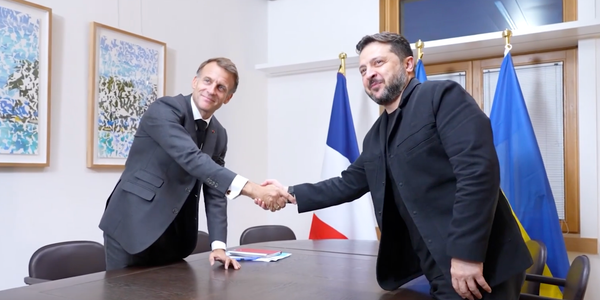
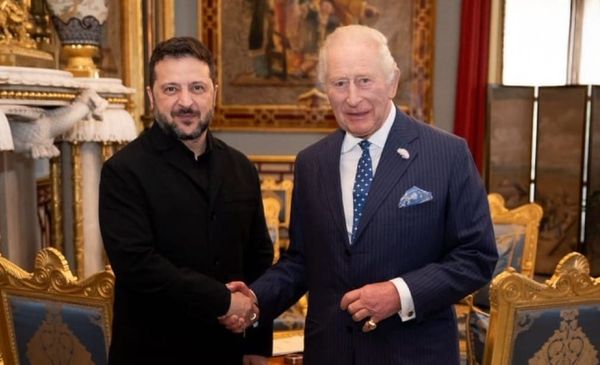
Ukraine intensified both its military operations and diplomatic engagement today.
President Zelenskyy confirmed:
Zelenskyy framed the operations as direct responses to continued Russian attacks after Ukraine proposed a ceasefire beginning May 6.
Ukrainian officials met with U.S. envoys Steve Witkoff and Jared Kushner to discuss:
Ukraine says Russia rejected ceasefire proposals while continuing attacks on civilian infrastructure and energy systems.
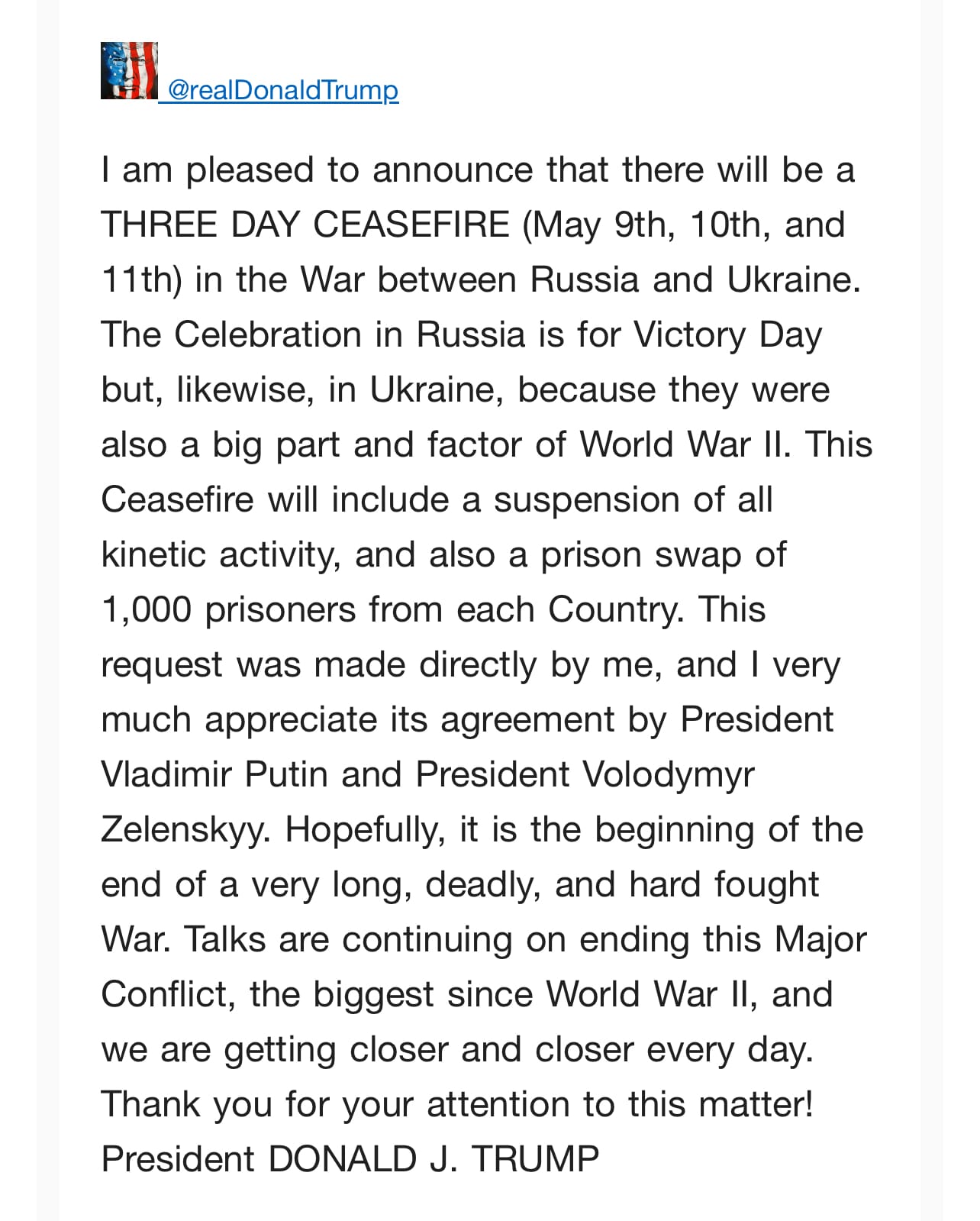
Ukraine’s leadership also raised concerns about the political framing surrounding the newly announced three-day ceasefire tied to Russia’s Victory Day celebrations on May 9.
President Trump described the temporary truce as a step toward ending the war, stating that both Moscow and Kyiv had agreed to suspend “all kinetic activity” while also conducting a large-scale prisoner exchange.
But critics argue the arrangement disproportionately benefits Russia militarily by giving Moscow time to reposition equipment and reinforce air defense systems ahead of future operations.
The debate reflects a broader frustration increasingly visible inside Ukraine and among some analysts: the gap between promises of rapid peace negotiations and the operational realities unfolding on the battlefield.
As fighting continues across multiple regions, Kyiv maintains that any ceasefire must be linked to genuine de-escalation rather than temporary pauses that allow Russia to regroup militarily.
WHO has now verified more than 3,000 attacks on healthcare facilities in Ukraine since the start of Russia’s full-scale invasion in 2022.
Zelenskyy also visited troops in the Dnipro region, discussing:
Two Colombian volunteers serving in Ukraine’s military were honored for rescuing a wounded soldier under fire.
China is escalating its pushback against U.S. sanctions ahead of the Trump–Xi summit.
Beijing formally ordered Chinese companies not to comply with certain U.S. sanctions tied to Iranian oil trade, placing Chinese firms between domestic legal obligations and international financial systems.
Separately:
Taiwan approved $24.8 billion in additional defense spending through 2033.
The funding will strengthen:
Taiwan also completed a difficult diplomatic visit to Eswatini after China reportedly pressured several countries to block overflight permissions.
Sir David Attenborough turned 100 today.
For generations, Attenborough has helped millions of people understand the natural world — not through fear or spectacle, but through curiosity, patience, and wonder.
The BBC marked the occasion with a special broadcast from the Royal Albert Hall, including a royal birthday message, a standing ovation, and a full audience rendition of “Happy Birthday.”
Scientists also named a newly discovered parasitic wasp species after him to mark the milestone.
And somewhere on Earth, Jonathan the tortoise — estimated to be around 193 years old — continues quietly outliving history itself.

A reminder that while politics often measures time in election cycles and conflicts, some lives reshape how humanity sees the planet across entire centuries.
ONEST is built on independent, reader-supported reporting — free from advertising pressure and algorithm-driven priorities.
For those who want to go beyond the headlines, ONEST+ offers:
Your support sustains this work.