ONEST Global Briefing — May 13, 2026
Trump in China, Iran’s Strait of Hormuz leverage, Ukraine’s drone diplomacy, and Canada’s resilience agenda

– 12 min read

Trump in China, Iran’s Strait of Hormuz leverage, Ukraine’s drone diplomacy, and Canada’s resilience agenda
QUOTE OF THE DAY
Asked whether Americans’ financial situation was motivating him to seek a deal in the Iran war, President Trump replied:
“Not even a little bit. I don’t think about Americans’ financial situation.”
The remark came as energy prices, tariff refunds, military spending, and global shipping disruptions remain central to the economic consequences of the current crisis.
President Trump arrived in China today with a delegation of senior administration officials and corporate leaders for talks with Chinese President Xi Jinping. The visit comes after Washington and Beijing partially walked back last year’s full-scale economic confrontation, though tensions have intensified again over China’s economic ties with Iran, sanctions enforcement, technology competition, and access to strategic markets.
Trump told reporters that trade would dominate the talks and said he would ask Xi to “open up” China to U.S. companies. Among the executives traveling with him are leaders from major U.S. firms, including Boeing, Goldman Sachs, Apple, and SpaceX, companies whose interests sit directly inside the broader U.S.–China competition over aerospace, finance, artificial intelligence, and advanced technology.
The two leaders are also expected to discuss a proposal for a new board to help govern bilateral trade, according to multiple reports.
Taiwan will also be on the agenda. Trump said he planned to discuss Chinese opposition to U.S. arms sales to Taiwan with Xi — a comment that appeared to raise questions because U.S. policy has long avoided giving Beijing a consultative role over American defense support to Taiwan. A State Department spokesperson later said Washington remains committed to its existing Taiwan policies, while Secretary of State Marco Rubio also said last week that U.S. policy toward Taiwan has not changed.
The Iran war is another central issue. China has been one of the world’s largest importers of oil moving through the Strait of Hormuz, and the U.S. blockade of Iranian oil bound for China has added pressure to the relationship. Trump downplayed the conflict’s importance to the talks, saying the administration has Iran “very much under control,” while Beijing has called for peace. The State Department said Washington and Beijing agree that no country should be able to charge shipping tolls in the Strait of Hormuz.
Artificial intelligence may also return to the bilateral agenda. The U.S. and China are reportedly considering resuming talks on AI safety after limited steps toward dialogue during the Biden administration. That cooperation remains sensitive because the two countries are also competing for dominance across multiple AI domains.
ONEST Explained: Read/watch our analysis on what to expect from Trump’s visit to Beijing.
Secretary of State Marco Rubio’s arrival in China carries its own diplomatic subplot. China sanctioned Rubio when he was a U.S. senator over his criticism of Beijing’s human rights record, including his role in legislation tied to alleged forced labor involving Uyghurs — allegations China denies.
According to reporting cited in the briefing notes, Beijing found a diplomatic workaround by using a different Chinese character for the first syllable of Rubio’s surname after he became Secretary of State. Diplomats suggest this allowed Chinese officials to formally distance the current cabinet official from the older sanctions designation.
Rubio previously called China an “unprecedented adversary” during confirmation hearings, but since joining the Trump administration, he has supported the president’s effort to stabilize trade relations with Beijing. That duality reflects the broader U.S. posture: competition remains intense, but both governments are trying to prevent the relationship from becoming completely unmanageable.
The New York Times reports that U.S. officials believe Chinese firms have been planning secret arms sales to Iran, including efforts to route weapons through third countries in order to obscure the origin of the shipments. The disclosure is likely to increase pressure on President Trump to raise the issue directly with Chinese President Xi Jinping during this week’s meetings in Beijing.
The allegation comes just days after China objected to new U.S. sanctions on China-based companies accused by Washington of supporting Iran’s military operations. Beijing called those measures illegal and unilateral, saying Chinese companies are required to operate according to law and that China would protect their “legitimate rights and interests.”
For ONEST readers, the importance is not only whether a particular weapons transfer is confirmed. It is that the Iran war is now intersecting with U.S.–China competition in multiple ways at once: oil flows, sanctions enforcement, maritime security, military procurement, and the future rules of economic pressure.
Antigua and Barbuda has nominated former Ecuadorian Foreign Minister María Fernanda Espinosa for United Nations Secretary-General, according to a UN General Assembly spokesperson. Espinosa also previously served as Ecuador’s defense minister and president of the UN General Assembly.
Her nomination brings the number of declared candidates to five, including current UN nuclear chief Rafael Grossi.
The next Secretary-General race matters because the UN is entering a period of heightened institutional pressure: war, nuclear risk, climate insecurity, questions about multilateral legitimacy, and frustration among smaller and middle powers over whether the international system still protects them equally.
Iran still has roughly 70 percent of its prewar missile stockpile and has reportedly restored access to 30 of its 33 missile sites along the Strait of Hormuz, according to unnamed sources familiar with U.S. intelligence assessments cited in the briefing material.
That matters because those sites could threaten U.S. ships and commercial traffic near one of the world’s most important maritime chokepoints. The reports appear to contrast with Trump’s public claim that Iran’s military had been “crushed” in the conflict.
The Strait of Hormuz remains at the center of the current crisis. Iran’s military capabilities, regional shipping disruptions, energy flows to China and other countries, and new defensive deployments by Western states are all converging around the same narrow waterway.
ONEST Explained: Who controls the Strait of Hormuz — and why the answer is more complicated than it sounds.
Britain said it will contribute autonomous mine-hunting equipment, Typhoon fighter jets, and the warship HMS Dragon to a multinational defensive mission aimed at securing shipping in the Strait of Hormuz.
The move reflects growing concern that the conflict with Iran is no longer limited to direct military confrontation. It is also becoming a shipping, energy, insurance, and freedom-of-navigation crisis.
Iran, meanwhile, accused Kuwait of unlawfully attacking an Iranian boat and detaining four Iranian citizens near an island Tehran says was used by the U.S. to attack Iran. Kuwait summoned Iran’s ambassador after alleged attackers linked to Iran’s Islamic Revolutionary Guard Corps attempted to infiltrate Bubiyan Island and exchanged fire with Kuwaiti forces.
The situation underscores how quickly maritime incidents can become diplomatic escalations in the Gulf.
The cost of U.S. operations against Iran has risen to $29 billion, according to a senior Pentagon official who briefed lawmakers on May 12. That is a $4 billion increase from the Defense Department’s public estimate two weeks earlier.
The U.S. military is also reportedly considering officially renaming the war with Iran “Operation Sledgehammer” if the ceasefire collapses and Trump decides to restart major combat operations.
Separately, the Air Force and General Atomics successfully test-fired laser-guided Advanced Precision Kill Weapon System rockets from an MQ-9A Reaper drone — another reminder that the current conflict is unfolding alongside rapid shifts in drone warfare, precision strike systems, and air defense planning.
Ukraine’s battlefield drone experience is increasingly becoming one of its most important strategic exports.
The U.S. and Ukraine are reportedly discussing a potential defense deal under which Kyiv would export military technology to the United States and partner with U.S. firms to manufacture drones. President Volodymyr Zelenskyy wrote this week that 20 countries are working on potential drone agreements with Ukraine.
In Sweden, Ukrainian drone pilots trained NATO forces and delivered a blunt warning: Western forces would have been dead if a mock attack they carried out had been real. That message reflects a growing concern inside NATO — that Russia’s war against Ukraine has produced battlefield adaptations faster than many Western militaries have absorbed.
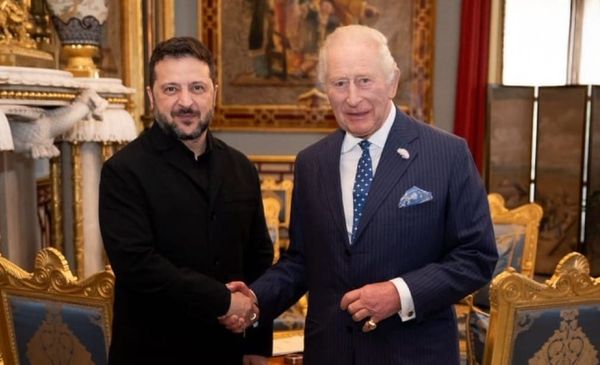
At the Bucharest Nine Summit, Zelenskyy met with Finnish President Alexander Stubb, who said Ukraine is now “a security provider in Europe, not a consumer.” Ukrainian and Finnish teams are already preparing a drone deal.
Zelenskyy also met Polish President Karol Nawrocki, thanking Poland for its support during Russia’s full-scale invasion and stressing that unity between Europe and the United States remains essential in diplomatic efforts to end the war.
Ukraine’s national anti-corruption agency announced that former presidential chief of staff Andriy Yermak has been charged in connection with an alleged money laundering scheme worth more than $10 million.
Yermak resigned in November after anti-corruption officials searched his home. He told journalists in Kyiv that he would comment once the investigation is complete.
The case is politically sensitive because Ukraine is simultaneously fighting a war, seeking deeper European integration, negotiating defense partnerships, and trying to demonstrate institutional accountability to allies.
Canada’s May 13 announcements point to a broader federal strategy: strengthen domestic resilience, expand housing and infrastructure, support strategic industries, and reduce vulnerability to external shocks.
In British Columbia, the government announced more than $32.6 million through the Canada Greener Affordable Housing Program to repair and retrofit 269 homes in Coquitlam. The upgrades include double-paned windows, heat pumps, energy recovery ventilators, low-flow plumbing fixtures, and rooftop solar panels. The goal is not only to reduce energy costs, but also to extend the life of existing affordable housing while making homes safer during extreme weather events.
In Calgary, Ottawa announced $3.35 million for two Indigenous-led public safety and reintegration programs. The Urban Society for Aboriginal Youth will receive $1.25 million for programming that supports Indigenous youth at risk of involvement in crime or gangs, while the Aboriginal Friendship Centre of Calgary will receive $2.1 million for a culturally grounded reintegration program for Indigenous people leaving incarceration or probation.
Canada is also investing in trade infrastructure. At Edmonton International Airport, officials marked the groundbreaking of an International Cargo Hub designed to expand airfield infrastructure, increase supply chain capacity, and strengthen trade corridors. The project is expected to create about 800 construction jobs and 250 airport jobs.
In the North, the federal government awarded a $14.6 million Indigenous-led design-build contract to relocate a section of the Alaska Highway away from an area of the Liard River shoreline expected to erode over the next century. The project is framed as both climate adaptation and critical infrastructure protection.
Ottawa also announced more than $168 million in research funding, including nearly $140 million for 165 new and renewed Canada Research Chairs, nearly $23 million through the New Frontiers in Research Fund, and more than $5.8 million for research infrastructure projects through the Canada Foundation for Innovation.
In Prince Edward Island, the government announced a $55.7 million investment in MDS Coating Technologies Corporation’s $212.9 million aerospace project. The investment is designed to expand protective coating technology for aircraft engines, strengthen Canada’s dual-use industrial base, and support aerospace as a sovereign capability.
Canada also announced more than $73 million to expand high-speed internet access to more than 27,600 households in over 500 rural and remote communities across New Brunswick.
And in British Columbia, Ottawa is investing over $3.2 million in the Greater Vancouver Board of Trade and World Trade Centre Vancouver to deliver Canada Connect, a domestic trade initiative designed to help companies find new buyers and supply chain opportunities within Canada.
Together, these announcements show a country trying to build economic strength from the inside: housing, connectivity, domestic trade, research, aerospace, climate-resilient infrastructure, and supply chains.
French President Emmanuel Macron said anti-France narratives in Africa are being pushed by foreign powers, calling “the Russians and others” the “real colonizers of the 21st century.”
At a France-Africa summit in Nairobi, Macron also said French and African investors are planning $27 billion worth of projects across African countries, with more than $16 billion from French firms and more than $10 billion from African entities. Kenyan President William Ruto said Africa’s new partnerships with France should be based on “win-win engagements,” not dependency.
EU foreign ministers approved sanctions on Israeli settlers accused of violence against Palestinians, according to EU foreign policy chief Kaja Kallas. The package had previously been blocked for months by former Hungarian Prime Minister Viktor Orbán, but his successor Péter Magyar signaled support after taking office.
Spanish Foreign Minister José Manuel Albares called for the creation of an EU military, arguing that Europe should be able to remain “free from coercion” and less dependent on U.S. political choices. Albares said the move would not weaken NATO, but would reduce Europe’s vulnerability to pressure through tariffs or military threats.
Russia’s State Duma adopted a resolution allowing President Vladimir Putin to use Russian forces to “defend Russian citizens detained abroad.” According to the briefing notes, around 3,000 Russians are currently detained abroad for cyberattacks and other crimes.
Haiti’s Prime Minister Alix Didier Fils-Aimé said the country is not secure enough to hold elections in August as planned. Haiti has been governed by a series of interim officials since the 2021 assassination of President Jovenel Moïse, and the delayed election would have been the country’s first since 2016.
South Africa’s lower house of parliament said it will create a committee to reinvestigate whether allegations that President Cyril Ramaphosa concealed foreign currency at private property warrant impeachment. Ramaphosa said he would challenge the parliamentary report and would not resign.
Colombia’s armed conflicts between criminal groups and state forces took their heaviest civilian toll in a decade in 2025, according to a Red Cross report. Explosive devices killed or injured 965 people, most of them civilians, while 308 people were reported disappeared.
Amnesty International said a Nigerian military airstrike killed at least 100 civilians at a market. A military spokesperson said forces were operating in the area but said there was “no verifiable evidence” of civilian casualties as reported.
A Syrian air force commander under former President Bashar al-Assad, allegedly responsible for chemical attacks, has been captured by the country’s new authorities. Separately, the Islamic State claimed responsibility for an attack in eastern Syria that killed two Syrian army soldiers.
Lebanon and Israel are scheduled to continue talks in Washington this week. Hezbollah’s leader has called for the Lebanese government to abandon direct negotiations, arguing that the question of Hezbollah’s potential disarmament is an internal matter.
Bahrain sentenced three people to life in prison for conspiring with and spying for Iran’s Islamic Revolutionary Guard Corps, as the country continues a crackdown following Iranian attacks.
Authorities in eastern Libya said they found and deported 120 migrants who had been held captive by traffickers south of Benghazi. The bodies of three other migrants were recovered from the Mediterranean shore.
The U.S. government had processed nearly $35.5 billion in refunded tariffs and related interest payments by May 11, according to a court filing. Up to $166 billion in tariffs were collected under a law the Supreme Court ruled had been improperly used, and tens of thousands of refund applications remain outstanding.
Prescriptions for ivermectin, an antiparasitic drug, reportedly spiked after Mel Gibson told Joe Rogan it cured his friends of cancer. There is no high-quality evidence that ivermectin benefits cancer patients.
The trend of dancing politicians continues.
After a recap of heavy diplomatic, military, and economic news, a lighter moment comes from French President Emmanuel Macron, who was seen dancing and briefly stealing the show.
Sometimes diplomacy is summits, communiqués, and strategic pressure.
And sometimes, apparently, it is rhythm.
ONEST is an independent global affairs platform focused on clear, factual, and accessible reporting on diplomacy, geopolitics, and the decisions shaping global stability.
We do not run ads or rely on commercial sponsors. ONEST is sustained by readers who believe that serious, independent, globally focused reporting should exist.
Join ONEST+ for:
Support ONEST+:
https://onestnetwork.com/onestplus