ONEST Global Briefing — May 11, 2026

– 8 min read

President Donald Trump will travel to Beijing this week for talks with Chinese President Xi Jinping, marking the first U.S. presidential visit to China since 2017. The trip, originally delayed due to the Iran war, is expected to focus heavily on regional stability, economic competition, and the Strait of Hormuz crisis. Tech leaders Elon Musk and Apple CEO Tim Cook are expected to join the official delegation.
The visit comes as Beijing is moving from rhetorical opposition to direct legal and financial countermeasures against U.S. sanctions. Chinese authorities are invoking “Blocking Rules” to prevent domestic firms from complying with certain U.S. restrictions, including measures targeting Chinese refineries accused of importing Iranian crude. Beijing is also relying on its anti-sanctions framework to pressure foreign companies that follow U.S. restrictions, creating a difficult “dual compliance” environment for multinationals operating between the two systems.
At the same time, China is expanding its economic defenses by promoting alternative payment channels, including the Cross-Border Interbank Payment System and the digital yuan, while reducing exposure to the U.S. financial system. Beijing is also signaling that critical sectors — including rare earths, advanced technology, and supply chains — may become tools of retaliation if Washington continues tightening restrictions on Chinese firms.
Together, these moves show that U.S.–China competition is no longer limited to tariffs or trade talks. It is increasingly becoming a contest over sanctions enforcement, financial infrastructure, technology access, and who gets to define the rules of global economic pressure.
With the 2026 FIFA World Cup now one month away, ticket prices across North America have surged dramatically, raising concerns about accessibility for ordinary fans. Some tickets for the final are reportedly being resold for tens of thousands of dollars, while even standard seats for major matches are reaching four-figure prices. President Trump himself commented that he “wouldn’t pay it either” when asked about the cost of attending U.S. matches.
At the same time, the tournament is becoming increasingly entangled in geopolitics. Trump administration travel restrictions affecting 39 countries — many of them African or Muslim-majority nations — have raised concerns about fan access during the competition. While players, officials, and staff are still expected to receive entry permissions, questions remain around broader public participation.
Iran’s participation has also drawn attention amid the ongoing regional conflict. Trump said Iran would be welcome at the tournament but suggested the United States may not be appropriate “for their own life and safety,” prompting discussions inside Iran about potentially relocating matches to Mexico. FIFA has since indicated it still expects Iran to participate in the tournament as scheduled.
The conflict surrounding Iran continues to widen across the region, with new drone attacks reported in Qatar, Kuwait, and the United Arab Emirates over the weekend. The UAE directly blamed Tehran for strikes targeting regional infrastructure and maritime assets, while Qatar — despite acting as a mediator — also faced attacks in its waters.
President Trump rejected Iran’s latest peace proposal as “totally unacceptable,” while Israeli Prime Minister Benjamin Netanyahu said the conflict is “not over,” suggesting in a televised interview that U.S. involvement may still be required to eliminate Iran’s uranium capabilities.
Meanwhile, Russian President Vladimir Putin stated Moscow is prepared to again store Iranian enriched uranium, reviving a mechanism previously used during earlier nuclear negotiations.
Oil prices have now climbed above $104 per barrel as concerns grow over global shipping routes and energy markets.
In a wide-ranging interview with CBS’ 60 Minutes, Israeli Prime Minister Benjamin Netanyahu stated that the war with Iran is “not over,” arguing that the conflict cannot truly end while Iran retains enriched uranium inside the country. Netanyahu suggested that removing Iran’s uranium stockpile remains a central objective and implied that further operations may still be required.
The interview comes amid growing instability across the region, including renewed drone attacks in Gulf states, threats to maritime traffic near the Strait of Hormuz, and mounting concerns over escalation involving Lebanon and regional proxy groups. Netanyahu also suggested that regime change in Iran was “possible, not guaranteed.”
One of the most notable moments of the interview involved Netanyahu publicly stating that Israel should begin reducing its dependence on U.S. military financial assistance. Israel currently receives approximately $3.8 billion annually in U.S. military support under a long-term agreement. Netanyahu said he wants Israel to “draw down to zero” the financial component of that assistance over the next decade, while maintaining broader strategic cooperation with Washington and strengthening ties with Gulf states.
Netanyahu also acknowledged Israel has struggled in the global “propaganda war,” arguing that social media manipulation by hostile actors has significantly contributed to declining public support for Israel internationally, particularly among younger audiences.
The interview reflected a broader strategic message emerging from Israeli leadership: that the current conflict is not being viewed solely as a military confrontation with Iran, but as part of a larger regional restructuring effort involving Gulf normalization, deterrence against proxy networks, energy security, and the future balance of power in the Middle East.
As global attention turns toward freedom of navigation, sanctions, shipping routes, and the Iran conflict, ONEST Explained focuses on one of the world’s most strategically important waterways: the Strait of Hormuz.
The explainer breaks down:
Read ONEST Explained: Who Controls the Strait of Hormuz?
Sweden’s Supreme Commander Michael Claesson issued one of Europe’s starkest warnings yet about Russia’s military posture, saying Moscow could test NATO before the alliance fully rearms. Claesson suggested Russia’s objective may not be territorial conquest, but rather testing whether NATO members would truly respond collectively to a limited attack — particularly in the Baltic region.
His comments come as European governments accelerate defense planning amid continued uncertainty over the trajectory of the war in Ukraine and the future of transatlantic security commitments.
EU foreign ministers are expected to discuss the possibility of future direct talks with Russia during upcoming meetings, according to EU foreign policy chief Kaja Kallas. While stressing that European security remains the priority, Kallas said EU members must first define internally what any future dialogue with Moscow would look like.
The discussions reflect a broader reality emerging across Europe: even while supporting Ukraine militarily and politically, European governments are increasingly preparing for long-term strategic management of relations with Russia.
Canada’s Spring Economic Update is being framed around affordability, housing supply, infrastructure, and long-term economic resilience. In Halifax, the government highlighted measures aimed at speeding up homebuilding by expanding skilled trades capacity, supporting modern construction methods, and accelerating more than $7 billion in low-cost loans through the Apartment Construction Loan Program, which Ottawa says could support up to 16,500 new rental homes.
The government also announced up to $14.3 million for shore power infrastructure at Port Charlottetown through the Green Shipping Corridor Program. The project would allow ocean-going vessels to turn off their engines while docked and connect to the local electrical grid, reducing emissions from marine transport.
For coastal and fishing communities, Ottawa is proposing $957.8 million over five years for the Small Craft Harbours Program, in addition to the program’s existing annual budget. The funding is intended for repairs, upgrades, dredging, and climate-resilient infrastructure at working harbours across the country.
Canada is also advancing work with TELUS on a proposed large-scale sovereign AI data centre in British Columbia. The project is part of Ottawa’s effort to expand domestic compute capacity, support Canadian researchers and businesses, and keep data, intellectual property, and economic advantage within Canada.
Together, the announcements point to a broader Canadian strategy: build more housing, modernize critical infrastructure, support regional economies, reduce emissions, and strengthen domestic capacity in sectors that will shape future competitiveness.
At a high-level meeting in Brussels, EU officials emphasized efforts to locate and return Ukrainian children transferred to Russia or occupied territories during the war. EU foreign policy chief Kaja Kallas described the deportations as “a deliberate Russian policy” and confirmed additional sanctions targeting individuals connected to the program.
The issue remains one of the most sensitive humanitarian dimensions of the war and continues to shape international legal and diplomatic pressure campaigns against Moscow.
Asked about moving 5,000 U.S. troops from Germany to Poland, President Trump said it was “possible,” pointing to his relationship with Polish President Nawrocki. The comment comes as NATO allies continue reassessing force posture in Eastern Europe amid growing concern over Russia’s next moves.
At the France-Africa summit, President Emmanuel Macron defended France’s withdrawal from Mali after the country’s military-led government rejected French involvement in counterterrorism operations. Macron argued that recent events showed Mali’s decision was likely not in the country’s best interest, underscoring the continued tension between France and several West African governments now led by juntas.
Prime Minister Keir Starmer said he will not step down after Labour suffered heavy local election losses, with around 45 Labour MPs reportedly urging him to resign. Starmer pledged to “meet the moment” and said his government would focus on rebuilding Britain’s relationship with Europe, arguing that the previous government was defined by breaking ties with the EU while Labour would be defined by repairing them.
The European Union announced it is fully restoring an economic cooperation agreement with Syria that had been scaled back in 2011 over human rights violations under Bashar al-Assad. Brussels said the decision reflects changed conditions after Assad’s fall and is intended to support Syria’s economic recovery.
Philippine Vice President Sara Duterte was impeached by the lower house, reviving proceedings that could end her future presidential ambitions if confirmed by the Senate. She faces accusations involving misuse of state funds and public threats against President Ferdinand Marcos Jr. A previous impeachment attempt was blocked by the country’s Supreme Court.
Prime Minister Narendra Modi urged Indians to work from home, use public transportation, and avoid international travel as the country responds to energy pressures linked to the Iran war. He said the government is shielding farmers from higher fertilizer prices through subsidies, while also calling on farmers to cut chemical fertilizer use.
In the U.S., at least 17 Americans from a cruise ship affected by hantavirus arrived in Nebraska for evaluation at a specialized quarantine unit. Separately, the man accused of storming the White House Correspondents’ Association dinner while armed pleaded not guilty to charges including attempting to kill President Trump. Energy Secretary Chris Wright said the administration may consider suspending the federal gas tax as gasoline prices rise. Meanwhile, the Pentagon is advancing several long-term defense initiatives, including future B-52 replacement planning, hypersonic missile defense testing, and efforts to increase air-to-air missile capacity.
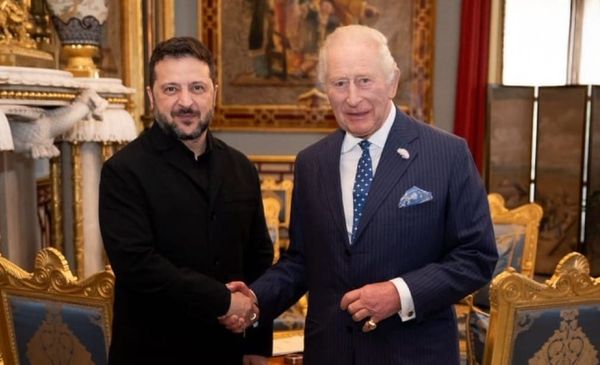
ONEST Explained: What the Yerevan Summit Reveals About Europe’s Next Chapter
Leaders from European countries and Canada gathered in Yerevan for the 2026 European Political Community Summit, focusing on Ukraine, defense autonomy, EU-UK cooperation, and shifting global alliances as Europe prepares for reduced U.S. involvement.
Watch the video here: https://www.youtube.com/watch?v=i9DN0jSscrQ&t
We hope you had a meaningful Mother’s Day celebrating the mother figures in your life.
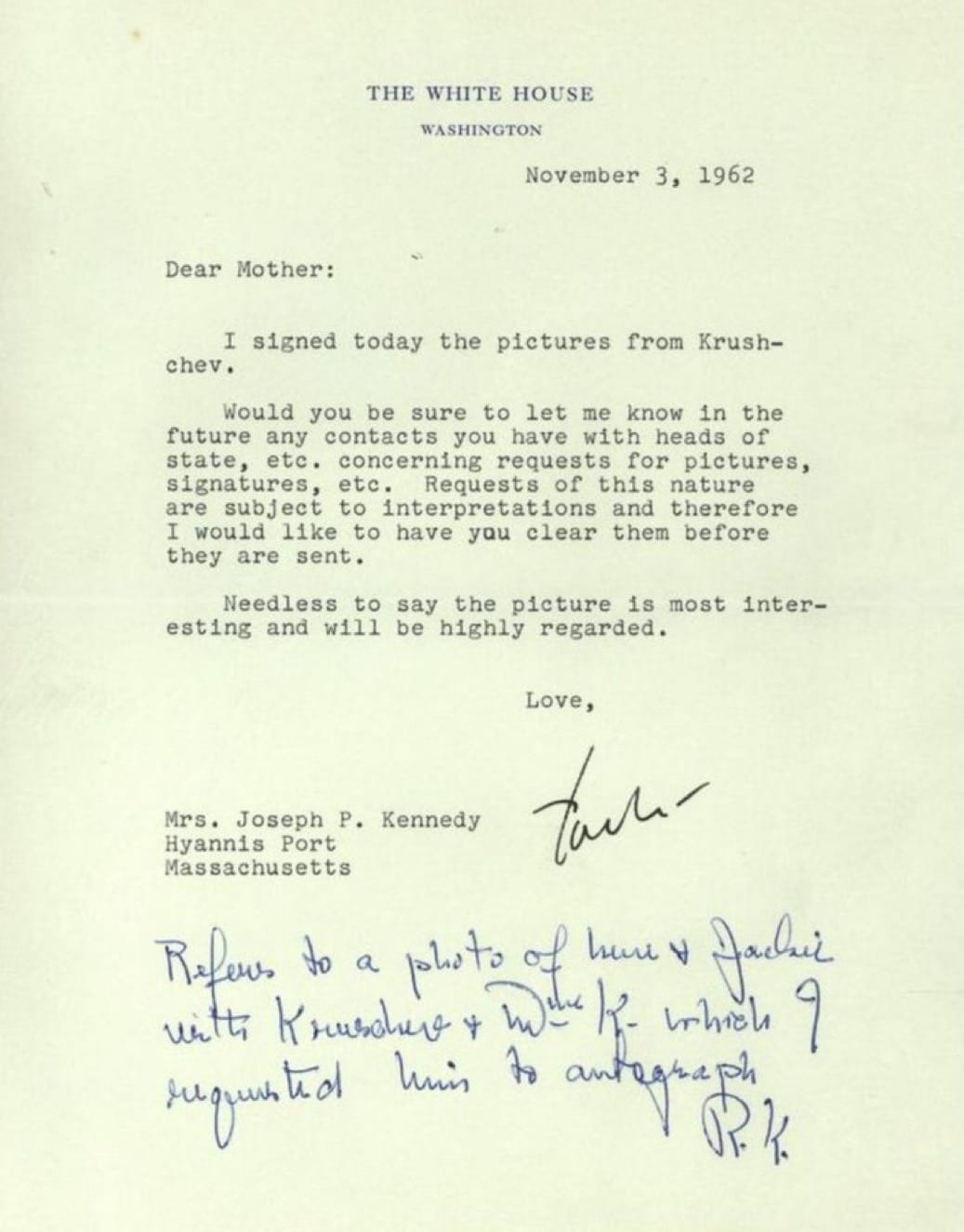
One lighter historical moment also resurfaced this weekend: a letter from President John F. Kennedy asking his mother not to contact Soviet leader Nikita Khrushchev requesting photographs without informing him first — a reminder that even during the Cold War, diplomacy occasionally "collided" with family dynamics.
ONEST is an independent global affairs platform focused on clear, factual, and accessible reporting on diplomacy, geopolitics, and world affairs.
Support independent reporting and receive Diplomatic Notes, Deep Dives, and behind-the-scenes global reporting through ONEST+:
https://onestnetwork.com/onestplus