ONEST Global Briefing — May 15, 2026
Trump’s Taiwan ambiguity, Cuba’s deepening crisis, Russia’s attack on Kyiv, and the new pressure on Europe’s security future.

– 14 min read

Trump’s Taiwan ambiguity, Cuba’s deepening crisis, Russia’s attack on Kyiv, and the new pressure on Europe’s security future.
Asked whether the United States would defend Taiwan if it came to it, President Trump replied:
“I don’t want to say that. I’m not going to say that.”
He added that Chinese President Xi Jinping had asked him the same question during their meeting, and that he told Xi: “I don’t talk about those.”
The exchange matters because Taiwan remains one of the most sensitive questions in U.S.–China relations — and because ambiguity can deter escalation, but it can also invite miscalculation.
President Trump said he has not yet made a determination on whether a major U.S. arms sale to Taiwan can move forward, after meeting with Chinese President Xi Jinping in Beijing.
China opposes U.S. arms sales to Taiwan and has repeatedly framed Washington’s relationship with the self-governing island as a central factor in U.S.–China relations. Trump’s comments therefore raised a familiar but serious question: whether Washington’s longstanding posture toward Taiwan is being treated as a settled policy framework — or as a bargaining point inside a larger negotiation with Beijing.
Trump also said Xi asked him directly whether the United States would defend Taiwan if conflict broke out.
Trump declined to answer publicly.
That answer may sound like traditional strategic ambiguity, but the context is important. Strategic ambiguity is designed to leave Beijing uncertain about the consequences of attacking Taiwan. But when it is paired with hesitation over arms sales, and delivered during a high-profile Beijing visit, it can be read differently: as uncertainty not only about deterrence, but about political will.
For ONEST readers, the core question is not whether Trump gave one sentence that changes U.S. policy. The question is whether Beijing is watching for a larger pattern: ambiguity on defense, uncertainty on arms sales, commercial dealmaking, and pressure to stabilize economic ties.
Read: Trump in China, Day 1
Read: Trump in China, Day 2
LIVE tonight: Latest updates and analysis
In another notable exchange with reporters, Trump said he discussed cyberattacks with Xi.
Asked whether he raised Chinese cyberattacks against the United States, Trump answered:
“I did. And he talked about attacks we did in China. You know, what they do, we do too. We spy like hell on them too. I told him, ‘we do a lot of stuff to you that you don’t know about.’”
The remark is striking not because espionage between major powers is new. It is striking because a sitting U.S. president described it so openly, in such blunt language, after a meeting with China’s leader.
Cyber operations are now a permanent feature of great-power competition. The United States, China, Russia, Iran, North Korea, and other actors operate in a world where data, infrastructure, communications networks, supply chains, and military systems are all targets.
But public messaging still matters. When leaders speak casually about mutual espionage, it can normalize a dangerous reality: that cyber operations are no longer a shadow element of statecraft, but part of the visible strategic environment.
That does not mean all cyber activity is equal. It does mean the next phase of U.S.–China competition will not be limited to tariffs, ships, Taiwan, or semiconductors. It is also about the invisible architecture of power.
Cuba’s crisis deepened this week as hundreds of people demonstrated in Havana over power blackouts and the country’s energy minister said Cuba had completely run out of diesel and fuel oil.
The situation is unfolding at the intersection of domestic collapse and U.S. pressure. Cuba’s president blamed Washington for the blackouts, calling U.S. fuel restrictions a “genocidal energy blockade.” The U.S. State Department said Washington has offered $100 million in humanitarian aid, while Havana said it would accept the offer.
At the same time, the Justice Department is reportedly preparing to seek an indictment against Raúl Castro, 94-year-old former Cuban president and former defense chief, according to the Associated Press, as President Trump threatens possible military action against the island. The expected focus is the 1996 shootdown of two Brothers to the Rescue planes, which killed four people.
CIA Director John Ratcliffe also made a rare visit to Havana to meet with Cuban officials. According to reporting cited in the briefing notes, Ratcliffe conveyed that Washington would “seriously engage” if Havana makes unspecified “fundamental changes.”
This is the part to watch carefully.
An indictment, if filed, would be a legal act. Threats of military action are a separate and far more serious matter. Humanitarian aid is a third track. And quiet intelligence-channel diplomacy is a fourth.
When all four happen at once — legal pressure, military rhetoric, humanitarian messaging, and back-channel diplomacy — the risk is that each side reads the other’s signals differently.
For ordinary Cubans, however, the immediate issue is not legal theory. It is electricity, fuel, food, and whether the state can function through a deepening energy emergency.
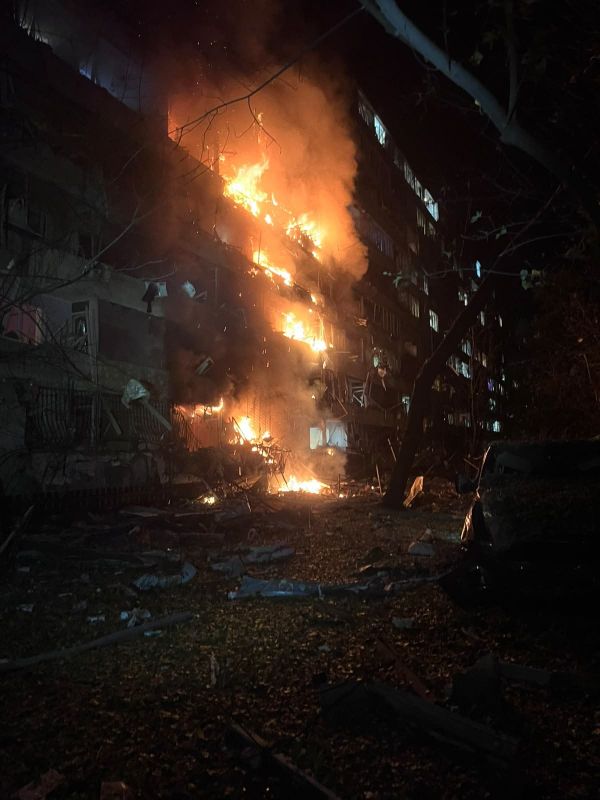
Russia launched one of its heaviest recent attacks across Ukraine, using more than 1,560 drones and 56 missiles over roughly two days, according to Ukrainian officials. The barrage killed civilians, hit multiple regions, and destroyed part of a residential building in Kyiv’s Darnytskyi district.
President Volodymyr Zelenskyy said the building was struck by a Kh-101 missile that preliminary information indicates was manufactured in the second quarter of this year. If confirmed, that detail matters because it would suggest Russia is still acquiring components, resources, and equipment needed for missile production despite international sanctions.
Zelenskyy said Ukraine’s drone interception rate during the attack was about 93 percent. That is significant — but it also underscores the limits of air defense under sustained pressure. Drones can be intercepted at high rates and still overwhelm cities, energy systems, and civilian life when launched in mass waves.
Missiles are a harder problem, especially ballistic missiles. Zelenskyy said protection against ballistic threats must be a daily priority and welcomed European efforts to build what he described as an “anti-ballistic coalition.”
This connects directly to the larger question now facing Europe: how quickly can it produce more of its own air defense systems, missiles, ammunition, drones, and industrial capacity — not as a future aspiration, but as a near-term security requirement?
Ukraine is no longer only asking Europe for help. Ukraine is showing Europe what modern war already looks like.
During a Council of Europe ministerial meeting in Chișinău, 36 states and the European Union signed an agreement on the Management Committee of the Special Tribunal for the Crime of Aggression against Ukraine.
The agreement defines the committee’s composition, powers, and procedures. It also provides the legal basis for moving the tribunal from the preparatory phase toward full institutional functioning.
The tribunal is intended to hold Russia’s senior military and political leadership accountable for the crime of aggression against Ukraine. This mechanism is necessary because the International Criminal Court does not have jurisdiction over the crime of aggression in this case with respect to states that are not parties to the relevant statute.
Deputy Head of the Office of the President of Ukraine Iryna Mudra called the signing “a concrete legal step” that makes the launch of the tribunal irreversible.
The next steps include forming the judicial panel, approving procedural rules, and initiating investigations. The tribunal will be based in The Hague under the Council of Europe and will have the status of an international organization.
The significance is both legal and political. The tribunal is not about whether Russia committed aggression in the abstract. It is about whether the international system can still create mechanisms of accountability when existing institutions do not fully cover the crime.
Several U.S. officials confirmed that 4,000 troops were no longer en route to Poland this week. The Trump administration had previously said it was cutting U.S. forces only in Germany, and the decision prompted questions in both Warsaw and Washington.
The announcement comes as NATO Secretary General Mark Rutte participated in the Bucharest Nine and Nordic Allies Summit, co-hosted by Romania and Poland.
This is not happening in isolation.
Russia is intensifying aerial attacks on Ukraine. Europe is debating its own air defense and defense production capacity. Ukraine is pressing allies for anti-ballistic systems. And Trump’s foreign policy continues to raise questions about whether the United States will remain a predictable security anchor.
The old question was whether Europe should do more for its own defense.
The new question is whether Europe has accepted that it may have no choice.
That does not mean NATO disappears. It does mean NATO’s European members are being forced to think about defense not simply as burden-sharing with Washington, but as survival planning in case Washington’s commitments become conditional, delayed, reduced, or politically unstable.
Europe is not yet living without the United States.
But it is increasingly planning for a world in which U.S. support can no longer be treated as automatic.
China’s electric truck sales tripled in 2025 and now account for about 20 percent of the country’s heavy-duty vehicle market, with monthly sales surpassing 24,000 vehicles amid rising fuel costs.
The trend was visible at the Beijing International Automotive Exhibition, held from April 24 to May 3 under the theme “Future of Intelligence.” The expo featured more than 1,000 vehicles, including electric trucks.
This matters far beyond transportation.
China’s push toward electric heavy transport is tied to energy security. Instability around the Strait of Hormuz has highlighted the danger of relying on imported oil and volatile fuel markets. As diesel costs rise, electric freight becomes not only a climate or technology issue, but a strategic resilience issue.
Beijing’s 15th Five-Year Plan calls for building roughly 6,200 miles of zero-emission freight corridors by 2030. Chinese companies have also announced thousands of charging stations.
The broader lesson: energy transition is not only about emissions. It is increasingly about sovereignty, supply chains, war risk, fuel prices, and the ability of major economies to keep moving goods when global chokepoints become unstable.
Recommended Read: Deep Dive: If Conflict Accelerates the Energy Transition, Who Gains Power Next?
Canada’s May 15 announcements again point to a federal agenda centered on resilience: climate adaptation, local infrastructure, coastal communities, housing rights, Indigenous history, forestry, and strategic industries.
In Ontario, the federal government announced up to $33.7 million for the Town of Lincoln to address flooding and shoreline erosion along Lake Ontario. The project includes roadway upgrades, relocation of roads inland, shoreline protection, and tree buffer strips. It is described as the largest federal infrastructure investment in Lincoln’s history and is expected to support future development, including more than 3,500 new homes at Prudhomme’s Landing.
In Nunavut, Ottawa highlighted proposed funding of $957.8 million over five years for the Small Craft Harbours Program, including improvements at Pangnirtung Harbour. The investment is aimed at repairs, upgrades, dredging, and climate-resistant harbour infrastructure for coastal and fishing communities.
In Prince Edward Island, Canada announced support for commemorative activities marking the 300th anniversary of the 1726 Treaty of Peace and Friendship, with funding for Lennox Island First Nation programming that includes storytelling with Elders, cultural workshops, traditional drumming, singing, and dance.
In Newfoundland and Labrador, Fisheries and Oceans Canada announced a new predictable management approach for the annual Food Fishery. Starting in 2026, the season will be set by fixed dates, with different access rules based on the health of cod stocks in different NAFO divisions.
Canada’s housing accountability debate also continued after the Neha review panel concluded that Canada is not meeting its obligations to progressively realize the right to housing in a gender-responsive and equitable manner. The Federal Housing Advocate and the Canadian Human Rights Commission welcomed the government’s response but said it falls short of concrete commitments, timelines, and accountability measures.
In British Columbia, Ottawa announced $12.4 million for 14 projects to strengthen the forest sector, including low-carbon wood technologies, mass timber, Indigenous forestry initiatives, and export diversification.
And at the Canadian Space Agency, Minister Mélanie Joly welcomed the Artemis II crew after their historic journey around the Moon, including Canadian astronaut Jeremy Hansen. The event highlighted Canada’s role in space exploration and the importance of inspiring young people to pursue science, engineering, and innovation.
Taken together, these are not isolated announcements. They show a country aiming to harden its foundations: infrastructure, climate adaptation, food systems, Indigenous recognition, housing rights, natural resources, and advanced science.
The World Food Programme warned that Afghanistan’s deepening malnutrition crisis is pushing mothers and children to the brink, as mass returns from neighboring countries and funding shortfalls overwhelm humanitarian operations.
The UN warned that disruptions to energy supplies and trade corridors are driving up the cost of food, transport, and essential goods worldwide, slowing economic growth and increasing pressure on vulnerable households and debt-strapped developing countries.
The World Health Organization warned that brightly colored nicotine pouches promoted through influencers, music festivals, and youth-oriented advertising are helping drive a rapid rise in nicotine use among young people.

NASA’s TESS mission released its most complete view of the sky to date, marking nearly 6,000 confirmed or candidate exoplanets identified by the mission as of September 2025.
Prime Minister Narendra Modi said he discussed ways to deepen India’s comprehensive strategic partnership with the UAE, including trade, energy, and other sectors.
Saudi Arabia has reportedly floated the idea of a regional nonaggression pact that could include Iran after the current war, potentially modeled on the Helsinki process that managed tensions during the Cold War.
Vice President JD Vance said he believes progress is being made in negotiations with Iran, after President Trump rejected Tehran’s latest proposal as unacceptable.
Lebanon’s health ministry said twelve people were killed in a series of Israeli strikes on cars, as conflict between Hezbollah and Israel continued ahead of another round of U.S.-mediated talks.
A drone strike reportedly hit an Iranian opposition camp north of Erbil, targeting an arms and ammunition depot.
Israel is funding an external fuel tank upgrade for its F-35I Adir fighters, a move that could expand the Israeli Air Force’s long-range strike capacity.
A federal judge temporarily blocked U.S. sanctions against Francesca Albanese, the UN expert on the Palestinian territories, finding that the Trump administration likely violated her free-speech rights.
The World Food Programme said it has halved emergency food assistance in Syria because of funding shortages, warning that millions remain vulnerable despite signs of stabilization in parts of the country.
Two weeks of intense clashes in southern Sudan killed more than 61 people, including nine children, according to a local medical group.
A BRICS foreign ministers meeting in New Delhi ended without a joint statement after members voiced differing positions over the Middle East.
A unit of Abu Dhabi National Oil Company said one of its tankers struck by Iranian drones leaked a small amount of fuel off the coast of Oman, underscoring the ecological risks of the Iran war.
India and Kenya both raised pump prices amid the global energy crunch. India’s increase was the first time New Delhi passed the international price hike to consumers through state-run fuel retailers, while Kenya raised prices by as much as 23.5 percent.
The United Kingdom plans to halve its 2024–2027 contribution to the world’s largest government-backed climate fund, cutting roughly $1 billion, citing reductions in its foreign aid budget.
Gunshots were heard in the Philippine Senate after Senator Ronald Dela Rosa, an ally of jailed former President Rodrigo Duterte, said police were planning to arrest him as part of an International Criminal Court probe. He left the Senate without being detained.
The Supreme Court ruled that patients can continue receiving abortion pills by mail.
The CDC is monitoring 41 people across the United States for symptoms of hantavirus.
A new Pentagon team has been tasked with accelerating rare earth supply deals using government funds and financing tools, as Washington tries to reduce dependence on China-dominated supply chains.
The Justice Department is reportedly considering dropping corruption charges against Gautam Adani, India’s richest man, as part of a broader Trump administration retreat from pursuing foreign bribery cases.
The Senate confirmed Kevin Warsh as Federal Reserve chair in a 54–45 vote, the most partisan confirmation for the position in history.
World Cup spectators from 50 countries will no longer be required to submit $15,000 in bond money to enter the United States if they hold valid match tickets.
A Senate motion to limit Trump’s war powers failed by one vote, the seventh such failure since the start of the Iran war.
The Pentagon announced long-term agreements with four defense companies to develop and produce large numbers of low-cost cruise missiles.
A confidential U.S. intelligence analysis reportedly details how China is using the Iran war to maximize its advantage over the United States across military, economic, diplomatic, and other fields.
CENTCOM chief Admiral Brad Cooper told lawmakers that America’s 38-day bombing campaign against Iran diminished Iran’s ability to threaten global security, but did not eliminate the threat.
The Air Force is planning two fiscal 2027 programs to develop more hypersonic missiles, including a follow-on to ARRW and a new Air-Launched Ballistic Missile effort.
L3Harris is reprogramming Falcon IV handheld radios to generate a personal protective electronic-warfare “bubble” against small drones.
A Congressional Budget Office estimate placed the 20-year cost of the Pentagon’s Golden Dome program at $1.2 trillion, though the general in charge of the project said the estimate was based on inaccurate assumptions.
Trump’s next comments on Taiwan arms sales after the Beijing visit.
Whether the Justice Department formally moves forward with an indictment connected to Cuba.
How Havana responds to U.S. humanitarian aid and political conditions.
European reactions to the halted U.S. troop movement to Poland.
Ukraine’s push for anti-ballistic defense cooperation in Europe.
Whether BRICS divisions over the Middle East deepen after the failed joint statement.
Fuel price ripple effects in countries dependent on imported energy.
The Musée d’Orsay in Paris has opened a gallery featuring works recovered from Germany and Austria after World War II.
The museum hopes visitors may help identify the paintings’ rightful owners.
It is a quiet reminder that history does not end when a war ends. Some losses remain unresolved for generations — in archives, museums, family memories, and empty spaces on walls.
And sometimes, the work of repair begins with simply refusing to forget.
ONEST is an independent global affairs platform focused on clear, factual, and accessible reporting on diplomacy, geopolitics, and the decisions shaping global stability.
We do not run ads or rely on commercial sponsors. ONEST is sustained by readers who believe that serious, independent, globally focused reporting should exist.
Join ONEST+ for:
Diplomatic Notes from inside major global events
Deep Dives that connect the dots
early access to reporting and interviews
clear analysis before the world catches up
Support ONEST+:
https://onestnetwork.com/onestplus