Trump may have inadvertently revealed the direction of his Middle East strategy.
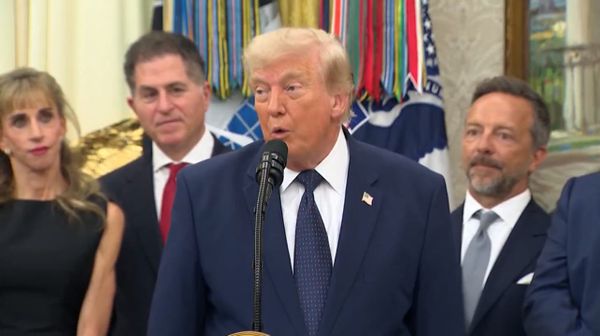
Asked by CNBC about the status of negotiations with Iran, Trump dismissed the importance of the talks altogether: “I don’t care if they’re over, honestly. I really don’t care. I couldn’t care less. If they’re over, they’re over. If they’re not, you know, I think they took too much time. Frankly, I thought they started to get very boring.”
That remark came as multiple fronts across the region moved simultaneously toward either escalation or collapse.
Over the past several days, tensions between Washington and Tehran have intensified. Iran reportedly downed a U.S. drone, CENTCOM responded with what it described as "defensive strikes" against IRGC command and radar infrastructure, and Iran retaliated by targeting Kuwait. At the same time, indirect negotiations between Washington and Tehran appear increasingly strained.
One of the latest sticking points is the U.S. demand that any agreement explicitly prohibit Iran from obtaining a nuclear weapon. Iranian officials have signaled a willingness not to develop a weapon, but reports suggest Washington is now seeking broader guarantees. Tehran, meanwhile, maintains that no final agreement is possible until what it describes as Iran’s security concerns are addressed.
Those security concerns extend well beyond Iran itself.
Iran has repeatedly linked progress in negotiations with developments in Lebanon. Tehran views the conflict there as inseparable from broader regional stability and has indicated that preserving a ceasefire remains a key condition for any understanding with Washington.
Yet events on the ground are moving in the opposite direction.
Israeli forces have pushed deeper into Lebanon while strikes near Beirut have resumed. Hezbollah has signaled openness to ceasefire proposals communicated through intermediaries, but fighting continues. Trump claimed this week that he held productive communications with Israeli Prime Minister Benjamin Netanyahu and, separately through intermediaries, with Hezbollah. According to Trump, Netanyahu agreed to halt troop movements toward Beirut while Hezbollah agreed to stop attacks. The reality on the ground remains far less clear.
This is what makes the current moment significant. What began as a nuclear negotiation has evolved into a negotiation over the entire regional security architecture. Lebanon, Israel, Iran, Syria, Iraq, Gulf security, and U.S. military posture are increasingly becoming parts of a single conversation.
The risk for Washington is that military pressure and diplomatic pressure are no longer producing the same outcome. Instead of accelerating a deal, they may be creating incentives for regional actors to seek alternatives. As uncertainty grows, China stands to benefit by presenting itself as a more predictable economic and diplomatic partner. The more fragmented the American approach becomes, the larger the opening for Beijing.
That context makes Trump's latest personnel move noteworthy.
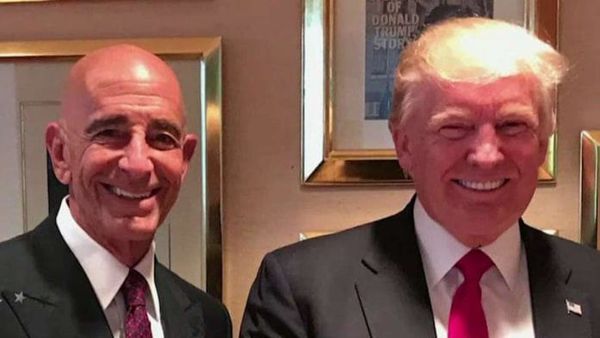
On Monday, Trump announced that Tom Barrack would expand his responsibilities beyond serving as U.S. ambassador to Türkiye and become Special Presidential Envoy to both Syria and Iraq. Barrack, a longtime Trump confidant with extensive business ties across the Middle East, now finds himself positioned at the center of several of the region's most consequential diplomatic files.
Barrack's appointment is not the story itself. It is a signal about what may come next.
If Trump's own comments are any indication, he appears increasingly impatient with prolonged negotiations. The question is whether Washington is moving from diplomacy aimed at reaching an agreement toward diplomacy aimed at maximizing leverage.
Barrack may represent that transition: not from war to peace, but from diplomacy as negotiation to diplomacy as personal leverage.