The Pope’s AI Warning: Do Not Outsource Human Morality
– 2 min read
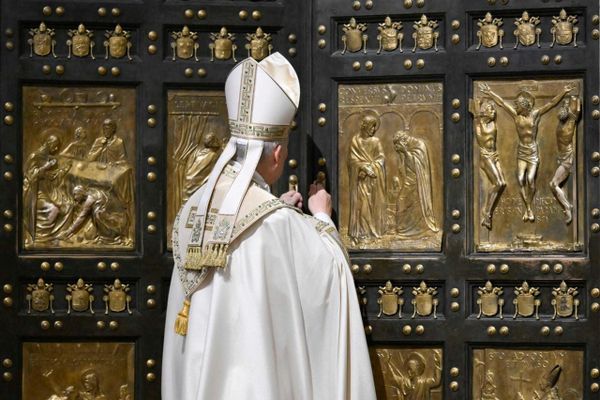
Pope Leo XIV’s first encyclical, Magnifica Humanitas, is not a rejection of technology. It is a rejection of surrender.
The Pope is warning that artificial intelligence cannot be treated as morally neutral when it is designed by human beings, owned by powerful institutions, trained on human society, and deployed into unequal systems.
The encyclical calls for artificial intelligence to serve humanity rather than concentrate power. It focuses on human dignity, truth, labor, social justice, peace, and the need to safeguard the human person in the age of AI.
That framing matters because AI is no longer a distant technical debate. It is entering education, medicine, law, finance, war, government, and work. It is increasingly being presented not as a product, but as infrastructure.
Sam Altman has described a future in which intelligence becomes a utility, bought by the meter like electricity or water. That idea may sound efficient. It is also profoundly political.
If intelligence becomes a utility, who owns it?
Who prices it?
Who regulates it?
Who is excluded?
Who decides what it may be used for?
The Pope’s warning lands precisely where governments and tech companies are weakest: morality.
Anthropic has also published research identifying internal emotion-related concepts in AI models. The careful point is important: this does not mean AI “feels.” It means large models can develop internal representations that mirror emotion-related concepts in human language, and researchers are still working to understand how those structures influence model behavior.
That should make the public more engaged, not more passive.
The problem is not that AI is powerful. The problem is that power is being built faster than public accountability.
If AI enters war, killing becomes more distant.
If AI enters labor markets, displacement can be framed as efficiency.
If AI enters education, inequality can be automated.
If AI enters governance, human judgment can be replaced by systems most people cannot inspect.
The Pope is not saying technology should stop.
He is saying humanity cannot become a spectator to its own replacement.
The question is no longer whether AI can think.
The question is whether humans will still be allowed to decide what thinking is for.