The Iran Deal Was Already Fragile. Trump May Have Made It Worse.

– 2 min read

The Iran deal was already politically fragile. Now Trump may have made it worse.
After days of claims that an agreement with Iran was getting closer, the emerging framework triggered growing backlash in Washington and among U.S. allies. Reuters reported that talks have focused on reopening the Strait of Hormuz, Iran’s enriched uranium stockpile, sanctions relief, and the release of frozen Iranian assets. Iran says progress has been made on some issues, but no final agreement is imminent.
The reported framework has raised major concerns because Iran could receive financial relief, movement on frozen funds, and a pathway out of the Strait of Hormuz crisis while major questions remain unresolved over uranium, enforcement, missiles, and regional activity.
Then Trump added a new demand.
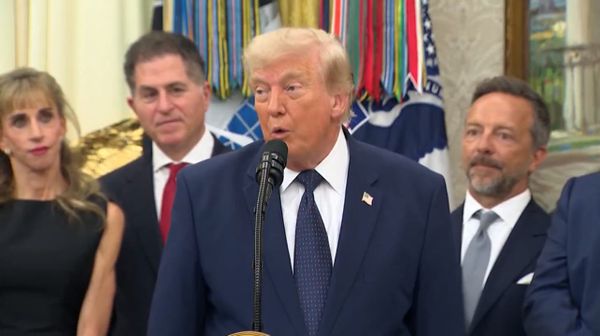
In a lengthy Truth Social post this morning, Trump said negotiations with Iran were “proceeding nicely,” but argued that countries including Saudi Arabia, Qatar, Pakistan, Türkiye, Egypt, Jordan, Bahrain, and the UAE should also join the Abraham Accords as part of a broader regional settlement.
Trump linked expanded Abraham Accords participation to the Iran deal, while Pakistan rejected the request and other countries have not publicly committed.
That may sound historic. But diplomatically, it makes an already difficult deal even harder.
Saudi Arabia has its own conditions, including the Palestinian statehood question. Qatar has its own regional role. Türkiye, Pakistan, Egypt, and Jordan each have different domestic and strategic calculations. Iran being folded into a framework associated with normalization with Israel would be an entirely different political universe.
And that is the problem.
Trump is no longer only trying to negotiate with Iran. He is now trying to combine Iran, the Gulf states, Israel normalization, the Abraham Accords, sanctions relief, the Strait of Hormuz, and domestic U.S. backlash into one political package.
That does not make the deal stronger. It makes it harder to land.
Trump may want a legacy deal. Iran wants relief. Israel wants constraints. Gulf states want guarantees. And right now, those are not the same deal.
This is what happens when diplomacy becomes branding: the deal gets louder before it gets clearer.
The danger is not only that the deal fails. The danger is that a weak or rushed deal could legitimize Iran’s leverage over the Strait of Hormuz, reward escalation, and leave the most dangerous questions unresolved.
A deal that lowers tensions can be good diplomacy.
A deal that gives Iran relief while leaving the core threats intact is not a breakthrough. It is a postponement.