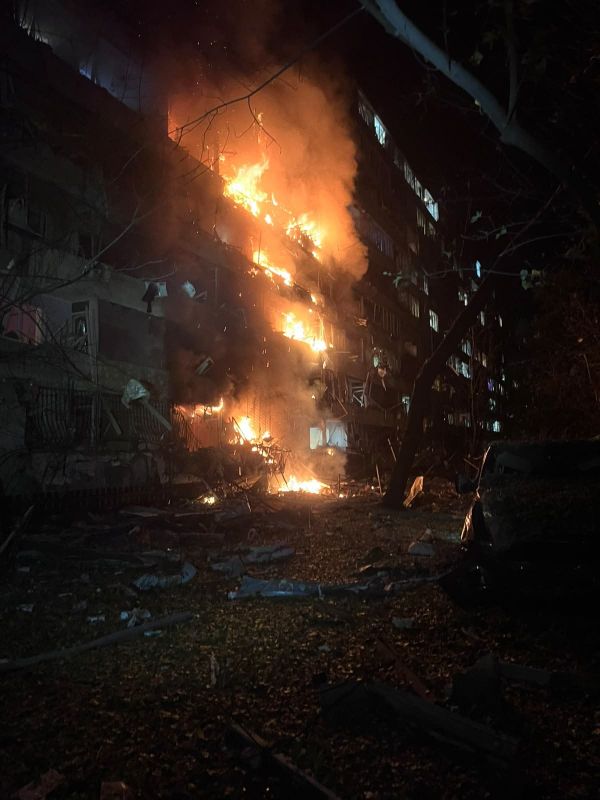
Secretary of State Marco Rubio confirmed that Russian Foreign Minister Sergey Lavrov called him after Putin asked that a message be relayed directly to President Trump. Moscow said it planned further strikes on Kyiv and urged foreign nationals and diplomats to leave the city. The European Union and several member states summoned Russian diplomats over the threats, while the United Nations Secretary-General expressed deep concern over Russia’s announced plans.
This was not a courtesy warning. It was psychological warfare.
Russia is trying to create a visual: embassies emptying, diplomats leaving, Kyiv appearing isolated, Ukraine looking abandoned. If Moscow can make international presence in Kyiv shrink, it can use that image as part of the war.
But several diplomatic missions, including the EU, France, and Poland, said they would remain in Kyiv despite Moscow’s warning.
That matters.
Diplomats staying in Kyiv is not only symbolic. It is strategic. It says Russia does not get to decide where the international community is allowed to stand.
At the United Nations, Ukraine’s Ambassador Andrij Melnyk delivered a joint statement on behalf of Ukraine and its allies condemning Russia’s escalating attacks on civilians and civilian infrastructure. The statement called for an immediate ceasefire, the return of prisoners, deportees, and children, and Russia’s full withdrawal from Ukrainian territory. It also condemned Russia’s threats against diplomatic institutions and embassies in Kyiv.
Russia’s response was predictable. Its ambassador used his briefing to claim Ukraine was targeting civilians in occupied Luhansk — part of the same inversion Moscow has used throughout the war.
Russia occupies Ukrainian territory, stages sham referendums under military pressure, then claims civilians “chose Russia.” It bombs Ukrainian cities, then claims Ukraine is the real aggressor. It threatens diplomats, then presents the threat as a warning.
This is not new. But it is escalating.
The threat to diplomats is part of the strike. The panic is part of the weapon.
Russia’s message was not only: “we are coming.”
It was: “leave before we come, so we can say Ukraine is alone.”
That is why the response matters. Every embassy that remains in Kyiv denies Moscow the image it wants.
Russia can threaten Kyiv. It can bomb civilian infrastructure. It can spread disinformation at the UN.
But it cannot be allowed to decide that Ukraine’s capital is too dangerous for the world to witness.
Like the ONEST Newsroom? Donate any amount to help keep this reporting going.