ONEST Global Briefing — May 18, 2026
Ebola emergency, Arctic security shifts, NPT final week, and the widening cost of global instability

– 9 min read

Ebola emergency, Arctic security shifts, NPT final week, and the widening cost of global instability
QUOTE OF THE DAY
“Attacks on nuclear installations are totally unacceptable, a violation of international law and must be condemned.”
— UN Secretary-General António Guterres, after drone strikes near the UAE’s Barakah Nuclear Power Plant
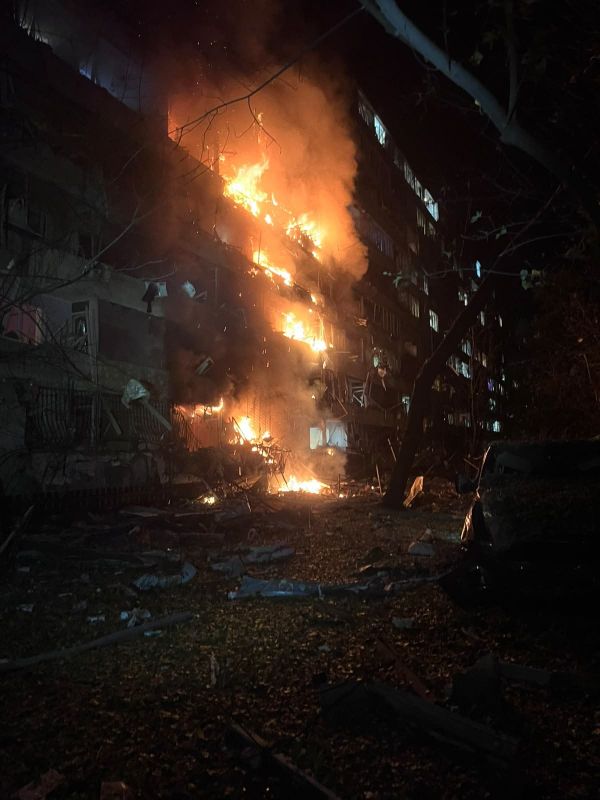
The warning came as the International Atomic Energy Agency confirmed that off-site power had been restored to Unit 3 of the Barakah Nuclear Power Plant after an attack caused a fire near an electrical generator. IAEA Director-General Rafael Grossi welcomed the restoration as an important step for nuclear safety and repeated that nuclear sites must never be targeted by military activity.
The World Health Organization has declared the new Ebola outbreak in eastern Democratic Republic of the Congo an international public health emergency. According to the latest reports, deaths have surpassed 100 across two provinces, and an American doctor is among the cases in Bunia, the capital of Ituri province.
The warning is not only about Ebola itself, but about the global system’s ability to respond. Disease transmission experts said that the chances of another pandemic-level emergency are rising, while reports from the ground point to a lack of vaccines, medicine, and resources needed to contain the outbreak.
For ONEST readers, the issue is familiar: global health crises are rarely only medical events. They expose fragile institutions, funding gaps, conflict conditions, humanitarian access problems, and the consequences of delayed international response.
The IAEA said the United Arab Emirates restored off-site power to Unit 3 of the Barakah Nuclear Power Plant after a drone strike caused a fire near an electrical generator. The restoration means the reactor no longer needs emergency diesel generators for power — an important safety step, according to IAEA Director-General Rafael Grossi.
The incident unfolded amid the broader Middle East crisis, after U.S. and Israeli strikes against Iran and Iranian counterstrikes across Gulf and regional targets. UN Secretary-General António Guterres said the incident provided “yet another reason” for all sides to halt the fighting completely, warning that there must be no further attacks near civilian infrastructure, including nuclear power plants.
This is precisely why nuclear risk is not only about nuclear weapons. Nuclear safety, civilian infrastructure, military escalation, drones, and regional conflict are now increasingly connected.
Alyn Ware on nuclear risk, common security, and the long work of disarmament
Negotiations at the 2026 NPT Review Conference are entering the final stretch at UN Headquarters, with states continuing work around draft language and the possibility of a consensus outcome. No major public breakthrough has been announced, and the atmosphere remains cautious as delegations navigate a difficult backdrop: rising nuclear risk, regional wars, weakened arms control, and deep mistrust among major powers.
The final week matters because NPT conferences are not only about formal documents. They are about whether nuclear-armed states, non-nuclear states, and nuclear-allied countries can still agree on language that reflects today’s reality — and whether the nonproliferation regime can adapt to a world where deterrence, proliferation concerns, nuclear safety, and great-power rivalry are all intensifying.
ONEST will continue following the final week of the NPT Review Conference from UNHQ, translating complex nuclear diplomacy into clear, accessible reporting.
The Trump administration is pausing the Permanent Joint Board on Defense with Canada, with U.S. Under Secretary of Defense Ebridge accusing Ottawa of failing to make “credible progress” on defense commitments and saying Canada must prioritize “hard power over rhetoric.”
Former Canadian Conservative leader Erin O’Toole called the move “profoundly misguided and quite strange,” especially coming shortly after President Trump’s visit to China. O’Toole stressed Canada’s long-standing alliance with the United States and warned against losing sight of shared values and shared defense history.
The dispute comes as Arctic security is rapidly becoming one of the most important strategic questions in North America. Since Trump’s threats to seize Greenland, officials in Greenland and Denmark have sought advice from Canada on creating their own version of the Canadian Rangers — a reserve force with deep experience operating in remote Arctic communities.
Canada is also deepening ties with Nordic countries, including Denmark, Finland, Iceland, Norway, and Sweden, as Prime Minister Mark Carney works to strengthen “middle power” alliances in a world where the United States is viewed by some partners as less reliable. Canada and the Nordics agreed in March to deepen cooperation on military procurement and defense production, while Canada has opened a consulate in Nuuk and invited Nordic counterparts to visit Canada’s Arctic.
The larger story is not only about one board or one diplomatic dispute. It is about whether Arctic democracies can build a credible security architecture at a time when climate change is making the region more accessible, Russia maintains a large Arctic military presence, and China is expanding its activity in the region, often in partnership with Moscow.
Taiwanese officials emphasized the island’s strategic importance after President Trump suggested that a weapons deal could be used as a “negotiating chip” with China. Taiwan’s president stressed that arms purchases from the United States remain “the most important deterrent” against regional conflict and instability.
The statement comes after Trump’s visit to China and amid continued uncertainty over how Washington will balance trade talks with Beijing, Taiwan’s security, and broader Indo-Pacific deterrence.
For Taiwan, the issue is not symbolic. U.S. arms support is treated as a practical deterrent. Any suggestion that it could become bargaining material in U.S.–China negotiations creates immediate concern in Taipei and among regional partners watching the credibility of U.S. commitments.
The Kremlin said the peace process with Ukraine is “on pause,” while claiming Russian strikes target only military or “quasi-military” sites. Ukraine, meanwhile, continues to argue that its long-range strikes and sanctions pressure are increasingly affecting Russia’s war economy.
President Volodymyr Zelenskyy said Russian oil refining has dropped by 10 percent in recent months and that Russian oil companies are being forced to shut down oil wells. He argued that Russia’s state deficit has already grown beyond what was planned for the entire year and said pressure from Ukraine and its partners is pushing Russia closer to ending the war.
At the same time, U.S. Treasury Secretary Scott Bessent announced yet another temporary 30-day general license allowing "vulnerable nations" to access Russian oil currently stranded at sea. According to Bessent, the move is intended to stabilize the physical crude market, ensure oil reaches energy-vulnerable countries, and reduce China’s ability to stockpile discounted oil.
Factcheck: The move highlights a central contradiction in Trump’s Russia policy. Publicly, the administration presents the waiver as a tool to stabilize energy markets and stop China from stockpiling more discounted Russian crude. But China already has a major oil cushion, and the U.S. is again allowing access to Russian oil already at sea — the second renewal since the original March waiver. For Ukraine, the timing is especially damaging: Zelenskyy says Russian refining has fallen and oil companies are being forced to shut down wells, while Washington is creating another pathway for Russian barrels to move.
President Vladimir Putin signed a decree granting fast-track Russian citizenship to residents of Transnistria, bypassing residency requirements and language exams. Moldova’s President Maia Sandu described the move as a recruitment tool for the front line and compared it to Russia’s earlier playbook in Donetsk and Luhansk before 2022.
This matters because Russian passportization has often served as a political and security instrument. It creates populations Moscow can later claim to “protect,” while deepening pressure on neighboring states’ sovereignty and territorial integrity.
The Department of Justice announced a $1.7 billion fund to compensate prosecuted allies of President Trump as part of a deal connected to dropping Trump’s $10 billion lawsuit against the Internal Revenue Service.
The move raises immediate questions about the relationship between law enforcement, political loyalty, and public money. It also comes as the administration pushes a broader law-and-order agenda, including a proposed “summer surge” of another 1,500 National Guard troops in Washington ahead of America’s 250th birthday.
Separately, a new report found that more than 100,000 children — about three quarters of them likely U.S. citizens — have been separated from their parents under Trump’s immigration crackdown.
Together, these developments point to a striking domestic contrast: expanded state power in the name of enforcement, alongside direct compensation for political allies who faced the actual enforcement.
Several U.S. defense developments point to the speed at which military planning is shifting.
A new Government Accountability Office report found that depot-level maintenance took longer than expected for nearly three-quarters of Air Force aircraft from fiscal years 2019 to 2024, with unplanned repairs rising across an aging fleet.
Meanwhile, Pentagon leaders working on the Golden Dome missile defense program say a new “Ecosystem Hub” will help companies pitch technology and allow the government to monitor supply chain and cyber risks. Under the Defense Department’s nearly $1.5 trillion fiscal 2027 budget request, the Army would receive almost $1 billion for small counter-drone technology — nearly double the enacted FY26 level.
The direction is clear: drones, counter-drone systems, missile defense, supply chain security, and aging platforms are now central to U.S. defense planning.
A proposed $100 billion AI data center in Utah has triggered backlash over water, power, local control, and the environmental footprint of the AI boom.
Türkiye is responding to a record-low fertility rate of about 1.48 by launching a “Decade of Family and Population.” Measures include cash bonuses, subsidized marriage loans, expanded parental leave, and regional incentives for larger families. Critics argue the policies may have limited effect while inflation and economic pressures remain high.
China’s Foreign Ministry said President Vladimir Putin’s upcoming state visit will be his 25th trip to China. Putin and Xi Jinping are expected to discuss bilateral relations, cooperation across multiple fields, and international and regional issues of mutual interest. The visit comes after Ukrainian sources said a Russian drone struck a Chinese cargo ship in the Black Sea overnight.
South Korean President Lee said he spoke with President Trump and was briefed on the results of the U.S.–China summit. The two leaders discussed the international situation, cooperation between Seoul and Washington, and peace and stability on the Korean Peninsula.
Iranian Foreign Minister Abbas Araghchi said Iran’s right to enrich uranium for peaceful purposes within its borders is “sovereign” and “inalienable,” and said direct negotiations with the United States are off the table while Washington continues sanctions and military pressure.
NATO Secretary General Mark Rutte will visit Sweden on May 21, where he is expected to meet Prime Minister Ulf Kristersson, Foreign Minister Maria Malmer Stenergard, Civil Defence Minister Carl-Oskar Bohlin, and other officials. He will also visit Sweden’s Civil Defence and Resilience Agency training center.
A strategic studies expert warned that the abrupt cancellation of U.S. rotational deployments to Poland could become one of the most damaging political decisions of the Trump administration, arguing that blindsiding one of Washington’s most trusted NATO allies makes little strategic sense.
Two U.S. Navy jets collided mid-air and exploded during the Gunfighter Skies Air Show at Mountain Home Air Force Base, but all pilots safely ejected, according to initial reports.
Christian Castro, an ICE officer, has been charged with four counts of second-degree assault and one count of falsely reporting a crime in connection with the January 14 shooting of Julio Cesar Sosa-Celis, according to Hennepin County Attorney Mary Moriarty. A warrant has been issued for his arrest.
A nine-person jury unanimously found that Elon Musk waited too long to file his lawsuit against OpenAI and missed the statute-of-limitations deadline.
Two Americans were arrested in Japan after one allegedly climbed into a zoo’s monkey enclosure while the other filmed it, apparently chasing viral attention around Punch, a baby macaque who had become an internet sensation.
In Türkiye, a stray cat reportedly visits the same cashier every day for one simple reason: a hug.
After a briefing on nuclear warnings, Arctic tensions, public health emergencies, and war, it is a small reminder that even in difficult times, gentleness still finds its way into ordinary places.
ONEST is an independent global affairs platform focused on clear, factual, and accessible reporting on diplomacy, geopolitics, law, policy, and the decisions shaping global stability.
We do not run ads or rely on commercial sponsors. ONEST is sustained by readers who believe serious, independent, globally focused reporting should exist.
Join ONEST+ for:
Support ONEST+:
https://onestnetwork.com/onestplus