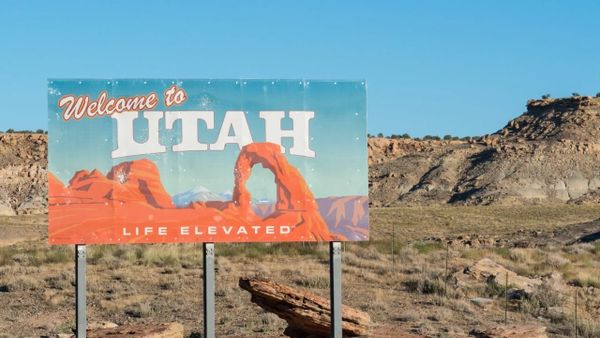
A massive AI infrastructure project approved in northwest Utah is becoming one of the clearest examples yet of the growing tension between technological expansion and environmental limits.
Last week, county commissioners approved plans for “Stratos,” a proposed $100 billion AI and data infrastructure development expected to span roughly 40,000 acres in Box Elder County near the Great Salt Lake basin.
Supporters describe the project as a transformative investment in America’s technological future — one tied to artificial intelligence, cloud computing, energy production, and potentially defense-related infrastructure. Critics see something very different: a warning sign of what the AI boom could demand from local communities, power grids, water systems, and fragile ecosystems.
The scale alone has drawn national attention.
According to reports, the project could eventually require up to 9 gigawatts of power — more electricity than the entire state of Utah currently consumes.
Developers insist much of that power would be generated onsite or separately sourced, while opponents argue that energy infrastructure at this scale inevitably affects surrounding regions through transmission, emissions, pricing, and long-term resource planning.
Kevin O’Leary, one of the project’s most visible backers, has promoted Stratos as a major economic opportunity, claiming it could create 10,000 construction jobs and 2,000 permanent positions.
Other estimates are more restrained. Business Insider reported projections closer to 4,000 construction jobs spread over a decade or more and approximately 1,350 permanent jobs once operational.
For many local residents, however, the debate extends far beyond employment numbers.
Nearly 4,000 complaints and objections were reportedly submitted ahead of approval. Environmental groups, residents, and local activists have raised concerns about water usage, rising energy demand, air quality, heat generation, tax incentives, and the long-term impact on the Great Salt Lake ecosystem — an already vulnerable environmental system that scientists have warned is under severe pressure from drought, climate change, and overuse.
Water remains one of the least resolved questions surrounding the project.
Modern AI infrastructure requires enormous amounts of cooling capacity, and large data centers around the world are increasingly facing scrutiny over water consumption. Utah officials have stated that additional environmental planning and water assessments will still be required, while critics argue the approval process moved faster than public understanding of the project itself.
The controversy also highlights a broader political question increasingly emerging across the United States: who gets to decide where AI infrastructure is built?
The project moved forward with support from Utah’s Military Installation Development Authority (MIDA), an entity originally created to support military and defense-related development. That has raised concerns among some residents who believe strategic or “national competitiveness” framing can reduce local influence over projects with long-term environmental consequences.
At the same time, many questions remain unanswered about the ultimate scale and purpose of infrastructure projects of this magnitude.
While companies describe these facilities as necessary for AI innovation, cloud computing, and future economic growth, the public often receives relatively little clarity about what systems these enormous computing hubs will ultimately support, how rapidly they may expand, or what safeguards will govern their use.
That uncertainty is increasingly colliding with broader public concerns surrounding artificial intelligence itself.
As governments and private companies expand the use of predictive systems, mass data processing, facial recognition, behavioral analysis, and surveillance technologies, critics argue that the physical buildout of AI infrastructure deserves far greater public scrutiny than it currently receives.
Companies such as Palantir and others operating in the defense, intelligence, and data analysis sectors have become symbols — for supporters and critics alike — of the growing intersection between AI, national security, private technology firms, and large-scale data collection.
None of this means projects like Stratos are inherently malicious. But it does raise an increasingly important democratic question:
How much infrastructure is being built before societies have fully decided how these technologies should be governed?
And that may ultimately be why the Stratos debate matters far beyond Utah.
Artificial intelligence is often discussed as something abstract — software, algorithms, digital transformation, productivity, innovation.
But AI is also physical infrastructure.
It requires land.
It requires electricity.
It requires water.
It requires cooling systems, roads, substations, industrial materials, and massive investment.
As governments and corporations race to build the infrastructure behind AI systems, communities around the world are beginning to ask the same question now being debated in Utah:
Who benefits from the AI boom — and who absorbs its costs?
The answer may shape not only the future of artificial intelligence, but the future relationship between technology, public trust, environmental sustainability — and democratic oversight itself.