Diplomacy Translated: Why the U.S., Japan, and the Philippines Are Deepening Maritime Cooperation

– 1 min read

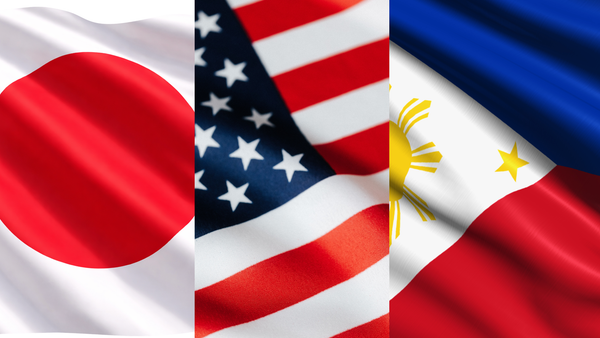
The United States, Japan, and the Philippines met in Manila for their second Trilateral Maritime Dialogue, a regular forum focused on security and cooperation at sea.
Officially, the three countries discussed maritime cooperation, joint exercises, foreign assistance coordination, and capacity-building programs to support a “free and open Indo-Pacific.”
This is about China.
While the joint statement never mentions Beijing directly, the dialogue reflects growing concerns about China’s expanding presence and increasingly assertive actions in the South China Sea.
For the Philippines, the priority is straightforward: strengthening its ability to defend its maritime claims and protect its fishermen, coast guard vessels, and supply routes in contested waters.
For Japan, maritime security is directly linked to trade, energy imports, and regional stability. Tokyo has become increasingly active in supporting Southeast Asian partners facing pressure in disputed waters.
For the United States, the dialogue is part of a broader strategy to strengthen alliances and partnerships across the Indo-Pacific without creating a formal NATO-style structure. Instead, Washington is building overlapping networks of security cooperation among like-minded countries.
The practical focus on joint exercises, coast guard cooperation, and foreign assistance coordination shows that this partnership is moving beyond political statements and toward operational cooperation.
The South China Sea carries an estimated one-third of global maritime trade. Any disruption would affect supply chains, energy markets, and international commerce far beyond Asia.
This trilateral format also reflects a broader shift in regional security. Rather than relying solely on bilateral alliances with Washington, countries such as Japan and the Philippines are increasingly working together directly, creating a more interconnected security architecture across the Indo-Pacific.
In short: the United States, Japan, and the Philippines are quietly building the habits, relationships, and capabilities needed to operate together in a region where maritime competition is becoming one of the defining geopolitical challenges of the 21st century.