Canada’s GlobalEye Decision Is About Defense — and Sovereignty

– 2 min read

Prime Minister Mark Carney announced that Canada has entered negotiations to procure Saab’s GlobalEye airborne early warning and control aircraft, built around the Canadian-made Bombardier Global 6500 platform.
The aircraft would give Canada long-range air, sea, and land surveillance capability, including the ability to track objects and signals up to 650 kilometers away. The Prime Minister’s Office says the procurement is projected to support 3,000 jobs in Canada’s aerospace and defense sector, with at least one-third of the projected GlobalEye fleet manufactured in Canada over the next 15 years. That could mean at least 40 aircraft, including allied orders, built by Canadian workers.
This is not just another procurement announcement.
It is part of Canada’s attempt to rethink defense industrial policy, Arctic security, NATO commitments, and dependence on foreign suppliers at the same time.
Canada says it has reached 2% of GDP in defense spending and is moving toward larger NATO spending targets. Carney’s government is also launching or implementing a Defense Investment Agency, a Defense Industrial Strategy, a new Strategic Partnership Framework, a Defense Concierge Service, and updated industrial benefits rules intended to push more defense work into Canadian supply chains.
The strategic signal is clear.
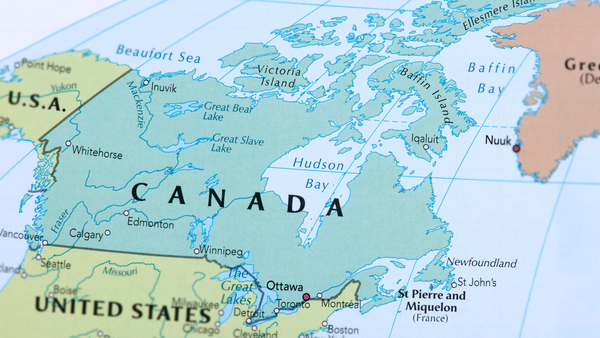
Canada is trying to defend the Arctic while building domestic industrial capacity. It is working with Sweden and Saab, using a Canadian Bombardier platform, and choosing a European-Canadian solution over American alternatives reported to include Boeing and L3Harris. Reuters reported that this fits Carney’s push to reduce reliance on U.S. defense firms.
That matters because Arctic defense is no longer theoretical. It is about missiles, drones, submarines, surveillance gaps, Russia, China, NORAD, NATO, and the credibility of Canadian sovereignty.
ONEST Take:
Canada’s defense problem has never only been about spending. It has been about speed, capacity, procurement, and whether Canada can actually build the systems it says it needs. The GlobalEye announcement is important because it links defense capability to industrial strategy. The question now is whether Canada can move from announcement to production fast enough for the security environment it is entering.
Like the ONEST Newsroom? Donate any amount to help keep this reporting going.