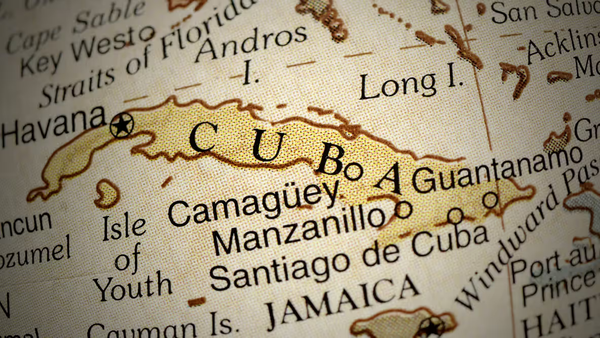
President Donald Trump has declared a national emergency with respect to Cuba, invoking sweeping executive powers that allow the United States to impose tariffs not only on Havana — but on any country that supplies it with oil, directly or indirectly.
The executive order, effective January 30, frames Cuba as an “unusual and extraordinary threat” to U.S. national security, accusing the Cuban government of hosting Russian intelligence facilities, deepening cooperation with China, and providing a permissive environment for groups such as Hamas and Hezbollah.
But the most consequential element lies beyond the rhetoric.
Under the order, the administration authorizes a new tariff regime targeting third-country trade, effectively exporting U.S. sanctions policy through economic punishment. The determination of who qualifies — and how severe the penalties are — is left largely to the Departments of Commerce and State, using deliberately broad definitions of “indirect” support.
This marks another step in the normalization of emergency governance.
The International Emergency Economic Powers Act was designed for exceptional moments. Increasingly, it is being used to bypass Congress, reframe trade as a security tool, and consolidate decision-making inside the executive branch.
Supporters argue the move confronts real threats posed by authoritarian coordination in the Western Hemisphere. Critics warn it risks:
- Retaliatory trade actions
- Legal challenges from allies
- Further erosion of predictable global commerce
Notably, the order is written to expand. It includes explicit provisions allowing escalation, retaliation, and modification without further legislative approval.
Whether this strengthens U.S. leverage — or accelerates fragmentation of the global trade system — will depend on how aggressively it is enforced, and how other countries respond.
What is clear: this is not a narrow Cuba policy.
It is a structural shift in how power, trade, and national emergencies are being used.
Become ONEST member to read and watch more Deep Dives.