The Daily | October 12, 2026

– 6 min read


Good evening and Happy Thanksgiving to our readers in Canada. Wishing you and your loved ones a peaceful holiday, good company and much to be thankful for. Thank you for making ONEST part of your day.
Tonight: Russia’s attacks test Washington’s announced energy ceasefire, Canada challenges the diesel agreement, Europe expands sanctions, and Britain formally attributes the Fairford plot to Iran. In Berlin, pandemic preparedness returns to a practical question: how quickly can countries detect a threat and act together?
Here’s what mattered today.
President Trump announced an energy ceasefire between Russia and Ukraine on Sunday. Ukraine says it supports reciprocal restraint and has issued the appropriate military orders. But on Monday, President Volodymyr Zelenskyy said Russian attacks on Ukrainian energy infrastructure were continuing.
Asked about a reporter’s assertion that neither Russia nor Ukraine had agreed to the ceasefire he announced, Trump replied: “Well they agreed, you know why? Because I said ‘you agree.’ That’s why.”
His response offered no details of mutual acceptance or enforcement. Ukraine has publicly supported reciprocal restraint; it says Russian attacks on its energy infrastructure continue.
According to Ukraine’s presidency, Russia attacked six energy facilities today, with 33 people wounded across the country. Zelenskyy described electricity and water disruptions in Kyiv and further damage to energy infrastructure in Kharkiv. His position remains clear: Ukraine is prepared to stop striking Russian energy infrastructure if Russia does the same.
Addressing the Warsaw Security Forum, Zelenskyy called for American and European pressure to make the ceasefire effective. He also challenged the logic of negotiating Russian diesel supplies without accounting for Ukraine’s ability to disrupt the refineries and export infrastructure supporting them.
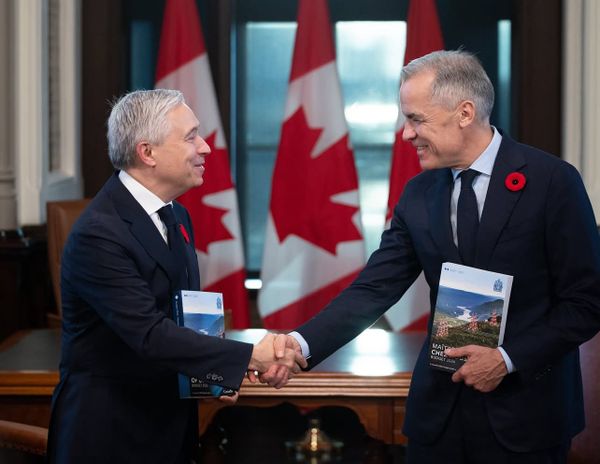
Canada has publicly challenged the diesel agreement. In his Sunday call with Zelenskyy, Prime Minister Mark Carney said it runs directly against efforts to secure peace in Europe by providing additional revenue for Russia’s war. Canada will maintain — and, where effective, tighten — its sanctions. The leaders also discussed further coordination on Ukraine’s air defense.
Germany is working to organize a Coalition of the Willing meeting. Zelenskyy and Chancellor Friedrich Merz also agreed on an E3-Ukraine meeting of national security advisers, with the two leaders expected to discuss support in greater detail this week.
Why it matters: The practical test is whether Russia stops striking and what Washington does if it does not.
Watch next: Published ceasefire terms (if any), Russian compliance, enforcement measures and coordinated European support for Ukraine’s winter defenses.
The EU adopted its largest-ever package of individual listings against Russia’s military-industrial complex: 826 companies and 743 executives, totaling 1,569 designations. The targets span missile production, electronics, communications, navigation equipment, machinery and shipbuilding.
Among the enterprises identified in Ukraine’s account are Salyut, involved in missile production; Elekon, which supplies components for missiles and combat aircraft; the Zlatoust Machine-Building Plant; and military microelectronics manufacturers Svetlana-Semiconductors and VZPP-Mikron. Named executives include the heads of submarine designer Rubin, nuclear-submarine builder Sevmash, Russian Space Systems and computer manufacturer Aquarius.
Separately, the EU sanctioned 77 people involved in illegal Russian parliamentary elections in occupied Ukrainian territory, including members of Russia’s Central Election Commission.
Ukraine also enacted its own sanctions over the weekend, targeting 70 people involved in ballistic-missile production, financial networks helping Russia evade restrictions, and businesses and collaborators operating in occupied territory. The financial measures include cryptocurrency services and people associated with the A7 shadow-banking network.
Why it matters: Europe is expanding pressure on Russia’s weapons production while Washington opens a channel for Russian diesel revenue. For companies, the immediate issue is exposure through suppliers, counterparties and executives across a much wider sanctions list.
Watch next: Coordination across sanctions regimes, restrictions on critical components and enforcement against financial intermediaries.
Britain’s assessment has moved beyond the initial investigation of a possible Iranian connection. Prime Minister Andy Burnham said Iran’s Islamic Revolutionary Guard Corps was almost certainly behind the suspected plot against RAF Fairford, which American bombers have used during the Iran war. Iran has rejected the allegations.
The UK summoned Iran’s ambassador and sanctioned two Iranian nationals: Ruhollah Bazghandi, identified by Britain as the IRGC’s head of counterespionage operations, and Shahram Ali Reza Tamarzadeh Jakki, identified as a facilitator of the Zindashti criminal network. The measures include asset freezes, travel bans and director disqualifications.
A joint statement from 29 governments, including the United States, Canada and major European partners, recognized Britain’s attribution of Iranian involvement in the September 27 incident. It condemned overseas attacks, lethal plotting, sabotage, arson and cyber operations, and pledged closer coordination to investigate and disrupt them.
Why it matters: This is now a coordinated diplomatic and sanctions response to Britain’s attribution. The criminal investigation remains a separate process, with individual responsibility still to be established through evidence and prosecution.
Watch next: Further charges, additional designations and measures to protect military sites and communities targeted by overseas networks.
The UN General Assembly adopted a political declaration on pandemic prevention, preparedness and response today, following the September 25 high-level meeting.
The declaration calls for sustained financing, stronger surveillance, expanded local and regional manufacturing, and equitable access to health tools. A major unfinished task remains the Pathogen Access and Benefit Sharing annex to the WHO Pandemic Agreement: the framework connecting access to pathogens with the sharing of resulting benefits, including medical countermeasures. Negotiations must conclude before the agreement can move through signature and ratification toward entry into force.
At the World Health Summit in Berlin, WHO also launched a five-year strategy for its Pandemic and Epidemic Intelligence Hub. Its ambition is for every country to detect and understand emerging health threats within 24 hours by 2030.
The strategy combines surveillance, genomic analysis, expert networks and secure data sharing, including responsible use of artificial intelligence. WHO says achieving the goal will require sustained investment and trusted international partnerships.
Why it matters: Early detection can buy time to contain an outbreak. Its value depends on whether countries can share information, mobilize a response and obtain the tools they need.
Watch next: Financing commitments, progress on benefit-sharing negotiations and measurable improvements in national detection capacity.
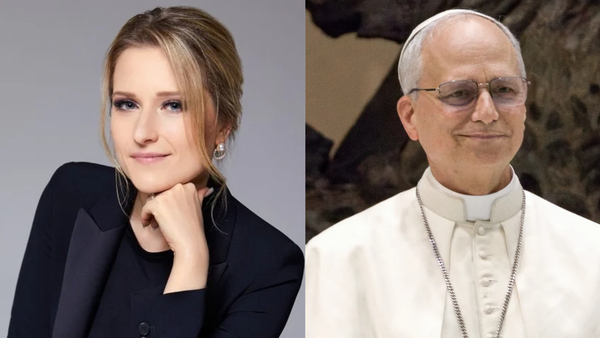
My interview with the CEO of the World Health Summit. A chance to hear directly from someone bringing global health leaders together and make the work behind the headlines easier to understand.
Thank you for reading, and to everyone celebrating in Canada, enjoy the rest of your Thanksgiving evening.
— Olga