Nvidia Chips Found in Russian Weapons, Musk’s Claims Fact-Checked, and Ukraine Strikes Far Beyond Its Borders
Your daily briefing on the developments shaping global affairs.

– 6 min read

Your daily briefing on the developments shaping global affairs.
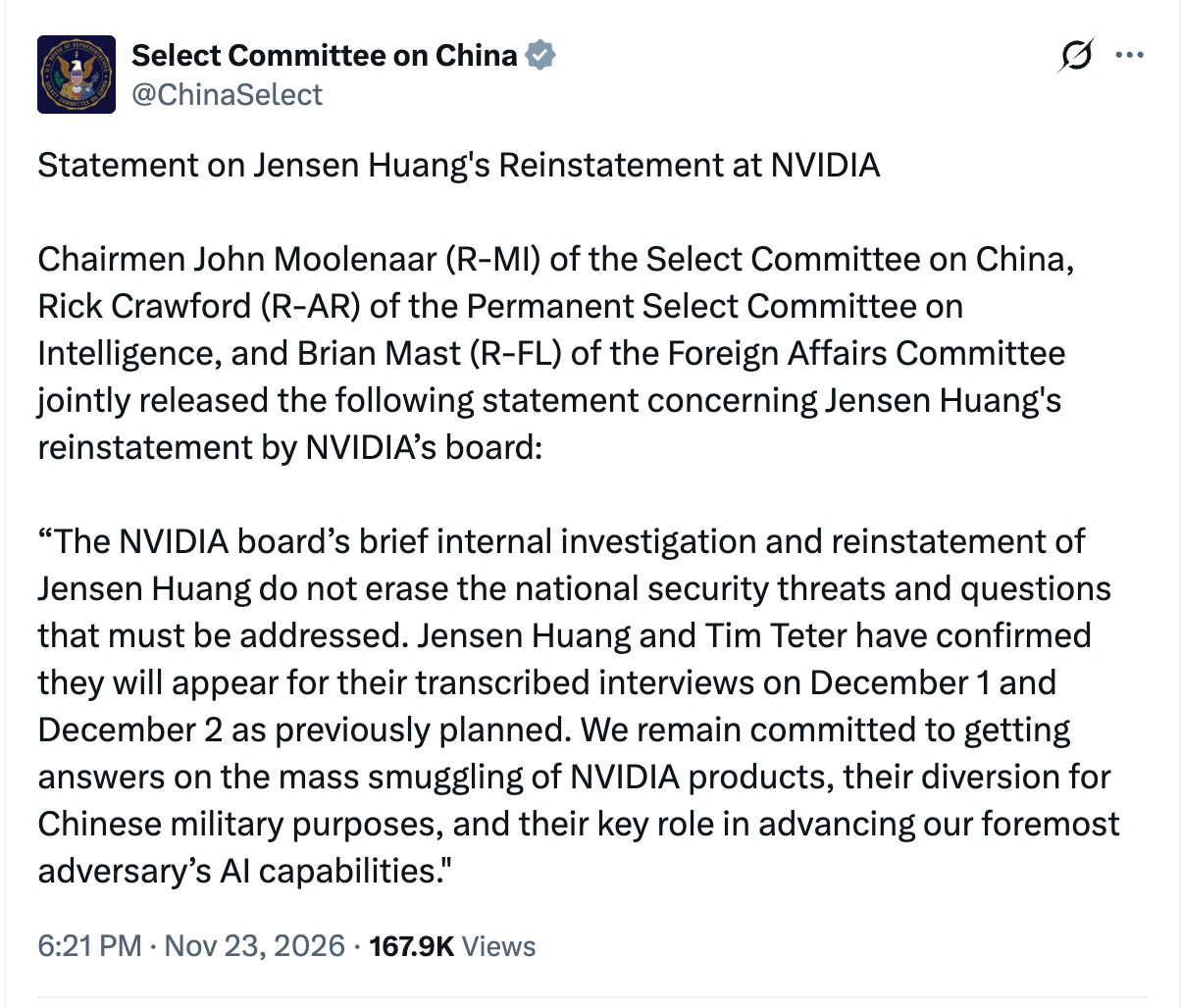
Nvidia's leadership crisis took another turn Monday as Jensen Huang was reinstated as chief executive, following reports of intervention by President Donald Trump.
The New York Times reported that Trump had directed a behind-the-scenes effort to pressure Nvidia's board to reinstate Huang, who resigned earlier this month following revelations about extramarital relationships.
The announcements came in rapid succession Monday morning. By 9:25 a.m. ET, Nvidia's board had announced Huang's reinstatement. Wall Street rallied on the news, with the S&P 500 reportedly rising nearly 5% in early trading.
Trump subsequently defended Huang during an interview with CNBC, describing his conduct as an indiscretion and suggesting his return could ultimately benefit the company.
But the controversy extends beyond Huang's personal conduct.
Questions remain about Nvidia's chip sales to China, American national security interests and the extent of presidential involvement in the management of a publicly traded technology company.
Trump acknowledged sales of approximately 200,000 chips to China but characterized them as "older technology". His comments raise questions about how the administration distinguishes commercial interests from the national security concerns it has repeatedly invoked to justify restrictions on advanced technology exports.
The international reaction was notable. Israeli Prime Minister Benjamin Netanyahu welcomed continuity in Nvidia's leadership, emphasizing the company's partnership with Israel's technology sector. Russia's Kirill Dmitriev also publicly defended Huang and welcomed his reinstatement.
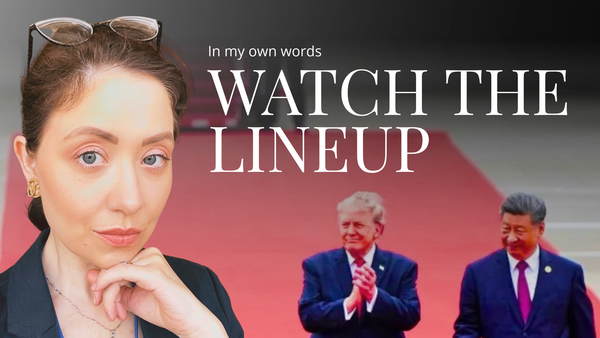
In My Own Words: Today's lead report examines the timeline of Huang's reinstatement, Trump's intervention, the China connection and the international reaction.
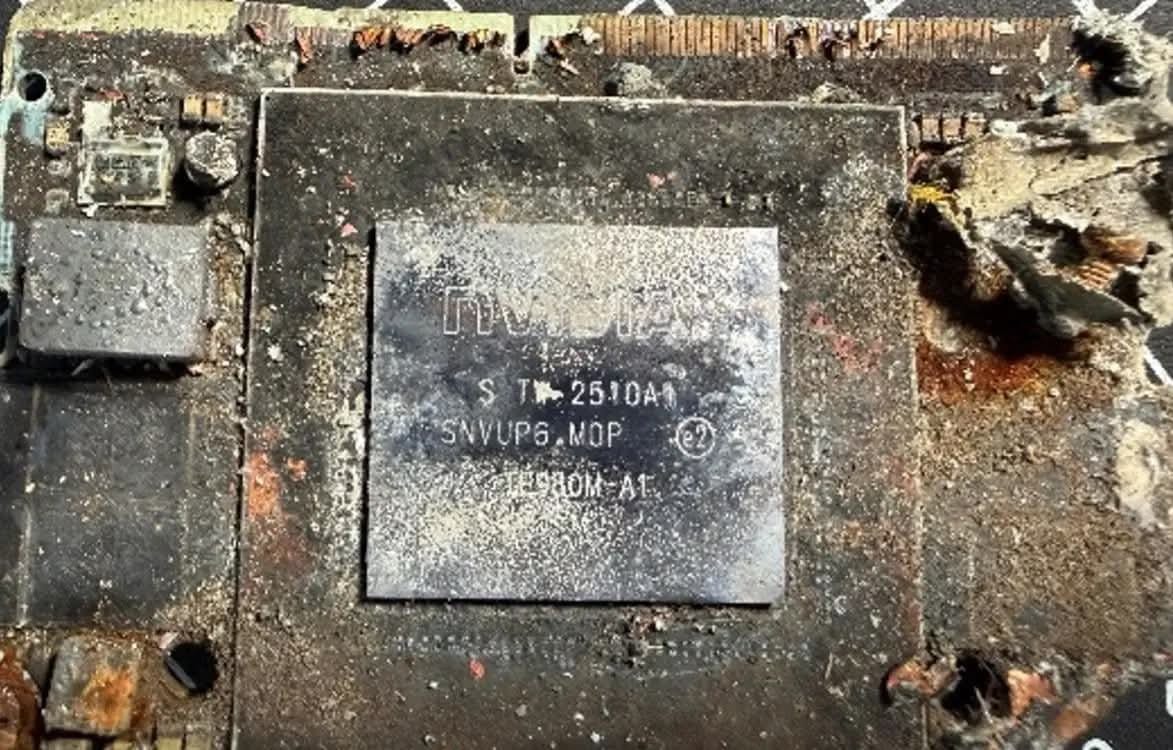
American technology is turning up in places where export restrictions are supposed to limit its reach.
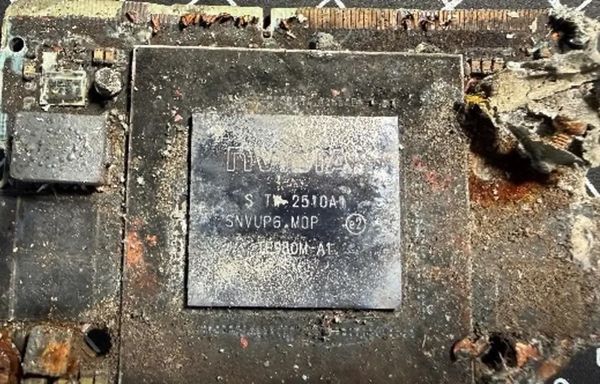
Ukrainian investigators have identified Nvidia hardware inside Russian attack drones and a cruise missile. Separately, Reuters documented purchases of restricted Nvidia chips by Chinese institutions linked to the military.
The evidence:
These discoveries do not establish that Nvidia knowingly supplied restricted military programs. They do, however, raise serious questions about how American technology reaches foreign military systems despite export controls.
 Olga Nesterova
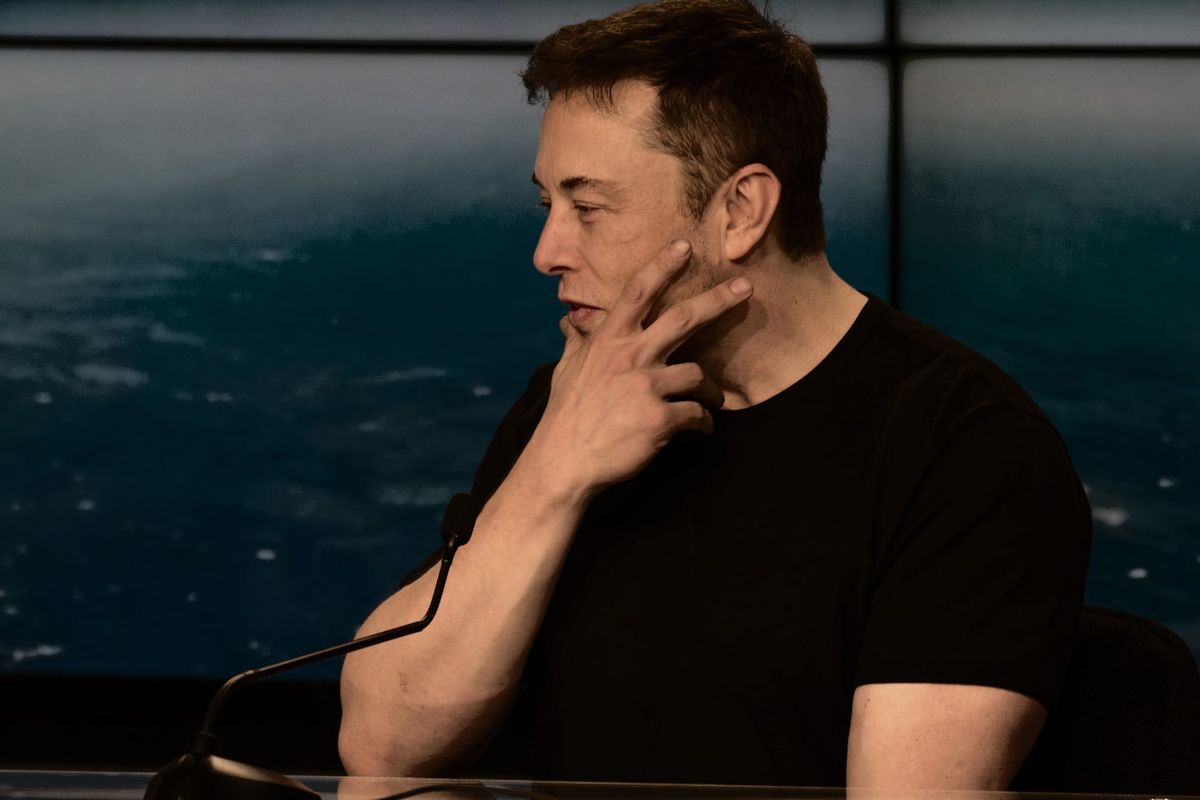
In a separate interview with Andrew Ross Sorkin, Elon Musk made several claims concerning Ukraine, its president and American involvement in Ukrainian politics.
Among them were assertions about the 2014 Euromaidan events, Ukraine's use of Starlink and Starshield, and President Volodymyr Zelenskyy's public statements about satellite communications restrictions.
The distinction between Starlink's commercial services, Starshield's government-controlled capabilities and Ukraine's actual access to those systems is central to evaluating Musk's claims.
ONEST examined the statements against the available documentary record, independent reporting and the public positions of the parties involved.
Read the full ONEST fact-check.
President Zelenskyy confirmed Monday that Ukraine was responsible for an attack on a Russian warship off the Libyan coast.
According to the Ukrainian account, seven domestically manufactured naval drones participated in an operation that sank a Russian corvette commissioned in 2023.
The attack marks a significant geographical expansion of Ukraine's maritime campaign against Russian military assets.
In an address to the NATO Parliamentary Assembly, Zelenskyy emphasized Ukraine's growing ability to strike Russian targets far beyond the immediate battlefield, including energy infrastructure in Western Siberia and naval assets off Libya.
Addressing the NATO Parliamentary Assembly, Zelenskyy argued that Ukraine's eventual membership would strengthen the alliance itself.
He questioned whether proposed security guarantees modeled on NATO's Article 5 could provide the same level of protection as full membership, pointing to unresolved questions about military commitments, troop deployments and financing.
Zelenskyy also called for negotiations involving Ukraine, Europe, the United States and Russia, saying Ukraine was ready to participate immediately and that partners hoped to convene talks before Christmas.
With winter approaching, he urged NATO members to provide additional Patriot, NASAMS and SAMP/T air defense systems and missiles.
Ukraine announced new sanctions targeting 27 individuals and 11 legal entities accused of supporting Russia's occupation of Ukrainian territory.
The measures include occupation officials in Crimea, Russian regional authorities accused of supplying drones and communications equipment, and Russian regulatory bodies operating in occupied Ukrainian regions.
The sanctions also target structures involved in administering the occupied Zaporizhzhia Nuclear Power Plant, as well as organizations accused of propaganda activities and providing material support to Russian forces.
Kyiv separately extended restrictions against entities accused of appropriating Ukrainian agricultural products and disseminating Russian propaganda.
Q: Is Jensen Huang's reinstatement a national security risk?
— Acyn (@Acyn) November 23, 2026
RUBIO: *leaves* pic.twitter.com/MnPiOwFakE
Secretary of State Marco Rubio and Qatari Prime Minister Sheikh Mohammed bin Abdulrahman Al Thani convened the eighth U.S.-Qatar Strategic Dialogue in Washington.
The two governments reaffirmed cooperation on regional security, defense, energy, critical minerals and emerging technologies.
Among the principal developments:
The dialogue also addressed Gaza, Iran, Syria, Lebanon, Afghanistan and several African countries. Additional discussions on defense, counterterrorism and other areas are expected in early 2027.
The U.S. "Department of War" announced the adoption of the Automated Classification Management Environment, or ACME, as an enterprise-wide solution for managing classified information.
Originally developed by the Air Force, the system uses automated workflows and what the department describes as super-intelligence-assisted tools to modernize classification and declassification. Officials say the system is intended to reduce the administrative burden of manually consulting more than 4,000 security classification guides. The department estimates that records management currently costs taxpayers more than $15 billion annually.
The announcement raises a broader question about how automated systems will be evaluated, audited and held accountable when handling sensitive national security information.
Iowa: President Trump ordered the Army to pause a planned controlled detonation of unstable explosives at an Iowa facility pending the outcome of a legal challenge. The New York Times subsequently reported that a federal court approved the operation.
U.S. military: B-2 bomber wings involved in Operation Midnight Hammer, the June 2025 strikes against Iranian nuclear facilities, received the Presidential Unit Citation, the military's highest unit-level award.
U.S. defense oversight: A Government Accountability Office assessment found that the Pentagon needs stronger coordination, clearer performance metrics and improved tracking to address munitions shortages.
Starshield: A Democratic senator is reportedly preparing a congressional investigation into restrictions affecting Ukraine's access to SpaceX's Starshield services.
Poland and Ukraine: Poland accused Russia of an intentional provocation after missiles reportedly struck Polish territory during a large-scale Russian attack on Ukraine. Ukrainian officials reported at least eight deaths from the broader assault.
Iran and the Gulf: Iran said it would use available means to confront the U.S. naval blockade. Bahrain reported attacks affecting industrial infrastructure, while U.S. Central Command denied an Iranian claim that its forces had struck an American F-16.
COP31: Climate negotiations in Türkiye collapsed without an agreement on reducing fossil fuel use or financing climate action.
Israel: Coalition negotiations between caretaker Prime Minister Benjamin Netanyahu's Likud party and Gadi Eisenkot's Yashar party ended without an agreement.
Red Sea: A proposed multinational coastguard task force involving Gulf and East African countries received backing from the UN maritime agency as regional governments seek to address piracy, smuggling and maritime insecurity.
Independent journalism. Publicly accessible. Supported by you.
ONEST is an independent news platform committed to making credible reporting, fact-checking and global affairs coverage accessible to everyone.
We believe access to reliable information should not depend on the ability to pay.
If you value our work and want to help us continue reporting independently, please consider making a contribution.
Your support keeps ONEST independent and accessible.