Elon Musk Wants to Rewrite History. Here's What the Facts Say.

– 4 min read


At The New York Times DealBook Summit on November 18, Elon Musk defended his role in Russia's war against Ukraine, accused President Volodymyr Zelenskyy of lying, claimed the United States orchestrated Ukraine's 2014 political upheaval, and distanced himself from the MAGA movement he had financially supported.
The interview with Andrew Ross Sorkin also covered Musk's political spending, the future of SpaceX and Tesla, artificial intelligence, satellite communications, and his ambitions for space exploration. Those subjects fall outside the scope of this fact-check, which focuses on Musk's statements about Ukraine, Russia, and the war.
Russia launched its full-scale invasion on February 24, 2022. Ukrainian Digital Transformation Minister Mykhailo Fedorov publicly requested Starlink assistance on February 26. Musk announced activation that day, and Ukraine confirmed receipt of its first shipment on February 28.
SpaceX had reportedly been discussing Ukrainian service before the invasion, but that is not the same as establishing that terminals were already deployed.
The historical record supports advance planning and rapid deployment, not Musk's specific account of prepositioned equipment.
Russia severely disrupted Ukrainian telecommunications, but did not eliminate every mobile network, fiber-optic connection or alternative satellite system. Contemporary internet-monitoring reports documented substantial disruptions, not the complete nationwide communications shutdown Musk described.
Starlink provided crucial resilience. It was not literally Ukraine's only surviving communications system.
Starlink has supported Ukrainian battlefield communications and drone operations, including strikes against Russian military targets in occupied Ukrainian territory.
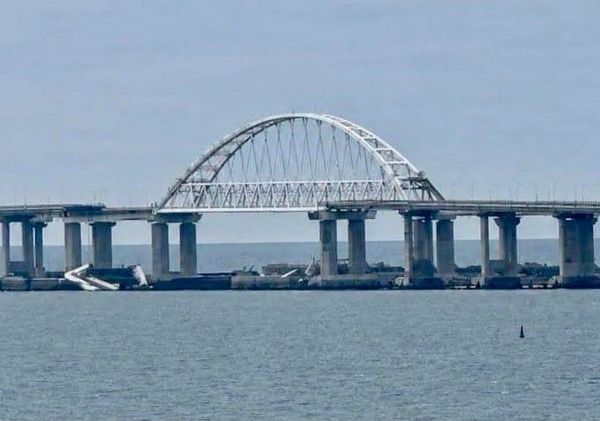
In 2022, Musk refused to activate Starlink coverage near Russian-occupied Crimea for a Ukrainian naval drone attack on Russia's Black Sea Fleet. More recently, in October 2026, restrictions on the military-grade Starshield service disrupted Ukrainian strike missions and interceptor drones defending against Russian attacks. The Wall Street Journal reported that Musk personally ordered the slowdown, while Reuters reported that the directive originated inside the White House.
These incidents demonstrate that restrictions on SpaceX's satellite services can directly affect Ukrainian military operations. They do not establish Musk's broader claim that Ukraine's entire front would immediately collapse without Starlink.
Starlink is SpaceX's commercial satellite communications service. Starshield is designed for government and national-security applications.
However, Musk's distinction does not resolve the October 2026 controversy. Reuters confirmed that Ukraine uses both systems and reported that speed restrictions affected Starshield-equipped attack drones and interceptor drones, including systems used to defend against Russian aerial attacks.
The issue was not exclusively Ukraine's desire to conduct offensive strikes.
An October 20 Wall Street Journal investigation reported that Musk personally ordered speed restrictions on Ukraine's military-grade satellite service. CBS News independently reported, citing people familiar with the decision, that Musk initiated the restrictions after discussions with administration officials. Reuters reported competing accounts: some officials attributed the decision to the White House, while other reporting identified Musk as the decision-maker.
Musk's presentation of the restrictions as solely a government matter omits significant evidence of his own involvement.
Musk rejected Zelenskyy's statement that Ukraine was using Starshield, the U.S. military-oriented satellite service, and accused him of lying. He claimed Ukraine was actually seeking to use commercial Starlink for offensive operations.
Reuters confirmed that Ukrainian forces use both systems, with Starshield supporting military drone operations. Axios further reported that Ukraine accesses Starshield through a U.S. government agreement.
When repeatedly asked whether Ukraine had access to Starshield, Musk avoided a direct answer, emphasizing instead that the system was controlled by Washington.
The distinction is straightforward: U.S. government control of Starshield does not, by itself, establish whether Ukraine has access to the service or under what conditions.
The Euromaidan protests began after President Viktor Yanukovych abandoned preparations for closer integration with the European Union. Following months of protests and deadly confrontations, Yanukovych fled Kyiv in February 2014. Ukraine's parliament voted to remove him and scheduled elections.
The United States supported Ukraine's European integration and engaged with opposition figures. But diplomatic involvement does not establish that Washington organized or executed the uprising.
His description closely resembles the Russian government's longstanding explanation of the 2014 events.
The war has caused enormous casualties among Russian and Ukrainian forces, and the human cost deserves serious scrutiny, but the front lines have not remained unchanged. Russia and Ukraine have both gained and lost territory throughout the conflict. Nor does acknowledging Russian casualties erase the distinction between the country that launched the invasion and the country defending its territory.
Musk himself acknowledged that Russia was the aggressor, while simultaneously advancing an unsupported claim about American responsibility for Ukraine's 2014 revolution.
He says he's not MAGA. For context, watch this.
Elon Musk (2026): “I’m not MAGA…”
— Marco Foster (@MarcoFoster_) November 19, 2026
Elon Musk (2024): “I’m not just MAGA… I’m Dark Gothic MAGA!” pic.twitter.com/7mj640Om31