Cryptocurrencies promised money without governments. Stablecoins put private issuers back at the center. Banks are creating tokenized deposits, while central banks are developing digital versions of sovereign currencies. As these systems begin to connect, the real contest is no longer simply over how we pay. It is over who will control the infrastructure of money and who will bear the risk when it fails.
Most of the money we use is already digital.
Your salary may arrive electronically. Your bank balance appears as numbers on a screen. You can pay a bill, transfer money or buy something without touching a banknote.
So why is everyone talking about “digital money” as though it were new?
Because the transformation now under way is not just about replacing paper with pixels. It is about changing what money is, who issues it, where it can move and what can be built into it.
Bitcoin introduced the possibility of transferring value without a bank or government operating the system. Stablecoins promised the speed and reach of crypto without the same price volatility. Commercial banks are experimenting with tokenized deposits. Central banks are exploring digital currencies of their own. And financial institutions are testing platforms on which money and assets could move together, with transactions executed automatically.
For years, these projects appeared to belong to separate worlds. Increasingly, they do not.
The systems are beginning to overlap. Stablecoins can connect crypto markets to the conventional financial system. Banks can place deposits on programmable ledgers. Central bank money could provide the settlement layer beneath tokenized commercial activity. Cross-border projects are testing whether different institutions and national systems can transact through shared or interoperable infrastructure.
That raises a question far larger than whether tomorrow’s payment will arrive faster:
When money becomes programmable, interconnected and dependent on digital infrastructure, who controls it and what happens when that infrastructure fails, is attacked or belongs to someone else?
First, what are we actually comparing?
The easiest way to understand the emerging system is to ask a deceptively simple question: Whose promise are you holding?
Cryptocurrency
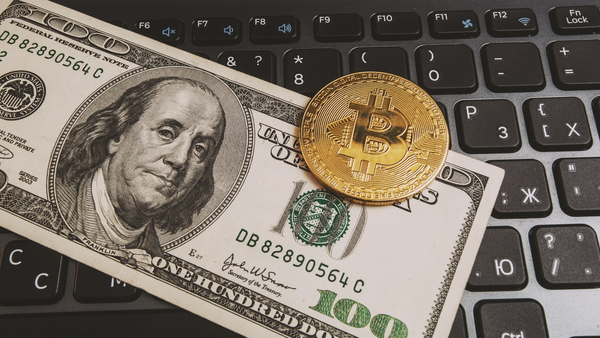
A cryptocurrency such as bitcoin is a digitally native asset recorded on a distributed network. It is not issued by a central bank, and it does not represent a promise by a commercial bank to return government currency on demand.
Its appeal is precisely that no single state or bank is supposed to control it. The network operates according to software, cryptography and a consensus mechanism distributed among participants.
But “decentralized” does not mean free of power. Influence can accumulate among large holders, mining pools or validators, exchanges, custodians, software developers, wallet providers and the companies supplying the physical and cloud infrastructure on which the ecosystem depends.
The protocol may not have a chief executive. Access to it often does.
Stablecoins
A stablecoin is a digital token designed to maintain a stable value, usually against a national currency such as the U.S. dollar. Unlike bitcoin, it normally has an identifiable issuer, or a mechanism, responsible for keeping that value stable.
The most prominent stablecoins promise that one token will remain worth approximately one dollar. To support that promise, an issuer may hold bank deposits, Treasury bills or other reserve assets. The quality and liquidity of those reserves matter because stablecoin issuers generally do not have deposit insurance or routine access to central bank liquidity.
This makes a stablecoin neither a dollar nor an ordinary bank deposit. It is a private claim whose usefulness depends on confidence in the issuer, the reserves, the redemption mechanism and the technology carrying the token.
Stablecoins are also overwhelmingly a dollar story. The Bank for International Settlements estimated in 2026 that roughly 98 percent of stablecoin value was denominated in dollars. That means their expansion could reinforce the dollar’s international reach, even when the tokens move outside traditional U.S. banking channels.
Tokenized commercial bank deposits
A tokenized deposit is still a claim on a commercial bank. The difference is that the deposit is represented on a programmable platform, potentially allowing money and assets to be transferred or settled together.
If a conventional deposit is a bank’s promise recorded in its account system, a tokenized deposit is that promise represented in a new technical form.
This distinction matters. A bank deposit belongs to the established two-tier monetary system: central banks issue public money and commercial banks create deposit money under regulation, supervision and access to central bank settlement. Tokenization could add new capabilities without abandoning that institutional structure.
Tokenized deposits are not yet used for ordinary daily payments, but banks and central banks are actively exploring how they could operate.
Central bank digital currencies
A central bank digital currency, or CBDC, is a digital liability of a central bank.
Wholesale CBDCs or tokenized central bank reserves are intended principally for transactions among banks and financial institutions. A retail CBDC would be available for use by the public, depending on its design.
The crucial difference is the issuer. A CBDC is not a claim on a technology company, a stablecoin firm or a commercial bank. It is sovereign money in digital form.
That can make it the safest form of digital claim in credit terms, but it does not eliminate operational, political or social risk. Its design determines what data are collected, who can access them, whether transactions can occur offline, what role private intermediaries play and how much power the system gives the state.
Central bank interest is widespread but should not be confused with imminent universal adoption. In a BIS survey covering 93 central banks, 91 percent said they were exploring a retail CBDC, a wholesale CBDC or both. Exploration can mean research, experiments or pilots, not necessarily a decision to issue one.
This is a contest over control
Each model distributes power differently.
With cryptocurrency, governance is embedded in code and dispersed across a network, but practical control may still collect around exchanges, validators, developers and infrastructure providers.
With stablecoins, a private issuer manages the token and its reserves, while regulators determine which companies may operate and under what conditions.
With tokenized deposits, commercial banks remain the issuers, central bank money remains the settlement anchor, and access usually takes place inside regulated financial networks.
With CBDCs, the central bank issues the money, but the surrounding architecture could still involve commercial banks and payment providers. A CBDC does not automatically mean that a central bank would offer every user an account or observe every purchase. Nor does the word “digital” guarantee privacy. Those outcomes depend on choices made in law and system design.
This is why arguments that reduce the future to “decentralized freedom versus government control” miss much of the story.
A stablecoin system may be privately operated but highly concentrated. A cryptocurrency may be decentralized at the protocol level while most users depend on a few centralized gateways. A CBDC may be state-issued but distributed through private intermediaries. A bank-led platform may preserve the existing monetary hierarchy while relying on technology developed by a small group of vendors.
The more useful questions are:
- Who issues the money?
- Who maintains the ledger?
- Who holds the reserves?
- Who can approve, reverse, freeze or block a transaction?
- Who sets the technical standards?
- Who sees the data?
- Who can enter the system and who can be excluded?
- Who is responsible when something goes wrong?
Why connect the systems at all?
Because today’s financial plumbing is slow, fragmented and expensive, especially across borders.
An international payment can pass through several correspondent banks, each maintaining its own records, compliance checks, operating hours and fees. The payment message and the actual movement of funds may travel through different processes. Reconciliation takes time. A transaction can fail after costs have already accumulated.
Tokenization offers a different possibility: money and assets represented on programmable platforms, with transfers coordinated so that one side of a transaction occurs only if the other does. A payment, an asset transfer and required compliance steps could potentially be linked.
The BIS has proposed architectures combining tokenized commercial bank deposits with tokenized central bank reserves. Its Project Agorá brings together eight central banks, the BIS and more than 40 private sector institutions to examine tokenized cross-border wholesale payments.
Stablecoins may also become components in hybrid systems rather than entirely separate global payment rails. In July 2026, the Financial Stability Board observed that stablecoin volumes remained small relative to total cross-border flows and suggested their nearer-term value might lie in integration with bank money and interoperable foreign exchange and settlement systems. It also stressed that this outcome remains a possibility, not a certainty.
This emerging architecture could make transactions faster and more efficient.
It could also ensure that a failure no longer stays neatly inside one system.
The architecture of vulnerability
Hacking becomes systemic
Digital finance already faces theft, fraud, compromised credentials, software vulnerabilities and attacks on exchanges, wallets and bridges between blockchain networks.
But the risk changes when digital money becomes part of critical national infrastructure.
An attacker would not need to “hack the currency” in some cinematic sense. They could target an intermediary, a wallet provider, an authentication system, a software update, a cloud service, a messaging layer or the bridge connecting two ledgers. A weakness at the edge can still interrupt access to the center.
The IMF describes CBDC as having a high risk profile because a major operational or security incident could have financial stability consequences at scale. It emphasizes that resilience depends on the entire ecosystem, not only the central bank’s core ledger.
Interconnection can increase efficiency, but it can also create new paths for contagion. If banks, stablecoins, asset markets and central bank settlement become linked through shared platforms, the compromise or prolonged outage of one critical component could affect many institutions at once.
Dependence on one or very few systems
The future of money may appear diverse at the surface while becoming concentrated underneath.
Several currencies and tokens could rely on the same cloud provider. Multiple banks could buy software from the same vendor. Wallets could depend on one dominant operating system. Cross-border payments could converge around a small number of technical standards, identity systems, bridges or settlement platforms.
This creates a single point of failure and a potential point of leverage.
If a country depends on foreign-developed payment infrastructure, its financial system may be exposed to decisions made outside its borders. Access could be restricted by sanctions, commercial disputes, licensing changes, export controls or geopolitical conflict. Even when no one deliberately shuts the system down, a disruption at one dominant provider could affect many countries simultaneously.
Financial sovereignty, therefore, will not be measured only by whose currency people use. It will also depend on who owns the rails, writes the code, controls the data and supplies the hardware beneath it.
A digital run can move at digital speed
Confidence has always been central to money. Digital networks do not remove that fact, they accelerate it.
If holders doubt a stablecoin issuer’s reserves, they may try to redeem at once. If money can move continuously and nearly instantly, a loss of confidence could become a run before institutions or regulators have time to respond.
Reserve composition is therefore not a technical footnote. It determines whether an issuer can meet redemptions under stress without rapidly selling assets, transmitting pressure into other markets or breaking the promise that one token equals one dollar.
The same speed could affect banks. If converting a bank deposit into a stablecoin, tokenized fund or CBDC becomes frictionless, deposit flight during a panic might accelerate.
Policymakers are examining limits, design features and liquidity arrangements partly because the safest exit in a crisis should not become a mechanism that destabilizes the rest of the system.
Surveillance, privacy and control
Cash allows a private, offline transaction. Digital money generally leaves data somewhere.
Who can see those data depends on design. A ledger might record transactions under pseudonymous addresses while exchanges identify users at entry and exit. A commercial provider may collect information. Banks already conduct identity and compliance checks. A CBDC could be designed with privacy protections and intermediaries or with far more centralized visibility.
The risk is not limited to embarrassing data exposure. Payment histories can reveal political activity, religious affiliation, medical treatment, relationships, travel and daily routines.
The IMF warns that CBDC data can be exposed through leakage, abuse, cyberattack and cross-border data sharing.
Programmability creates another concern: could money be restricted by time, location, merchant or category of purchase?
It is important not to confuse what technology can permit with what every system will do. Programmable payments can be useful. For example, releasing funds automatically when contractual conditions are met. But without legal limits and democratic oversight, the same capability could become a tool of surveillance, discrimination or coercion.
What happens when the network disappears?
A sophisticated payment system is of little comfort during a prolonged power outage, communications failure, natural disaster or war.
Offline payment capability is therefore not an optional convenience. It is part of national resilience.
So is inclusion. A system that assumes everyone possesses a modern smartphone, reliable internet access, government identification and technical confidence could exclude elderly people, low-income users, migrants, residents of remote areas and people with disabilities.
If cash is allowed to disappear before a resilient alternative exists, society may gain speed while losing a vital fallback.
The geopolitical contest beneath the technology
Money is never only a payment instrument. It is also an expression of state power.
The dollar’s central role gives the United States influence over global finance and supports demand for dollar-denominated assets. Stablecoins could extend that reach by making digital dollars easier to hold and transfer globally. They could also move dollar activity onto privately operated networks that are harder for authorities to supervise consistently.
For countries with inflation, capital controls or weak financial institutions, access to dollar stablecoins may be attractive. But widespread use can weaken domestic monetary sovereignty by encouraging people and businesses to save and transact in a foreign currency. The BIS has warned that foreign currency stablecoins may increase dollarization risks in economies with weaker macro-financial foundations.
Central banks are responding for different reasons. Some want to preserve public access to sovereign money as cash use declines. Some want faster domestic payments or greater financial inclusion. Others see digital currency and payment infrastructure as a question of strategic autonomy.
Europe’s digital-euro project illustrates the point. The European Central Bank says it aims to be ready for a possible first issuance in 2029, assuming the necessary EU legislation is adopted in 2026. A pilot is being prepared, but issuance has not yet been decided.
The geopolitical competition will not necessarily produce one victorious currency or one global network. It may produce blocs: interoperable in some circumstances, deliberately separated in others.
Standards could become instruments of influence. Countries that shape the dominant rules for identity, compliance, cybersecurity, programmability and cross-border settlement may acquire power even if they do not issue the currency used in every transaction.
So who will control the money of the future?
Probably no single actor.
The most plausible future is a hybrid system in which central banks, commercial banks, regulated stablecoin issuers, technology companies and decentralized networks coexist.
People may use different forms of money without noticing which one is moving underneath. A payment could begin in a bank account, travel through a tokenized network, use a stablecoin for one part of a cross-border transaction and settle ultimately in central bank money.
In that world, the greatest power may belong not to the institution whose logo appears in the wallet, but to whoever controls the points of connection.
Those gatekeepers could decide which tokens are accepted, which identities are recognized, which transactions satisfy compliance rules, which ledgers can communicate and which participants are permitted to enter.
The central political question is therefore not whether governments, banks or crypto will “win.” It is whether the new system will distribute power and risk transparently or hide both inside infrastructure that the public cannot see and a handful of institutions can control.
ONEST Take
The future of money will be sold to us through convenience.
Payments will be faster. International transfers may become cheaper. Transactions that now require several intermediaries could happen automatically. New forms of finance may become available to people whom the existing system has failed.
Those benefits are real.
But convenience is not the same as resilience, and innovation is not the same as decentralization.
A monetary system can have thousands of tokens and still depend on three cloud providers. It can call itself decentralized while users enter through a few exchanges. It can be backed by a central bank but built on proprietary foreign technology. It can promise inclusion while making a smartphone, digital identity and continuous connectivity the price of participation.
The measure of a successful digital monetary system should not be how quickly it moves on an ordinary Tuesday. It should be whether people can trust and access their money during a bank run, a cyberattack, a blackout, a war or a political crisis.
Before societies surrender cash, privacy or national control in exchange for speed, the public deserves clear answers:
Who built the system? Who can change its rules? Who can see or stop a payment? What happens when it fails? And is there another way to pay when it does?
The money of the future will not be controlled only by whoever issues it.
It will be controlled by whoever owns the infrastructure on which everyone else depends.
Missed last week's article? Read it here: What If the U.S. Dollar Lost Its Place at the Center of the Global Financial System?
This series is made possible by readers who support ONEST.
Please consider contributing to the ONEST Newsroom Fund. Your support helps keep this series independent and allows us to keep these articles available to everyone, rather than putting them behind the paywall.