ONEST Brief | August 31, 2026

– 10 min read

The United States and Iran have exchanged direct fire for the first time in about a month, raising the risk that a conflict which had recently shifted toward economic pressure could again escalate militarily.
U.S. Central Command said American forces took “limited, precise action” against IRGC forces on Iran’s Larak Island that it said were preparing to deploy sea mines in the Strait of Hormuz.
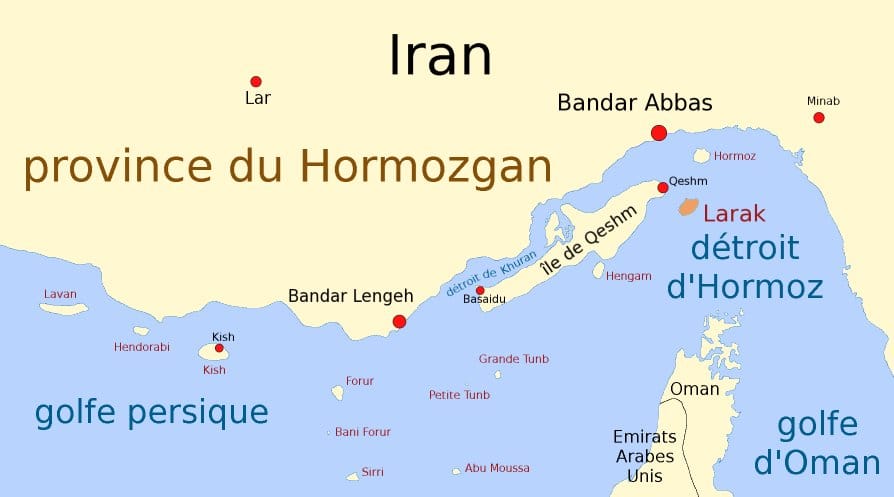
Iran responded by launching ballistic missiles toward U.S. military positions in Jordan. Jordan said it intercepted eight missiles.
Iran also claimed to have attacked U.S. personnel and helicopters at Al Minhad Air Base in the United Arab Emirates.
The UAE denied that the base had been successfully targeted but confirmed that its air force intercepted an Iranian drone over Emirati territorial waters. The UAE says its armed forces remain on high alert for further threats.
The exchange ended roughly a month without significant direct U.S.-Iran military action.
President Trump then added another element of uncertainty by posting an AI-generated video appearing to show Iran’s Kharg Island, its known key oil-export hub, being destroyed.
Iran says Kharg was not attacked and that operations there continue normally.
That distinction is important. An actual strike on Kharg would represent a significant escalation against Iran’s energy infrastructure.
Meanwhile, Washington continues its economic campaign against Tehran.
Treasury Secretary Scott Bessent is at the G20 finance meeting in Asheville, North Carolina, today and tomorrow, where Iran and sanctions enforcement are expected to feature.
Bessent said the Trump administration also plans to sanction another bank this week as part of its effort to further isolate Iran financially.
That follows U.S. action against the UAE operations of Banque Misr over transactions allegedly linked to Iran. The central banks of Egypt and the UAE say they are coordinating over the issue.
So we currently have two tracks running simultaneously:
military pressure in and around the Strait of Hormuz, and financial pressure aimed at Iran’s ability to move money internationally.
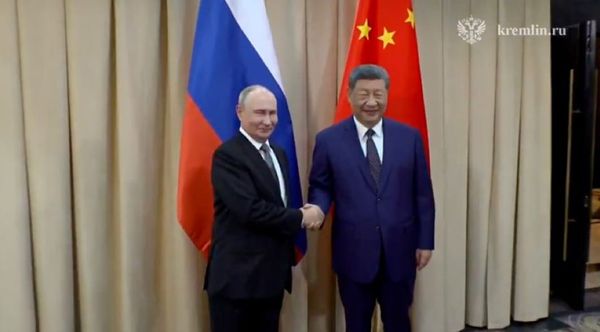
Chinese President Xi Jinping, Russian President Vladimir Putin and Indian Prime Minister Narendra Modi are among the leaders meeting today in Bishkek for the Shanghai Cooperation Organization summit, alongside Iranian President Masoud Pezeshkian.
The bilateral meetings are already producing some substance.
Xi and Putin met on the sidelines of the summit, with the Kremlin emphasizing the need to expand practical cooperation between Russia and China and conclude additional agreements. Energy remains a major part of the relationship, including discussions surrounding the long-delayed Power of Siberia 2 gas pipeline. Putin also said Russia is ready to make visa-free travel with China permanent.
Putin and Modi have also met. Modi again pressed the case for ending the war in Ukraine, saying that every day of war sets humanity back. Their talks also covered energy, trade and the broader Russia-India strategic relationship.
The optics matter almost as much as the individual agreements. Xi, Putin, Modi and Pezeshkian are gathering at the same summit while Russia remains at war with Ukraine, Iran has resumed exchanging direct fire with the United States, and Washington’s trade and sanctions policies are aiming to place pressure on all four relationships in different ways.
The SCO has long promoted a more multipolar international order, but this summit gives that message unusually powerful visuals: some of the world’s largest non-Western powers publicly coordinating on trade, energy, security and financial cooperation while their relations with Washington are increasingly strained.
Ukraine’s Foreign Ministry says Russia destroyed more than 10 million Ukrainian books in a single summer.
In Kharkiv alone, a Russian strike on a publishing house destroyed 8 million books, including more than 620,000 school textbooks.
In the latest attack in the Kyiv region, warehouses storing books from numerous Ukrainian publishers were hit, destroying more than 60,000 books.
According to Ukraine’s MFA, Russia has carried out at least 21 attacks on Ukraine’s book industry since the beginning of the full-scale invasion.
This summer alone, more than 30 Ukrainian publishers lost books, raw materials or works in progress.
Kyiv is seeing the destruction as part of a much longer history of Russian attempts to suppress Ukrainian language and culture: once through bans, decrees and censorship, and now through missiles and drones.
The ministry’s message: Russia can destroy books and publishing infrastructure, but it will not erase Ukrainian culture.
Separately, Ukrainian forces say they struck several Russian military targets over the past day and overnight into August 31.
Ukraine’s General Staff reported strikes against a Russian radar station in Desnyansky in the Bryansk region.
Another strike targeted a command-and-staff vehicle belonging to an S-400 Triumf air-defense system near Ploskobukreivka, also in Bryansk.
Ukrainian forces also reported hitting a Russian military communications hub in Zimovne in Belgorod region and a Russian drone command post near Huliaipole in Ukraine’s Zaporizhzhia region.
The Economist reports growing anxiety inside the Kremlin over how Vladimir Putin can end the war without appearing to have failed.
According to the publication, Putin believes ending the war without capturing all of Donbas could threaten not only his authority but potentially his personal security.
One insider told The Economist that Putin had told associates:
“They’ll hang me.”
After weeks of deliberation this summer, the Kremlin reportedly chose escalation over winding the war down.
The underlying problem remains the same: Russia has absorbed enormous military losses without producing the kind of decisive battlefield outcome Putin could easily present domestically as victory.
Meanwhile, Ukrainian drones are reaching deeper into Russian territory and the sense that ordinary Russians can remain insulated from the war is gradually eroding.
The Economist reports increasingly dark sentiment among parts of Russia’s elite.
One possibility being discussed is further escalation through intensified attacks on Ukraine, expanded sabotage and hybrid activity in Europe and potentially hundreds of thousands of additional troops sent to the front without a formally declared new mobilization.
That remains reporting and analysis rather than a confirmed Kremlin decision.
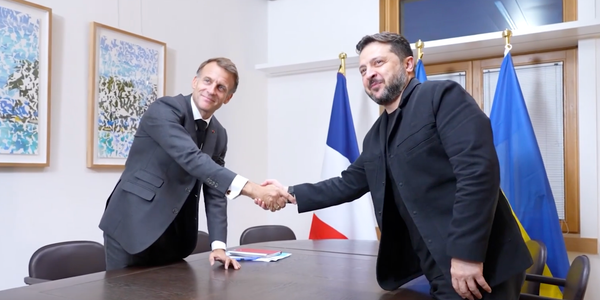
French President Emmanuel Macron is in Stockholm today, where France and Sweden are deepening their defense partnership.
Macron and Swedish Prime Minister Ulf Kristersson are set to sign a €4.3 billion agreement for four French-made frigates.
The vessels will be manufactured by Naval Group, with delivery of the first ship scheduled for 2030.
The French and Swedish defense ministers are also signing a broader framework covering cooperation in operational, capability and industrial areas.
The deal is one of Sweden’s biggest defense investments in decades and comes as Stockholm continues its rearmament following Russia’s invasion of Ukraine and Sweden’s accession to NATO in 2024.
The relationship works both ways.
France recently finalized a deal worth more than €1 billion for two GlobalEye airborne surveillance aircraft manufactured by Sweden’s Saab.
And at NATO’s summit in Ankara in July, France pledged troops to a Swedish-led NATO force in Finland.
Today marks an important deadline for the Recovery and Resilience Facility, the centerpiece of NextGenerationEU.
EU member states have reached the final implementation deadline for the reforms and investments included in their national recovery and resilience plans.
The program was created as part of the EU’s unprecedented common economic response to the COVID-19 pandemic and later became intertwined with Europe’s response to the economic consequences of Russia’s invasion of Ukraine.
Also today, the European Commission positively assessed Sweden’s third and final payment request of €332.8 million under the program.
And the EU has just brought three more major online services under stricter Digital Services Act supervision.
ChatGPT has been designated a Very Large Online Search Engine.
Reddit and Roblox have been designated Very Large Online Platforms.
Each reported at least 45 million average monthly users in the European Union, crossing the threshold for designation.
They will now face additional EU requirements covering systemic risks including risks to minors, fundamental rights and public security.
Icelanders have voted against reopening negotiations to join the European Union.
Importantly, this was not a referendum on EU membership itself.
Voters were deciding whether Iceland should resume accession negotiations.
The result was narrow:
52.8% voted No.
47.2% voted Yes.
Many opponents were concerned about the potential consequences of EU membership for Iceland’s sovereignty and its highly valuable fishing industry.
Supporters argued that joining could strengthen Iceland economically and provide greater geopolitical stability.
Iceland remains closely integrated with the EU through the European Economic Area and Schengen but is not a member of the bloc.
It is also the only NATO member without a standing military.
President Trump says the United States has secured access to more than 65 billion barrels of proven Venezuelan oil reserves under its new arrangement with Caracas.
That is a huge headline number.
But there is an enormous difference between oil existing underground and oil being economically usable.
Much of Venezuela’s enormous reserves are concentrated in the Orinoco Belt and consist of extremely heavy crude.
That oil generally requires dilution, upgrading or specialized refining before it can enter much of the global refining system.
And Venezuela’s infrastructure has deteriorated after years of underinvestment and sanctions.
That matters particularly in the context of the U.S. Strategic Petroleum Reserve.
You cannot simply take tens of billions of barrels of Venezuelan extra-heavy crude and pour it directly into the SPR as though it were interchangeable with conventional crude.
Venezuela’s own upgrading capacity is limited, and rebuilding major new upgrading infrastructure would require billions of dollars and years of investment.
That also explains some of what we heard at the White House oil roundtable: executives were reluctant to commit enormous amounts of upfront capital without clarity over returns, contracts and political risk.
So the interesting question is not:
Does Venezuela have 65 billion barrels?
It does.
The question is:
How much capital, infrastructure and time will it take to turn those barrels into oil the United States can actually use?
There is another Iran story happening inside the Pentagon.
According to reporting on the classified Secretary of Defense Orders Book, multiple senior military officials have warned that prolonged operations against Iran may not be sustainable.
Officials from U.S. European Command, Indo-Pacific Command and Southern Command, along with the Navy’s senior admiral, reportedly issued formal non-concur assessments.
That means they disagree with aspects of the Secretary of Defense’s orders or assumptions but will still execute them.
The concern is not simply Iran.
Moving weapons, aircraft, ships and personnel toward the Middle East necessarily affects what is available for Europe, the Indo-Pacific and other contingencies.
That makes today’s renewed fighting particularly important: it is happening while senior commanders are reportedly already warning about the cost of sustaining the existing force posture.
Separately, inflation and expensive upgrades are continuing to push up the estimated cost of the F-35 program.
The U.S. Space Force spent nearly $124 million on commercial space data and services between 2023 and 2025, and a little-known interagency working group could help facilitate additional purchases.
And the military task force operating along the U.S.-Mexico border recently used a high-energy laser to destroy three drones described as "cartel-linked".
The United States is also planning a significant expansion at Morón Air Base in Spain.
The project would create additional infrastructure and parking capacity for as many as nine more B-52 Stratofortress strategic bombers.
And the Iran connection here matters.
Spain previously denied permission for Morón and the U.S. naval facilities at Rota to be used for direct strike operations against Iran during Operation Epic Fury.
Yet Washington is now preparing infrastructure at Morón that would substantially increase its capacity to operate strategic bombers from the base.
That gives the United States greater operational flexibility around Europe, North Africa and the Middle East, including in a future Iran contingency.
And politically, this goes beyond runways and bombers.
Trump has repeatedly treated defense spending and burden-sharing as tests of whether NATO members deserve U.S. protection.
If Madrid again refuses U.S. operational requests involving Iran, the dispute gives Washington another pressure point against Spain and another argument for Trump to question Spain’s role inside the alliance.
That does not mean a move against Spain has already been decided.
But the military infrastructure and the political conflict are increasingly difficult to separate.
In Libya, representatives of rival political factions have signed a UN-backed roadmap aimed at holding long-delayed national elections within 24 months.
The agreement is intended to address disputes over electoral laws and reform of the national elections body.
Whether Libya’s competing political and military centers actually implement the roadmap will be the key question.
In Algeria, President Abdelmadjid Tebboune is seeking the introduction of the death penalty for arson following devastating wildfires that killed 12 people in the country’s northeast.
Iraq’s anti-corruption authorities say Deputy Oil Minister for Distribution Affairs Ali Al Bahadli and former MP Talal Al Zubaie have each been sentenced to seven years in prison in separate corruption cases, along with multimillion-dollar fines.
Syrian security forces say they killed a high-profile Assad-era military commander during a raid.
Authorities say the former officer played a major role in last year’s mutiny against Syria’s new government.
Syria’s Foreign Minister Asaad Al Shibani was also in Tripoli discussing increased security and economic cooperation with Libya as Syria’s embassy there reopens.
Senior officials from Türkiye, Saudi Arabia and Pakistan are meeting in Istanbul today for the first committee meeting under the joint defense accord the three countries signed this month.
That one is worth watching.
Three major regional military powers creating a formal mechanism for defense coordination has implications well beyond the three countries themselves.
NASA’s Nancy Grace Roman Space Telescope, named after NASA’s first chief astronomer, launched yesterday aboard a SpaceX Falcon Heavy.
Roman is now heading toward an observation point roughly one million miles from Earth.
Its field of view is more than 100 times wider than Hubble’s while providing similar image resolution.
NASA says Roman will be able to survey areas of the universe dramatically faster than Hubble.
Its primary scientific goals include investigating dark matter and dark energy and identifying and studying planets beyond our solar system.
It also carries a coronagraph designed to block out starlight, allowing astronomers to directly image some planets orbiting other stars.
And there’s a fun detail:
Roman’s primary mirror originated as hardware donated to NASA by the National Reconnaissance Office.
A spy satellite mirror is now going to help us investigate the structure of the universe.
Today is Tim Cook’s final day as CEO of Apple.
Senior Vice President of Hardware Engineering John Ternus takes over tomorrow.
Cook is staying with Apple as executive chairman after 15 years running the company.
OpenAI is severing its relationship with Cursor following Cursor’s acquisition by Elon Musk’s SpaceX.
OpenAI says it will end Cursor’s access to its models because it cannot be confident SpaceX will use OpenAI technology within its terms of service.
The cutoff is planned for November 12.
It adds yet another layer to the increasingly hostile relationship between Elon Musk and OpenAI CEO Sam Altman.
Google Maps has changed the name of Lake Ontario to Lake America for users in the United States following President Trump’s executive order.
Canadian users continue to see Lake Ontario.
Users elsewhere may see both names.
The Metropolitan Museum of Art and John Galliano have cancelled a planned exhibition devoted to the designer’s work.
Galliano spent years at the pinnacle of the fashion industry before a series of antisemitic and racist remarks in 2010 and 2011 led to his dismissal from Dior and his conviction in France.
The Met and Galliano announced the cancellation jointly today.