Simply Put: What Does a Resilient Health System Actually Look Like?
Everyone wants a “resilient” health system. But resilience is one of those words used so often that its practical meaning can disappear.

– 1 min read

Everyone wants a “resilient” health system. But resilience is one of those words used so often that its practical meaning can disappear.

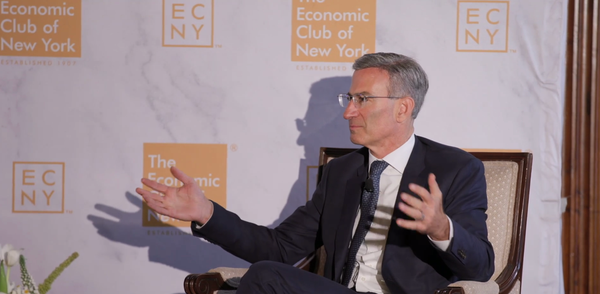
During the World Health Summit 2026 in Berlin — held under the theme “From Crisis to Resilience: Innovating for Health” — I asked CEO Carsten Schicker to explain what resilience actually means for a health system, and more importantly, what it should mean for the person depending on one.
His answer begins with a useful comparison to business.
A company would hardly be considered resilient if it relied on one supplier, had no financial buffer and had no contingency plan. Yet health systems are sometimes expected to operate with similarly fragile foundations.
For Schicker, resilience means designing a system for disruption, not merely for normal conditions.
That requires enough people, capacity, supplies and data; but also something less tangible: trust.
And for an ordinary person, he offered a much simpler test:
Can you still get the care you need?
Are medicines available?
Can you get clear and reliable information?
Are vulnerable people still protected?
That shifts resilience away from an institutional buzzword and toward something measurable in people’s lives.
Schicker also stressed that resilience should not mean repeatedly surviving emergencies through exhausted staff and temporary measures. A genuinely resilient system should be able to absorb a shock, adapt quickly and continue functioning without becoming permanently dependent on emergency responses.
That also explains why health resilience cannot be created by hospitals or health ministries alone.
In his view, it requires governments willing to commit, science as a foundation, industry capable of supplying and scaling solutions, and civil society helping build trust — before the next crisis begins rather than after it has already arrived.
Simply Put. is ONEST’s public interview series built around straightforward questions to people who understand complicated subjects deeply — without stripping away the nuance.
Join ONEST for the reporting, interviews and context behind the headlines.
Cover photo: World Health Summit