What Do They Want From Ukraine and What Will It Take to Get It?
The minerals, money and business connections behind the deals; and the distance between access on paper and usable resources.

– 9 min read

The minerals, money and business connections behind the deals; and the distance between access on paper and usable resources.
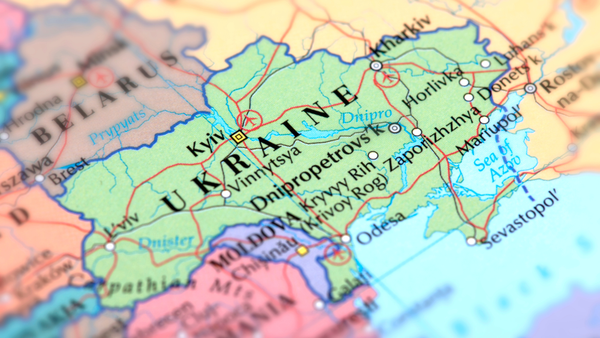
Ukraine has something governments and investors want. The question is how much of it they can actually get.
Washington wants materials essential to technology and national security. European manufacturers want dependable supplies close to their factories. Investors want profitable assets. Kyiv wants capital, industrial development and partners with a lasting interest in Ukraine’s survival.
Those ambitions meet underground, where a deposit can exist for decades before producing anything a customer can use.
They also meet at the negotiating table.
On October 3, The New York Times reported that American talks with Russia over ending the war had expanded to include a multibillion-dollar transaction involving Lukoil’s international oil assets. According to Reuters’ account of the reporting, the prospective buyers included American investor Todd Boehly, Middle Eastern groups with business relationships involving Jared Kushner or Steve Witkoff’s family, and an American government arm. Putin reportedly raised the transaction during his September 5 meeting with the two American negotiators.
The proposed assets are Russian-owned oil fields, refineries and gas stations abroad. They are separate from Ukraine’s mineral deposits.
The reporting raises a consequential question: whose commercial opportunities are being discussed alongside Ukraine’s future and what would each participant receive?
Published accounts of the Times investigation identify Qatari businessmen Moutaz and Ramez Al-Khayyat, whose business interests include a planned luxury resort in Albania involving Kushner and Ivanka Trump. They also identify an investment fund controlled by Emirati royal Sheikh Tahnoon bin Zayed Al Nahyan, with reported financial connections to Kushner’s investment business and the Trump-linked World Liberty Financial cryptocurrency venture. The accounts identify DFC, the American government’s international investment institution, as a prospective participant.
Connections and personal financial benefit are different things. Those accounts say the reporting did not establish that Kushner or Witkoff would personally profit from the transaction. Witkoff’s spokeswoman denied that he had a conflict of interest or financial stake.
Nevertheless, the overlap deserves scrutiny. Negotiators discussing war and peace are reportedly involved in a transaction that could benefit people with whom they or their families have business relationships.
The transaction would require approvals. Permission to negotiate is not permission to complete a sale. OFAC’s September 18 guidance allows negotiations and contingent contracts for Lukoil’s international assets, while requiring separate authorization for an actual transfer. Its stated conditions include severing ties with Lukoil, blocking funds owed to it until sanctions are lifted, and preventing an upfront windfall to the Russian company.
Private equity was already involved. Lukoil announced a conditional, nonexclusive agreement with Carlyle in January 2026, while continuing talks with other prospective buyers. That announcement did not establish a completed acquisition.
Moscow’s interest extends beyond selling assets. Reuters reported in September that Russian envoy Kirill Dmitriev discussed possible postwar American-Russian energy initiatives with U.S. officials. Renewed commercial relationships offer Russia a route toward economic normalization.
Ukraine’s minerals occupy a different, but politically connected, part of this contest over access, investment and future supply.
What can these players actually obtain and what will it take to deliver it?
For ONEST members: what the American agreement provides, where the minerals are, the documented investor connections, and the money, processing capacity and security needed to turn deposits into usable supplies.