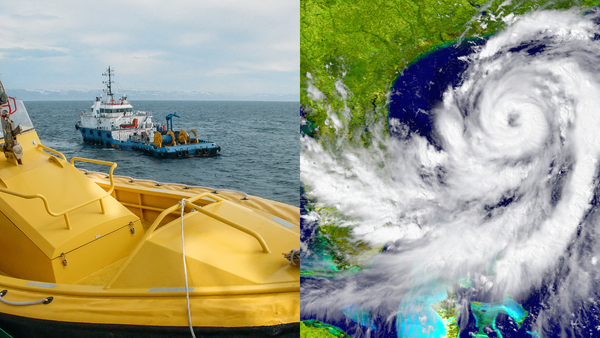
For more than a decade, hundreds of instruments anchored across the Atlantic and Pacific Oceans have quietly collected some of the world’s most valuable environmental data.
They measure ocean temperatures, currents, oxygen levels, marine ecosystems, underwater conditions, and the movement of heat through the oceans. They help scientists understand storms, fisheries, climate change, marine heat waves, and even the circulation systems that influence weather patterns across entire continents.
Now much of that network is being dismantled.
The National Science Foundation has announced the “descoping” of the Ocean Observatories Initiative (OOI), a $368 million monitoring system originally designed to operate for 25 years or longer. Instead, after roughly a decade of operation, the agency will begin removing infrastructure from four major observing arrays in the Atlantic and Pacific Oceans. More than 900 instruments currently provide real-time data to researchers around the world.
According to NSF and OOI officials, the removals will occur over approximately 15 months beginning this summer. The Endurance Array off the Pacific Northwest will be the first major site affected, with additional removals planned through 2027. Only the Regional Cabled Array off the Pacific Northwest is expected to remain operational.
The official explanation is “budgetary and strategic”. NSF says the decision aligns with a “nimbler” approach that prioritizes emerging technologies, evolving scientific priorities, and lifecycle management of research infrastructure. The agency insists the program is not being fully canceled and that all previously collected data will remain publicly available.
But the timing is difficult to separate from broader changes inside the federal government.
The decision follows the Trump administration’s proposal to cut NSF’s budget by roughly 55 percent and comes amid a wider effort to reduce federal spending on scientific and environmental programs. Scientists and lawmakers argue the dismantling is being driven less by scientific priorities than by political decisions about what research deserves continued funding.
The concern is not simply the loss of equipment.
Long-term scientific records become most valuable with time. The Ocean Observatories Initiative was designed to create a continuous multi-decade record of how the oceans are changing. Interrupting that record after ten years means losing the ability to compare future observations against what was intended to become a 25-to-30-year baseline.
Scientists warn the consequences could extend well beyond academic research. Ocean observations support weather forecasting, hurricane prediction, El Niño monitoring, fisheries management, and measurements of how much heat the oceans absorb from a warming atmosphere. Unlike satellites, which primarily observe the ocean surface, many of these instruments measure conditions deep below the water where critical climate processes occur.
In Europe, governments are expanding ocean observation capabilities. In the United States, part of an existing network is being removed.
Whether the decision ultimately saves money or creates larger costs in lost forecasting capability and climate knowledge remains to be seen.
What is clear is that the United States spent more than a decade building one of the world’s most sophisticated ocean monitoring systems.
It will take only 15 months to dismantle much of it.