Hiroshima, the World Court and the Nuclear Order Coming Apart

– 20 min read

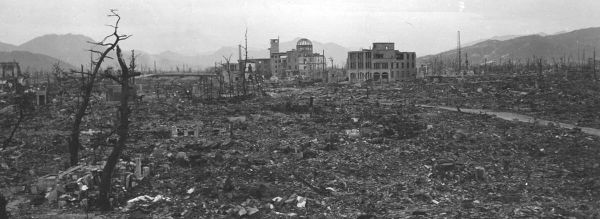
At 8:15 on the morning of August 6, 1945, the United States dropped an atomic bomb called Little Boy over Hiroshima.
The bomb exploded approximately 600 meters above the Japanese city. In seconds, heat, blast and fire destroyed much of its centre. Tens of thousands of people were killed almost immediately. Many others died over the following weeks and months from burns, injuries, radiation sickness and the collapse of basic medical services.
By the end of 1945, an estimated 140,000 people had died in Hiroshima. Three days after the first attack, the United States dropped a second atomic bomb — Fat Man — on Nagasaki. Japan announced its surrender on August 15 and formally signed the surrender documents on September 2.
But Hiroshima did more than help bring the Second World War to an end.
It opened the nuclear age.
Eighty-one years later, the world has built an elaborate system of treaties, inspections, courts, diplomatic commitments and deterrence doctrines intended to prevent another nuclear weapon from being used.
Yet in 2026:
Russia occupies Europe’s largest nuclear power plant while waging war against the country to which it belongs.
The United States and Israel have attacked Iranian nuclear facilities.
Iranian missiles have struck the area around Dimona, the Israeli city that houses the Shimon Peres Negev Nuclear Research Center.
The United States has signed a civil nuclear cooperation agreement with Saudi Arabia under terms that have raised questions about uranium enrichment, inspections and regional proliferation.
The last treaty legally limiting the strategic nuclear arsenals of the United States and Russia has expired.
And the latest Nuclear Non-Proliferation Treaty Review Conference ended without agreement — for the third consecutive time.
The question today is therefore no longer only whether Hiroshima can happen again.
It is whether the international legal system built after Hiroshima can still restrain governments that believe nuclear risk serves their strategic interests.
Little Boy was a uranium-235 fission weapon developed through the Manhattan Project.
Unlike the plutonium implosion device tested in New Mexico weeks earlier and later used against Nagasaki, the basic gun-type design of Little Boy had not been tested before it was used in war.
![Col. Paul Tibbets, Jr., waves from the cockpit of the Enola Gay before departing for Hiroshima, August 6, 1945. National Archives Identifier 535737]](https://storage.ghost.io/c/be/36/be36f176-1233-4fd2-9ac3-2a7a90e8c247/content/images/2026/08/tibbets-in-enola-gay-535737-crop.png)
A B-29 bomber named Enola Gay, piloted by Colonel Paul Tibbets, carried the weapon from the Pacific island of Tinian. Hiroshima was selected in part because it was an important military and logistical center and had largely escaped previous bombing, making the effects of the new weapon easier to assess.
At 8:15 a.m., the bomb detonated above the city with an explosive force commonly estimated at approximately 15 kilotons of TNT.
People near the hypocenter were killed by extreme heat, blast pressure, collapsing buildings and fire. Others survived the initial explosion but suffered severe burns, radiation exposure and injuries in a city whose hospitals, transportation systems and emergency services had themselves been destroyed.
Radiation created another category of harm that was poorly understood by much of the public at the time.
Survivors — the hibakusha — subsequently experienced elevated risks of leukemia, cancers and other illnesses. Many also faced discrimination in employment, marriage and social life because of misconceptions about radiation-related illness.
Hiroshima was therefore not only a military attack.
It became the first full human demonstration of what happens when nuclear physics is converted into an instrument of war.
The conventional American explanation is that Hiroshima and Nagasaki forced Japan to surrender and avoided a costly invasion of the Japanese home islands.
The bombings clearly contributed to Japan’s decision. But historians continue to debate how decisive each factor was.
The Soviet Union declared war on Japan on August 8, 1945, between the bombings of Hiroshima and Nagasaki, and invaded Japanese-held territory in Manchuria. That development shattered Tokyo’s remaining hopes that Moscow might mediate a negotiated end to the conflict.
Japan’s leadership was therefore confronting several simultaneous shocks:
The destruction of Hiroshima.
The Soviet entry into the war.
The loss of any realistic diplomatic route through Moscow.
The bombing of Nagasaki.
And the possibility of additional atomic attacks.
The historical argument is not simply “the bombs ended the war” versus “the bombs had no effect.” The more serious question is whether the second bombing was necessary, whether Japan could have been compelled to surrender through a combination of blockade, Soviet intervention and modified surrender terms, and whether the weapons were also used to demonstrate American power at the beginning of the emerging confrontation with the Soviet Union.
What is not debatable is the nature of the weapon’s effects.
Hiroshima demonstrated that one bomb, delivered by one aircraft, could destroy a city and leave consequences that continued long after the blast itself.
That reality transformed military strategy, diplomacy, science and international law.
After the war, the United States briefly possessed a nuclear monopoly.
That ended in 1949 when the Soviet Union tested its first atomic weapon.
Britain followed in 1952, France in 1960 and China in 1964. As the arsenals of the United States and Soviet Union grew from dozens of weapons to thousands, nuclear strategy shifted away from simply using bombs on military or urban targets.
Nuclear weapons became the foundation of deterrence.
The theory was that no rational government would launch a nuclear attack if doing so guaranteed its own destruction.
This eventually became known as mutually assured destruction.
The system was presented as horrifying but stabilizing: nuclear weapons prevented great-power war because their consequences were too catastrophic to contemplate.
But deterrence contains a contradiction.
For a threat to deter an adversary, the threat must be credible. Governments must therefore persuade opponents that they are prepared to use weapons whose humanitarian effects they simultaneously describe as unacceptable.
“Nuclear deterrence requires readiness to use them.”
That readiness creates permanent risks of miscalculation, technical failure, false warning, unauthorized action and uncontrolled escalation. Ware particularly highlighted launch-on-warning postures, under which political leaders may have only minutes to decide whether an apparent incoming attack is genuine.
The system does not eliminate nuclear danger.
It continually manages nuclear danger while promising that catastrophe will never occur.
The Treaty on the Non-Proliferation of Nuclear Weapons entered into force in 1970.
Its basic bargain rests on three pillars.
Non-nuclear states agree not to acquire nuclear weapons.
Nuclear-weapon states agree to pursue nuclear disarmament.
All parties retain the right to peaceful nuclear energy, subject to safeguards intended to prevent civilian programs from being diverted to military purposes.
The treaty formally recognizes five nuclear weapon states: the United States, Russia, China, France and the United Kingdom — the countries that had tested nuclear weapons before January 1, 1967.
India, Pakistan and Israel remained outside the treaty and developed nuclear arsenals. North Korea joined, later withdrew, and developed nuclear weapons.
The NPT has had real effects. The number of nuclear-armed states is significantly lower than many early Cold War projections anticipated. International Atomic Energy Agency safeguards provide a system for accounting for declared nuclear materials and facilities.
But the treaty also institutionalized an inequality.
Most countries permanently renounced nuclear weapons. Five states were temporarily permitted to retain them while promising to negotiate disarmament.
More than half a century later, all five continue to possess nuclear arsenals. All are modernizing at least portions of those arsenals.
This is the political fracture at the centre of the NPT.
Nuclear weapon states emphasize non-proliferation: other countries must never acquire the bomb.
Non-nuclear states increasingly emphasize Article VI: the existing nuclear powers also accepted a legal obligation to move toward disarmament.
That disagreement is not peripheral.
It is threatening the legitimacy of the entire arrangement.
On July 8, 1996, the International Court of Justice issued its landmark advisory opinion on the legality of the threat or use of nuclear weapons.
The Court considered the UN Charter rules governing force, the law of armed conflict, international humanitarian law and treaties addressing nuclear weapons.
It concluded that the threat or use of nuclear weapons would generally be contrary to the rules of international law applicable in armed conflict — particularly the principles and rules of humanitarian law.
Nuclear weapons cannot distinguish neatly between military targets and civilians. Their blast, heat, radiation and environmental effects can extend across territory and persist for years.
However, the Court stopped short of declaring every conceivable nuclear use illegal.
By a closely divided vote, it said it could not definitively determine whether the use of nuclear weapons would be lawful or unlawful in an extreme circumstance of self-defense in which the very survival of a state was at stake.
That ambiguity has been repeatedly invoked by nuclear-armed states.
But the Court also reached a unanimous conclusion with potentially enormous significance: states have an obligation to pursue in good faith and bring to a conclusion negotiations leading to nuclear disarmament under strict and effective international control.
That wording went beyond an obligation merely to attend meetings or discuss disarmament.
The obligation included achieving a result.
Ware was among the civil-society figures involved in the World Court Project, which helped generate the campaign for the advisory opinion. As he explained in his ONEST interview, the project was not primarily directed against one nuclear state:
“The issue was nuclear weapons regardless of who possessed them.”
The campaign began with lawyers and activists in New Zealand and ultimately helped place the legality of nuclear deterrence before the world’s highest court.
Yes — but not enough.
The opinion strengthened the legal interpretation of Article VI of the NPT. It helped produce momentum toward the disarmament commitments adopted at the 2000 NPT Review Conference and gave non-nuclear states, campaigners and parliamentarians a common legal foundation.
It influenced later litigation and diplomacy, including the Marshall Islands’ attempts to hold nuclear-armed states accountable for failing to pursue disarmament.
It also helped change the public debate.
Nuclear weapons were no longer discussed solely as military instruments. Their possession, threatened use and continued modernization could be evaluated through humanitarian law and legal obligation.
But the opinion did not create an enforcement mechanism.
Advisory opinions are authoritative interpretations of international law, but they are not judgments ordering a defendant state to pay damages or dismantle weapons.
Implementation remained political.
As Ware summarized the lesson:
“You can achieve something in court, but political action is required for full implementation.”
Parliaments decide whether to fund new nuclear weapons. Governments determine their military doctrines. Nuclear states decide whether to negotiate. Courts can define legal obligations, but they cannot independently dismantle arsenals.
This is both the power and the limitation of international law.
Law changes the boundaries of what governments can credibly describe as legitimate.
But governments can still violate those boundaries — particularly when jurisdiction is limited and enforcement depends upon political institutions in which powerful states hold vetoes.
On July 23, 2025, the ICJ issued another historic advisory opinion — this time on states’ obligations in relation to climate change.
The case was driven largely by small island states and a global youth campaign. For countries facing sea-level rise, climate change is not an abstract environmental problem. It threatens territory, livelihoods, freshwater, culture and, in some cases, the continued physical existence of the state.
The underlying legal question resembled the nuclear weapons case:
What obligations do governments have when conduct within their control creates catastrophic harm beyond their borders and across generations?
The Court concluded that states have binding duties under international law to protect the climate system and environment from human-caused greenhouse gas emissions.
Those duties do not arise only from the Paris Agreement. They also emerge from customary international law, human rights obligations, environmental law and the requirement that states prevent significant transboundary harm.
Most consequentially, the Court reframed harmful state conduct as potentially internationally wrongful.
A state’s failure to regulate fossil fuel production, consumption, licensing or subsidies may engage its international responsibility. Consequences can include cessation of the wrongful conduct, guarantees against repetition and, where legal requirements such as causation are established, reparation. The Court did not award damages or divide responsibility among states, but it created a new legal baseline for future cases.
This is already influencing domestic litigation.
In Canada, litigants have drawn on the opinion while arguing that the Paris temperature commitment is reflected in domestic legislation. The Federal Court acknowledged that parts of the commitment had been incorporated through Canadian climate laws while considering whether the claim could proceed.
The opinion therefore matters in at least three ways.
It gives courts a more authoritative framework for evaluating state responsibility, due diligence, human rights and climate harm.
Domestic courts are not required to treat an ICJ advisory opinion as if it were national legislation. But judges can use its reasoning when interpreting constitutional rights, environmental duties and government obligations.
Governments can no longer as easily present climate commitments as purely voluntary policy choices.
The opinion strengthens the argument that inadequate climate action can amount to a breach of legal obligations — not merely a failure of ambition.
The opinion creates tools for challenging conduct that locks in future emissions, including new extraction licenses, subsidies and state support for fossil fuel infrastructure.
But once again, the central hurdle is implementation.
The opinion does not automatically cancel a drilling permit, close a coal plant or compensate an island state.
Someone must bring the case.
A court must possess jurisdiction.
The claimant must establish responsibility and causation.
A government must comply with the eventual result.
Nuclear weapons and climate change may appear to be separate subjects.
One concerns military force. The other concerns emissions, energy and environmental policy.
But legally and politically, they pose the same fundamental challenge:
How can international law restrain conduct that may benefit a powerful state in the short term but creates catastrophic risks for humanity as a whole?
Both involve damage that does not respect borders.
Both threaten future generations.
Both can produce irreversible environmental harm.
Both involve governments claiming exceptional national interests: national security in one case, development and energy security in the other.
And both expose the limits of a system in which states are simultaneously the creators of international law, the subjects of that law and often the gatekeepers of its enforcement.
The July 2026 conference organized around the 30th anniversary of the nuclear weapons advisory opinion deliberately joined these discussions. Its program examined the role of ICJ advisory opinions on nuclear weapons, climate change and other global issues — not as isolated legal judgments, but as mechanisms for defining obligations where ordinary politics has repeatedly failed.
The strongest connection is therefore not rhetorical.
It is structural.
In both fields, the Court establishes that states cannot treat planetary catastrophe as legally neutral.
The ICJ has two principal functions.
It decides contentious disputes between states.
And it provides advisory opinions when authorized UN bodies request clarification of international law.
Contentious judgments are binding upon the parties. But the Court generally requires state consent to exercise jurisdiction.
That is the weakness.
Only a limited number of states accept the Court’s compulsory jurisdiction without major reservations. Others accept jurisdiction only through particular treaty clauses or case-specific agreements.
The United States withdrew its acceptance of compulsory jurisdiction after the Court ruled against it in the case brought by Nicaragua during the 1980s.
It remains a party to the ICJ Statute as a UN member, but that does not mean another state can automatically sue the United States over any international dispute.
A state may sometimes establish jurisdiction through a treaty containing a compulsory dispute-settlement clause — as South Africa did in bringing its case against Israel under the Genocide Convention.
But many environmental, military and security agreements contain no equivalent mechanism.
A state can therefore be bound by a rule of international law while remaining difficult to bring before a court capable of enforcing it.
That gap is central to the LAW not War campaign.
Launched in 2023, the campaign seeks broader acceptance of ICJ compulsory jurisdiction, greater use of treaty-based dispute-settlement clauses, more advisory opinions and stronger national implementation of the UN Charter’s prohibition on war.
Its target is not the elimination of politics.
It is the creation of a more credible alternative to force.
Ukraine exposes one of the deepest obstacles to nuclear disarmament.
After the Soviet Union collapsed, Ukraine inherited hundreds of strategic nuclear warheads and the infrastructure associated with one of the world’s largest nuclear arsenals.
Ukraine did not possess complete independent operational control over that arsenal, and maintaining it would have involved enormous technical, financial and diplomatic challenges. Nevertheless, relinquishing the weapons was a major strategic decision.
Ukraine joined the NPT as a non-nuclear-weapon state and transferred the warheads to Russia for dismantlement.
In return, the 1994 Budapest Memorandum provided security assurances from Russia, the United States and the United Kingdom. The parties committed to respect Ukraine’s independence, sovereignty and existing borders and to refrain from the threat or use of force against it.
Russia later occupied Crimea, supported armed conflict in eastern Ukraine and launched its full-scale invasion in February 2022.
For other governments considering nuclear restraint, the message is devastating.
Ukraine surrendered inherited nuclear weapons.
Russia violated the territorial assurances attached to that process.
The United States and United Kingdom supported Ukraine but did not treat the memorandum as an automatic military-defense guarantee.
This does not prove Ukraine would necessarily have been safer had it attempted to retain nuclear weapons.
But it damages the political argument that states can reliably exchange nuclear capability for international assurances.
In our recent interview, Ware argues that disarmament arrangements based only on political promises are fragile. They require credible conflict resolution and compliance systems, including access to the ICJ and a Security Council that cannot be paralyzed by the veto of the state accused of aggression.
Russia’s occupation of the Zaporizhzhia Nuclear Power Plant has introduced another form of nuclear coercion.
Zaporizhzhia is a civilian nuclear energy facility, not a nuclear weapon.
But occupying and militarizing a nuclear plant creates risks that radiate far beyond the immediate battlefield.
Russian forces seized the plant in March 2022. The facility has since operated under occupation, with repeated military activity nearby, damage to electrical connections, pressure on personnel and continuing dependence on fragile systems needed to cool reactors and spent fuel.
The IAEA has maintained a presence at the site and repeatedly warned that military activity, unreliable external power and restricted access create serious nuclear safety risks. The agency and its member states have affirmed that Ukrainian nuclear facilities, including Zaporizhzhia, should operate under Ukraine’s full sovereign control.
The plant gives Russia leverage even without deliberately causing a nuclear release.
Every explosion near the facility produces fear.
Every interruption of external electricity raises the possibility of cooling system failure.
Every allegation of an impending attack forces Ukraine and its allies to calculate the possibility of a radiological emergency.
This is coercion through risk.
The plant’s danger is useful precisely because a nuclear accident could affect Ukrainian territory, Russian-controlled territory and countries far beyond the battlefield.
Russia does not need to detonate a nuclear weapon to exploit nuclear fear.
It can use the vulnerability of civilian nuclear infrastructure to impose psychological, military and political costs on Ukraine and its supporters.
In June 2025, Israel attacked multiple Iranian nuclear facilities. The United States then struck Fordow, Natanz and Isfahan in Operation Midnight Hammer.
The IAEA withdrew inspectors during the attacks because of the security situation. It subsequently reported that the strikes had caused extensive damage and complicated the agency’s ability to verify the status and location of nuclear material.
The attacks were intended to degrade Iran’s capacity to enrich uranium and prevent it from developing a nuclear weapon.
But attacking safeguarded or previously monitored nuclear facilities creates another risk.
Military action can destroy equipment.
It can also destroy transparency.
Inspectors are evacuated. Monitoring devices are damaged or disconnected. Governments relocate nuclear material. Political support for cooperation with the IAEA collapses.
Even where an attack causes no large radiological release, it may make the nuclear program more difficult to observe.
The IAEA has repeatedly warned that nuclear facilities should not be attacked because of the possible effects on people, the environment, nuclear security and the global safeguards system.
Iran has meanwhile demonstrated how quickly this logic can spread.
In March 2026, following renewed attacks on Iran’s Natanz facility, Iranian missiles struck Dimona and Arad. Dimona is home to Israel’s principal nuclear research center. Iran had previously threatened to target the facility if the United States and Israel pursued regime change.
This was not equivalent to Hiroshima.
Nor is a civilian or research facility the same as a nuclear weapon.
But the pattern is profoundly dangerous:
One side attacks the other’s nuclear infrastructure.
The other responds near a nuclear site.
Each claims necessity, deterrence or self-defense.
And nuclear facilities become accepted objects of military coercion.
Once that norm erodes, it will not remain limited to Iran and Israel.
In July 2026, the United States and Saudi Arabia signed a civil nuclear cooperation — or “123” — agreement intended to give American companies access to Saudi Arabia’s emerging nuclear energy market.
Civil nuclear cooperation is not the same as sharing nuclear weapons.
Saudi Arabia has legitimate reasons to seek nuclear energy, including rising electricity demand, desalination needs, economic diversification and the expansion of data centers.
But civilian nuclear programs can acquire geopolitical significance when they include sensitive fuel cycle capabilities.
The central concerns are uranium enrichment and the reprocessing of spent nuclear fuel.
Both can serve peaceful purposes.
Both can also provide technologies, materials and expertise relevant to a weapons program.
Under its 2009 agreement with Washington, the UAE legally committed not to enrich uranium or reprocess spent nuclear fuel domestically and accepted the IAEA Additional Protocol, giving inspectors broader access and information.
The new U.S.-Saudi agreement appears substantially less restrictive. The Department of Energy confirmed on July 22, 2026 that Washington and Riyadh had signed a Section 123 nuclear cooperation agreement together with a separate bilateral safeguards agreement. However, the administration has not publicly released the full text. Reporting and independent analysis indicate that the agreement does not require Saudi Arabia to permanently renounce uranium enrichment or reprocessing and does not require Riyadh to adopt the IAEA Additional Protocol. Reports also indicate that it contemplates studying the feasibility of enrichment in Saudi Arabia.
There is still some uncertainty over exactly how those provisions would operate. President Donald Trump subsequently said the agreement would not proceed unless Saudi Arabia normalizes relations with Israel through the Abraham Accords, while also publicly disputing suggestions that he had approved Saudi enrichment. The agreement therefore remains subject both to political conditions and congressional review.
The risk is not that building civilian nuclear reactors automatically gives Saudi Arabia a nuclear weapon.
The concern is nuclear latency and precedent.
Uranium enrichment has legitimate civilian uses, but the same technology can produce increasingly highly enriched uranium if a state chooses to move toward a weapons capability. Reprocessing can similarly separate plutonium from spent nuclear fuel. Possessing either capability therefore reduces some of the technical barriers between a civilian nuclear program and a potential weapons option.
That distinction matters particularly in Saudi Arabia because Crown Prince Mohammed bin Salman has repeatedly said that if Iran acquires a nuclear weapon, Saudi Arabia would seek one as well.
The regional consequences could extend beyond Riyadh.
The UAE could question why it accepted permanent restrictions on enrichment and reprocessing if another close U.S. partner receives less restrictive terms. Other states pursuing nuclear energy programs could seek comparable arrangements rather than accepting the UAE model. Nonproliferation experts have specifically warned that allowing enrichment without the Additional Protocol could encourage other governments to pursue similar fuel cycle capabilities.
It would also complicate Washington’s position toward Iran. The United States has repeatedly sought stringent limits on Iranian enrichment while now appearing prepared to tolerate at least the possibility of enrichment in Saudi Arabia. Tehran can point to that distinction as evidence that Washington applies nonproliferation restrictions differently depending on the country involved — even though the histories, safeguards records and nuclear programs of Iran and Saudi Arabia are substantially different.
For Israel, meanwhile, the immediate issue is not a Saudi bomb but the possible emergence of another regional state possessing the technical infrastructure needed to shorten the path toward one. Israel has never officially acknowledged possessing nuclear weapons, but it is widely understood to maintain an undeclared nuclear arsenal.
A Saudi civilian program could therefore alter the strategic balance long before Saudi Arabia produced a weapon.
That is why the agreement matters beyond the construction of nuclear reactors: it could help shift the Middle East from a region in which only Iran possesses an extensive indigenous enrichment capability toward one in which several states regard control of the nuclear fuel cycle as a legitimate component of national power.
For decades, the United States and Soviet Union — and later Russia — constructed treaties intended to reduce the risk of nuclear war.
These agreements did not eliminate rivalry.
They imposed limits, required data exchanges, permitted inspections and gave both sides information about the other’s forces.
That predictability matters.
A government that understands an adversary’s arsenal is less likely to assume the worst and begin a costly expansion based on uncertainty.
Russia suspended implementation of New START in 2023, halting central verification activities while the treaty technically remained in force.
New START then expired on February 5, 2026.
For the first time in decades, the United States and Russia now have no legally binding treaty limiting their deployed strategic nuclear arsenals.
The consequences may not be immediate.
Both countries can initially remain near the former limits.
But without inspections, binding ceilings and data exchanges, suspicion grows.
Each side begins planning not only against what the other possesses, but against what it could build.
China’s expanding arsenal further complicates any successor framework, while Beijing has resisted joining a system originally designed around the much larger American and Russian stockpiles.
This is how arms races restart.
Not necessarily with a single announcement.
But through the gradual disappearance of information, restraint and confidence.
From April 27 to May 22, 2026, states parties met at the United Nations for the latest NPT Review Conference.
They failed to reach consensus on a final document.
It was the third consecutive Review Conference to end without an agreed substantive outcome, following the failures in 2015 and 2022.
The disputes extended across all three NPT pillars.
Non-nuclear states demanded more credible progress toward disarmament.
Nuclear weapon states emphasized deteriorating security conditions and strategic competition.
Governments remained divided over Russia’s aggression against Ukraine and its occupation of the Zaporizhzhia plant.
The Middle East remained fractured over the long-promised objective of creating a zone free of nuclear weapons and other weapons of mass destruction.
Iran’s nuclear program, attacks on nuclear facilities and the weakened inspection environment further strained the non-proliferation system.
The lack of consensus does not terminate the NPT.
But repeated failure matters.
Review Conferences are supposed to assess implementation and renew the political bargain between nuclear and non-nuclear states.
When they repeatedly produce no agreement, the treaty begins to resemble a system governments invoke against their adversaries but avoid applying fully to themselves.
The evidence is mixed.
Vladimir Putin’s Russia has violated fundamental rules of the UN Charter.
Yet Russian officials, including Foreign Minister Sergey Lavrov, continue to frame their decisions through legal arguments.
Those arguments may be distorted, selective or propagandistic.
But the effort itself matters.
Governments rarely announce that international law is irrelevant. They reinterpret facts, invent justifications or accuse opponents of violating the same rules.
That suggests law still shapes legitimacy.
It affects alliances, sanctions, diplomatic support, domestic court cases and the historical record.
But legal influence is not the same as legal compliance.
Law is strongest when several conditions exist together:
Clear legal obligations.
A court with jurisdiction.
Reliable fact-finding.
Domestic institutions willing to implement decisions.
Political and economic consequences for violation.
And security arrangements that make compliance safer than defiance.
Remove those conditions and the law becomes easier to manipulate.
This is why Russian officials can invoke international law while attacking Ukraine.
Why nuclear weapon states can endorse the NPT while modernizing their arsenals.
Why governments can accept climate obligations while authorizing new fossil fuel development.
And why states may praise the ICJ until a case threatens their own interests.
LAW not War proposes a straightforward principle:
International disputes should be resolved through law rather than military force.
Its practical objectives include broader acceptance of the ICJ’s compulsory jurisdiction, stronger dispute-resolution clauses in international treaties, more frequent use of advisory opinions and domestic laws reinforcing the UN Charter’s prohibition on aggression.
It also seeks universal acceptance of ICJ jurisdiction by 2045 — the centenary of the United Nations.
The campaign draws on the legacy of Benjamin Ferencz, the last surviving Nuremberg prosecutor, who spent much of his life arguing that humanity must replace the rule of force with the rule of law.
But that aspiration confronts the structure of the present international order.
The five permanent members of the Security Council are also the five nuclear weapon states formally recognized by the NPT.
Each possesses veto power.
The institutions responsible for enforcing international peace are therefore dominated by the same states whose conduct may require restraint.
Ware has proposed seeking an ICJ advisory opinion on the legal limits of the Security Council veto — particularly when a permanent member uses the veto to obstruct action concerning its own aggression.
Such an opinion would not physically remove the veto.
But it could clarify when its use conflicts with the UN Charter and strengthen the authority of the General Assembly to respond when the Council is paralyzed.
Hiroshima demonstrated the destructive power of a nuclear weapon.
The NPT attempted to prevent that power from spreading.
The 1996 ICJ opinion placed the threat and use of nuclear weapons under international humanitarian law and confirmed an obligation to achieve nuclear disarmament.
The 2025 climate opinion extended the same principle of responsibility to another form of planetary danger: governments cannot create or permit catastrophic transboundary harm and assume their conduct exists outside the law.
But 2026 is revealing the limits of legal progress without enforcement.
Russia is using an occupied nuclear plant to create danger and political pressure in Ukraine.
The United States, Israel and Iran have helped normalize military operations against or around nuclear facilities.
Saudi Arabia’s civilian nuclear agreement raises questions about how proliferation standards will be applied in a region already shaped by nuclear ambiguity.
New START has expired.
The NPT Review Conference has failed again.
None of this means international law is meaningless.
If it were meaningless, governments would not work so hard to present their actions as legal.
But law alone does not enforce itself.
The lesson of the two ICJ opinions is that courts can identify the obligations humanity needs for survival.
The lesson of Hiroshima — and of the nuclear order now coming apart — is that political leaders must still choose to obey them.
Eighty-one years after the first atomic bomb was used against a city, humanity does not lack evidence.
It does not lack treaties.
It does not lack legal principles.
What it lacks is a reliable system for applying those principles equally — to adversaries, allies and the most powerful states themselves.
The unresolved question is therefore no longer whether the world understands the danger.
It is whether law can restrain power before power again produces a catastrophe that law can only judge afterward.