The Daily | September 16, 2026
What mattered today, before tomorrow’s headlines.

– 8 min read

What mattered today, before tomorrow’s headlines.
Good evening,
Earlier this week, I told you Canada was exploring something that did not yet exist: an “associate” relationship with the European Union.
Today, the President of the European Commission publicly opened the door.
And Canada made another move toward Europe by formally applying to join a UK-led rapid-response military coalition.
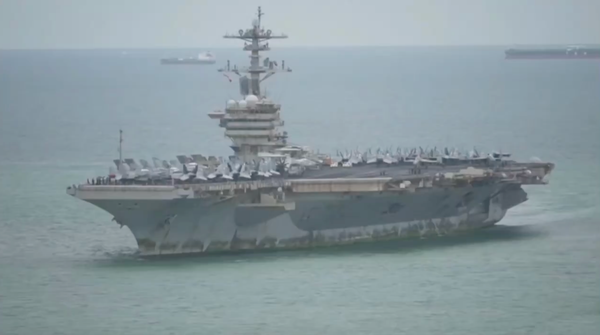
Meanwhile, Washington got a clearer accounting of the Iran war: $38.1 billion already spent, billions more every month, and interceptor stockpiles being consumed at a rate that may take years to replenish.
Here’s what mattered today.
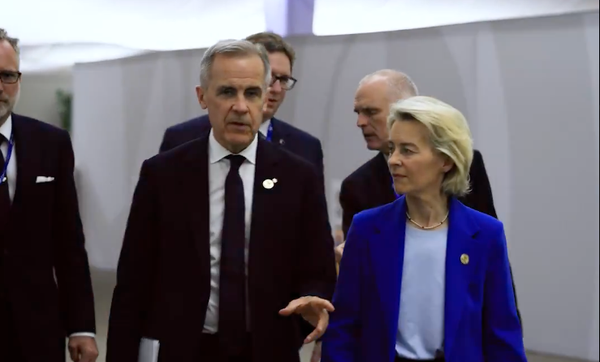
European Commission President Ursula von der Leyen used her State of the Union address today to propose taking Canada’s relationship with Europe to what she called the “highest level possible” — potentially making Canada the first associate member of the European Union.
There is currently no such membership category in EU treaties. Creating one would therefore require Europe and Canada to define what it actually means.
Von der Leyen proposed a “common prosperity and economic space” spanning manufacturing, defense industry integration, technology, the Arctic, AI, energy and critical minerals.
European lawmakers gave the proposal a standing ovation.
Few days ago, “associate membership” was something Canadian and European officials were discussing. Today, it became a public proposal from the head of the European Commission. That does not mean it is a done deal.
EU member governments would ultimately have to determine whether such a relationship is legally and politically possible, and there is no existing template to copy. But Ottawa and Brussels are now openly discussing an institutional relationship that goes well beyond CETA.
And the timing matters.
Canada is trying to reduce its dependence on the United States while Europe is trying to secure reliable partners for energy, critical minerals, defense production and technology.
The fit is increasingly obvious.
Carney then met British Prime Minister Andy Burnham and announced that Canada has formally applied to join the Joint Expeditionary Force, the UK-led rapid-response military grouping focused heavily on Northern Europe, the Baltic and the High North.
Canada is also exploring deeper participation in the Global Combat Air Program, having joined as an observer earlier this year.
Yesterday we asked whether Canada’s European pivot was becoming structural. Today provided another answer: it is moving from diplomacy into institutions.
The details.
What would “associate membership” actually include: movement of people, defense procurement, capital, digital trade, research, access to the single market, or some combination of them? The phrase itself is historic. The substance will determine whether it actually changes Canada’s economic geography.
The Congressional Budget Office estimates the U.S. war with Iran cost the Pentagon approximately $38.1 billion through August 1.
Every additional month could add another $2 billion to $3 billion, but the dollar figure may not be the most consequential number.
The United States is burning through some of its most sophisticated missile interceptors. During Iran’s recent attack on U.S. forces in Jordan, the U.S. reportedly fired roughly 60 to 70 Patriot interceptors plus more than a dozen THAAD interceptors against approximately 20 Iranian ballistic missiles. The CBO estimates replenishing some of the interceptors already expended could take years.
This is the difference between the financial cost of war and the industrial cost of war. Money can be appropriated relatively quickly. A Patriot or THAAD interceptor cannot simply appear because Congress authorizes another billion dollars: factories have production rates, supply chains have bottlenecks, components take time, and the same weapons are relevant to other theaters, including Europe and the Pacific.
Seven months into the conflict, another National Guard F-16 squadron is now rotating into the Middle East, while Air Force officials are openly discussing what prolonged deployments are doing to readiness.
This is becoming a war not only of military capability, but of replacement capacity.
The production numbers.
How quickly can the United States replace the interceptors it is firing? And which theater gets priority if demand exceeds supply?
That question increasingly connects Iran, Ukraine, Israel and the Pacific.
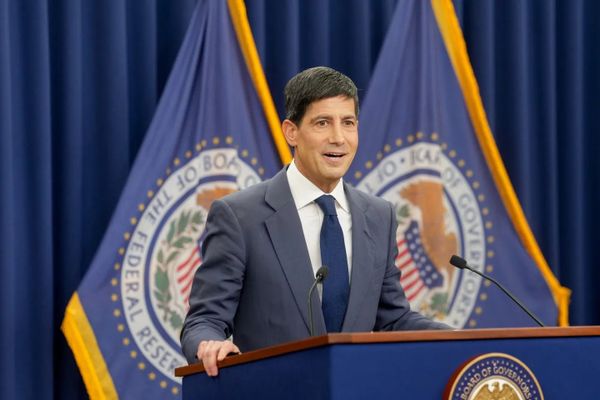
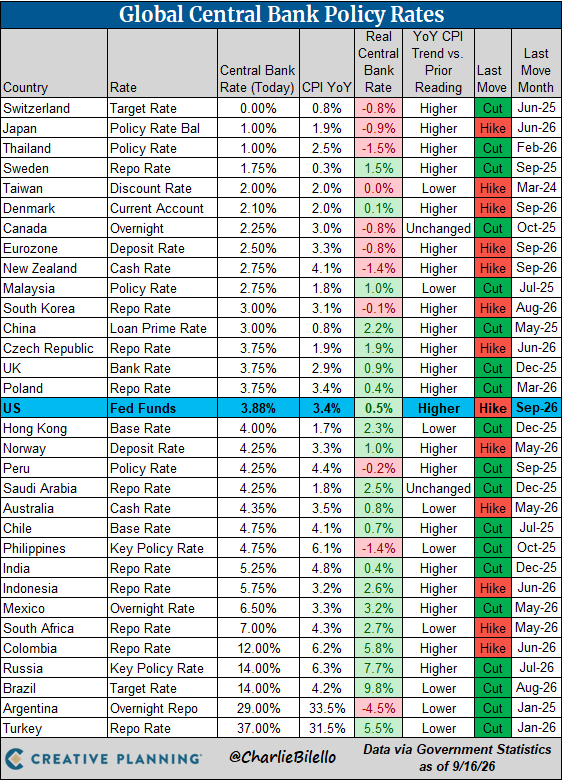
The Federal Reserve today raised its benchmark interest rate by 0.25 percentage point, to a target range of 3.75%-4.00%, its first hike in three years. The vote was unanimous, and the Fed said inflation remains elevated and the increase is intended to return it to the 2% target more quickly.
President Trump responded by saying U.S. interest rates should be 1% or lower.
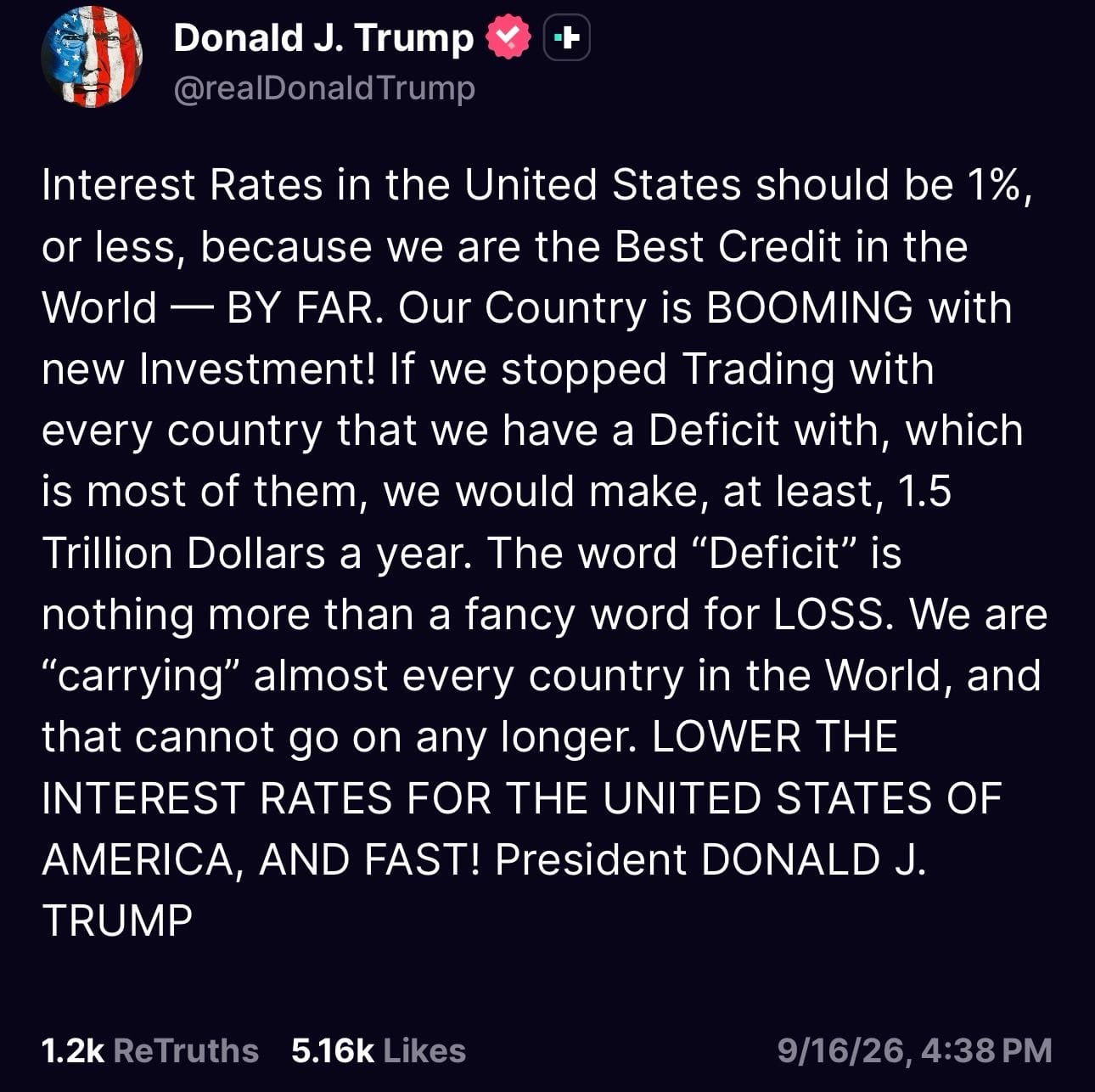
Trump to reporters: "I want [the Fed] to be independent, but my opinion.. I'm very good at this stuff.. is interest rates are too high."
Trump also argued that the U.S. has the “best credit in the world” and framed trade deficits as money the United States is effectively losing.
Neither is accurate.
The United States does not hold the highest sovereign credit rating across the major agencies; S&P rates U.S. debt below AAA, and Moody’s downgraded the U.S. from its top rating in 2025.
Also, a trade deficit is not an economic loss. It simply means the United States imports more goods and services than it exports.
In 2025, the U.S. exported $3.43 trillion and imported $4.33 trillion, producing a $901.5 billion goods-and-services trade deficit. Those imports were goods and services purchased by Americans and U.S. businesses — not money handed away.
So the contrast today is pretty stark:
The Fed raised rates because it says inflation remains too high. Trump wants rates at 1% or below, while basing part of his argument on claims about U.S. credit and trade deficits that do not hold up.
Yesterday, we focused on U.S. Ambassador to NATO Matthew Whitaker saying Washington wants Europe and Canada to take over the conventional defense of the continent.
Today, Germany effectively accepted the premise.
After meeting Pete Hegseth at the Pentagon, German Defense Minister Boris Pistorius said:
“We Europeans want to take some of the burden off the U.S. and assume primary responsibility for conventional deterrence in Europe.”
The two governments also signed an agreement aimed at expanding joint weapons development, licensed manufacturing, maintenance and production.
Hegseth calls the approach “NATO 3.0.”
Whether by choice or circumstance, Germany has accepted that Europe will carry more of the conventional defense burden.
What comes next is more concrete: what happens to U.S. bases in Germany in an actual European conflict, and who would be able to use them in Europe’s defense?
And back to yesterday’s point: Europe should not treat access to or permission for U.S.-origin weapons as automatically guaranteed. Washington has previously limited how American-supplied systems could be used, and with U.S. munitions being consumed heavily elsewhere, those dependencies matter even more. NATO’s own framework also leaves each ally to decide what assistance it “deems necessary” under Article 5.
Not another statement about burden-sharing. Watch forces, production, command structures and operational control. That will tell us what “NATO 3.0” actually means.
The Trump administration submitted its annual list of major drug-transit and illicit-drug-producing countries to Congress.
Twenty-three countries are on it.
But four, Afghanistan, Bolivia, Burma and Colombia, were designated as having “failed demonstrably” to meet their international counternarcotics obligations.
The document is particularly revealing when read alongside yesterday’s decision to redirect U.S. military assistance toward conservative-leaning governments in Latin America.
Trump praises the governments of Argentina, Ecuador and El Salvador as among Washington’s strongest regional partners, welcomes Peru’s cooperation under President Keiko Fujimori, and describes political changes across South America as creating new openings for U.S. cooperation.
Colombia is more complicated: it remains formally designated as having “failed demonstrably,” but the administration explicitly welcomes its new government and signals that the designation could be lifted if promised eradication efforts proceed.
Today’s determination makes the ideological sorting even more explicit.
Washington is simultaneously labeling some governments as failed partners, praising others as preferred allies, and tying security cooperation more openly to political alignment across the hemisphere.
The important part now is not the theory.
It is how that preference translates into money, weapons, access and influence.
China Investment Corporation and major sovereign investment institutions from Thailand, Indonesia, Malaysia and Azerbaijan have launched the China-ASEAN Joint Investment Council.
The new platform is designed to connect sovereign capital across the China-ASEAN corridor through investment projects, research, regular dialogue and executive cooperation.
Malaysia’s KWAP has also joined.
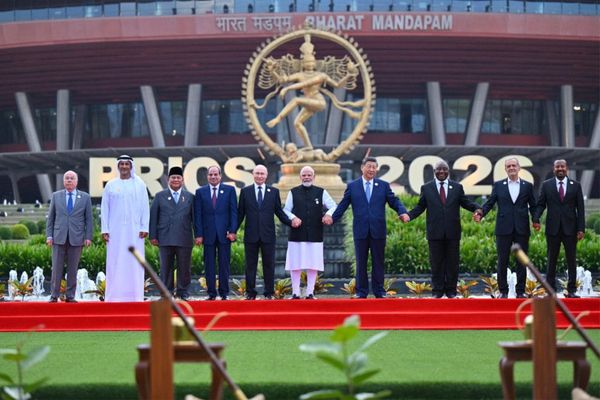
There is a broader trend here that we have been following through BRICS:
Countries are building institutional relationships that do not require Western financial architecture to function.
CAJIC is neither a new currency nor a military alliance, but a practical mechanism for state-controlled capital to invest together at scale, adding another institutional layer to already deep China-ASEAN trade and manufacturing ties.
Money.
The council itself matters less than what it actually finances. Watch for cross-border infrastructure, advanced manufacturing, digital projects and energy investments, and whether joint investment moves from dialogue to deployed capital.
Saudi Arabia is trying another route around its damaged pipeline. Riyadh is offering additional crude shipments to Asian refiners through ship-to-ship transfers off Oman after attacks damaged the East-West pipeline to the Red Sea.
Saudi Arabia says an attempted attack on Mecca crossed a “red line.” Riyadh blamed the Houthis; the Houthis denied responsibility. The accusation further raises the stakes in a conflict already expanding along the Red Sea.
China is pushing Iran to reopen Hormuz. Foreign Minister Wang Yi urged Tehran and Washington to return to negotiations based on the Islamabad memorandum during talks with Iranian Foreign Minister Abbas Araghchi.
Two U.S. government officials were accidentally shot in Eswatini during an anti-smuggling operation. Their injuries were described as minor, and authorities are investigating.
The Democratic Republic of Congo has created a task force to accelerate its strategic minerals partnership with Washington, focused on attracting investment into cobalt and copper.
Cambodia and Thailand have begun a U.N.-backed conciliation process over their maritime boundary dispute.
Next week, I’ll be reporting from UNGA81 in New York — from inside the UN and from meetings, interviews, diplomatic events and smaller conversations happening around High-Level Week.
I’ll be following the stories that matter, but I also want to know what you want me to pay attention to.
If there’s a country, issue or question you’re particularly interested in, leave a comment below.
That’s The Daily.
Tomorrow, we do it again.
What mattered. Why it mattered. What comes next.
— Olga