The Daily | September 15, 2026
What mattered today, before tomorrow’s headlines.

– 6 min read

What mattered today, before tomorrow’s headlines.

Good evening,
Europe has spent the past 48 hours dealing with Russian drones, military encounters and increasingly explicit threats.
At the same time, Washington is telling Europe and Canada that it wants them to assume primary responsibility for the conventional defense of the continent.. so the United States can shift more military power elsewhere.
And in Germany, investigators are trying to identify a drone that came down roughly one kilometer from one of the country’s most important military airbases.
Here’s what mattered today.
EU foreign policy chief Kaja Kallas gave a stark summary today of what Europe has seen in roughly 48 hours:
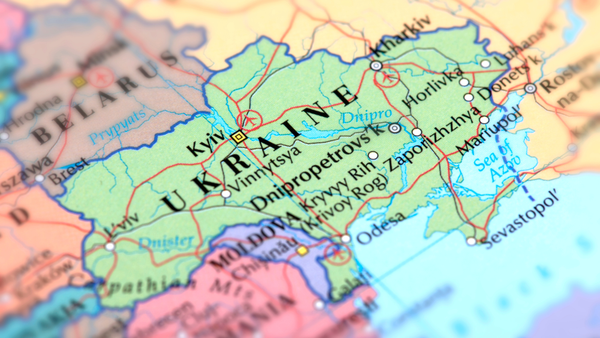
A Russian warship fired flares near a Danish military helicopter. NATO aircraft shot down a drone that entered Lithuanian airspace. Russia struck a passenger train near Ukraine’s border. Poland recovered a drone from its coast.
Kallas described the incidents as “calculated attempts” to weaken European resolve rather than separate accidents.
Then came a very different message from Washington.
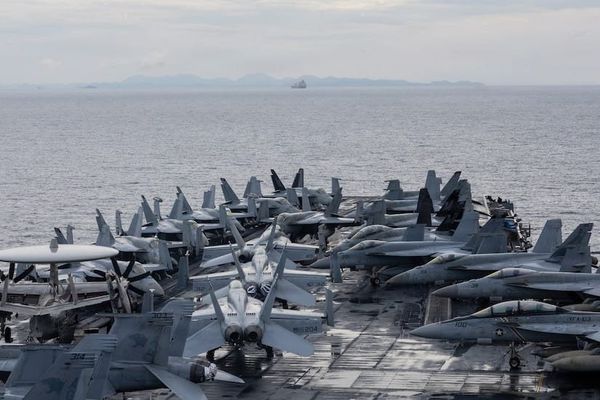
U.S. Ambassador to NATO Matthew Whitaker said the administration is working toward having European allies and Canada take over the conventional defense of Europe, freeing American forces to focus on global requirements, particularly potential challenges in the Pacific.
Does Washington now see itself as outside the conventional fight if Europe is attacked?
Article 5 would still apply. But the devil is in the details: each ally decides what response it “deems necessary,” and NATO explicitly says that response may or may not involve armed force.
So Washington could theoretically consider intelligence sharing, logistics or weapons support its Article 5 contribution, without sending U.S. forces into combat.
That is why Whitaker’s wording matters.
European militaries also rely heavily on American-made systems.
That does not mean Washington can simply “switch off NATO weapons.” Different systems operate under different agreements.
But U.S. export controls, software support, spare parts, munitions resupply and technical sustainment can all affect how independently American-origin weapons can be operated over a prolonged conflict.
Building a European defense posture is not only about buying more weapons, it is also about whether Europe can sustain and use those weapons independently when it matters.
Next: watch how NATO governments respond to Whitaker’s wording.
German authorities are investigating debris from an unidentified drone found roughly one kilometer from the Bundeswehr airbase at Wunstorf, near Hanover.
The Bundeswehr has confirmed the incident. Investigators have not yet established who operated the drone or where it came from.
Wunstorf is not an ordinary airport. It is a major German military logistics hub and the principal operating base for Germany’s A400M transport fleet. The incident comes as European governments are already dealing with suspected sabotage, drone incursions and intelligence operations around critical infrastructure.
There was another revealing statement today.
Nikolai Patrushev, the former head of Russia’s FSB and now a senior adviser to Vladimir Putin, said that if Russia confronted Poland militarily, Moscow could force Poland to capitulate within three days.
The important point is not whether that military assessment is credible, especially given how spectacularly Russia’s own forecasts failed in Ukraine.
The important point is that senior Russian officials are increasingly willing to discuss direct confrontation with a NATO member in concrete military terms and even attach timelines to it. That is a change worth noticing.
The Trump administration is stripping $52 million in military assistance from Slovakia, North Macedonia, Tunisia and Iraq and redirecting it to conservative-leaning governments in Panama, Peru, Ecuador and Colombia.
The administration says the move reflects its decision to prioritize security challenges in the Western Hemisphere, including drug trafficking and Chinese influence.
On the same day, Washington is preparing a much larger proposed weapons package for Israel.
According to Reuters and The Washington Post, the package is worth roughly $2.8 billion and includes:
20,000 MK-84 bombs
20,000 BLU-117 bombs
Each weighs about 2,000 pounds and can rip through metal and concrete, leaving massive craters behind.
Earlier this year, we focused on a Washington strategy that outlined a new map of American priorities and influence.
A few months later, we are watching parts of it play out in real time.
From massive weapons support for Israel, to shifting military assistance toward conservative-leaning governments in Latin America, to asking Europe and Canada to assume more of their own conventional defense, the pattern is becoming increasingly visible.
Add tariffs and the pressure created by the Hormuz crisis, and Europe is being asked to carry more at precisely the moment it is already absorbing multiple economic and security shocks.
And whether by choice or consequence, several of these developments also keep producing advantages for Moscow.
Canada held its first Canada Investment Summit in Toronto today.
The government says investors from nearly 30 countries managing more than C$100 trillion in assets participated, producing nearly C$500 billion in investment and financing commitments.
Some of the biggest numbers:
CPP Investments and Brookfield launched a C$50 billion Maple Fund for Canadian infrastructure and strategic industries.
PSP Investments plans another C$25 billion in Canada.
TD committed C$150 billion in financing across energy, critical minerals, defense, aerospace, AI and infrastructure.
Scotiabank announced more than C$100 billion.
BMO plans to mobilize C$70 billion.
Bell announced a C$52.5 billion, 1.2-gigawatt AI infrastructure hub in Saskatchewan, expected to create more than 4,500 jobs.
Yesterday we talked about Canada looking toward Europe. Today we got a clearer picture of what Ottawa is trying to build at home.
Energy, critical minerals, defense, AI, infrastructure.
The strategy is increasingly about reducing economic vulnerability by building enough domestic capacity and attracting enough global capital that Canada has more room to maneuver internationally.
Carney also announced a new Productivity Mega Deduction, allowing a much wider range of business investments to be written off immediately.
The government says that would reduce Canada’s marginal effective tax rate on new business investment from roughly 13% to 6.4%.
Ottawa will also explore long-term private concessions to operate Canada’s four largest airports while retaining public ownership of the land and underlying assets.
The speed and volume of operations at scale.
Canada has announced nearly C$500 billion in new investment and financing commitments. Now watch how quickly those commitments move into actual projects, particularly in defense, AI, critical minerals, energy and infrastructure.
U.S. Air Force Secretary Troy Meink said this week that the Space Force already has “space control weapons” on orbit.
It is one of the clearest public acknowledgments yet that the United States has deployed capabilities in space intended to affect adversary systems.
Officials have not disclosed exactly what the weapons are or how they operate. China responded by warning Washington against an arms race in space.
Satellites now underpin almost every modern military operation: communications, navigation, missile warning, targeting, intelligence, and command and control.
A conflict between major powers would almost certainly extend beyond land, sea and air. The question has long been whether space would become an active battlefield. The debate is increasingly shifting toward what kind of battlefield it already is.
The U.S. Supreme Court rejected President Trump’s attempt to impose new restrictions on mail-in voting ahead of the midterms. The emergency ruling leaves existing state systems in place for this year’s election while litigation continues. Trump criticized the decision Tuesday.
The Houthis launched another wave of missiles and drones at Saudi Arabia. Saudi authorities issued security alerts across several cities; the Saudi-led coalition says 13 civilians were wounded. Riyadh is also weighing its response to rapid Houthi territorial gains along Yemen’s Red Sea coast.
Saudi Crown Prince Mohammed bin Salman met U.S. CENTCOM commander Adm. Brad Cooper as the kingdom considers how to respond to the Houthi escalation.
Sudan’s food crisis may be approaching another breaking point. The World Food Program says funding shortages could force sharp cuts to food assistance within weeks while roughly 20 million people face acute hunger.
Nigeria’s Dangote refinery is moving toward public ownership, opening an opportunity for outside investors to buy into Africa’s largest refinery.
Next week, I’ll be reporting from inside the UN and from meetings, interviews, diplomatic events and smaller conversations happening around High-Level Week.
I’ll be following the stories that matter, but I also want to know what you want me to pay attention to.
If there’s a country, issue or question you’re particularly interested in, leave a comment below. I’ll be reading them before the week begins.
That’s The Daily.
Tomorrow, we do it again.
What mattered. Why it mattered. What comes next.
— Olga
Join ONEST for The Daily, Diplomatic Notes when something important cannot wait, and deeper ONEST Explained analysis.
Monthly or annual membership.
Prefer to follow for free? Free subscribers receive selected public reporting and interviews.