What’s Happening in Poland? A Constitutional Crisis, Explained
Poland’s long-running fight over its Constitutional Tribunal has moved from legal arguments into a physical confrontation over who controls the court.

– 3 min read

Poland’s long-running fight over its Constitutional Tribunal has moved from legal arguments into a physical confrontation over who controls the court.
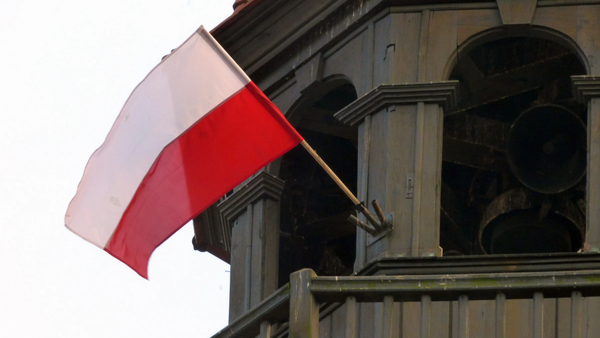
Poland’s constitutional crisis escalated dramatically this weekend after a judge suspended the president and vice-president of the country’s Constitutional Tribunal, protesters surrounded the court, President Karol Nawrocki cut short a trip abroad and returned to Warsaw, and Poland’s ambassador to China resigned over the turmoil.
The dispute has been building for years.
Now it has become a direct confrontation over who has the legal authority to run one of Poland’s most important institutions.
On Friday, Judge Anna Korwin-Piotrowska announced that she was suspending Constitutional Tribunal President Bogdan Święczkowski and Vice President Bartłomiej Sochański for one month and assuming responsibility for running the court.
Korwin-Piotrowska argues that the Tribunal’s existing leadership has obstructed judges elected by the current parliamentary majority and prevented the institution from functioning normally.
Święczkowski and his allies reject the decision entirely and say Korwin-Piotrowska has no legal authority to remove them.
The result is extraordinary: two competing groups now claim legitimate authority over Poland’s constitutional court.
Seven judges elected by parliament entered the Tribunal headquarters on Friday evening, accompanied by officers from Poland’s State Protection Service.
Police were deployed around the building as protesters gathered outside. Some demonstrators attempted to breach security barriers and threw objects at officers; several people were detained.
President Karol Nawrocki, who had been traveling to Senegal, ordered his plane to turn around and returned to Warsaw. He later entered the Tribunal amid a confrontation with judges at the entrance and accused the government of staging a “forcible takeover” of a constitutional institution.
Prime Minister Donald Tusk has taken the opposite position. He says the government is trying to restore the rule of law after years in which the Tribunal was politicized under the previous Law and Justice, or PiS, government.
The Constitutional Tribunal decides whether Polish laws comply with the Constitution. That gives it enormous power over legislation, executive action and the legal system itself.
The current fight dates back to 2015, when PiS began reshaping the court after taking power. Its judicial appointments triggered years of conflict with the European Union over judicial independence and the rule of law.
When Tusk’s coalition returned to government in 2023, it promised to reverse those changes. But that created a new problem: the government and the Tribunal increasingly stopped recognizing each other’s decisions. The government has questioned the legitimacy of parts of the court and has refused to publish some rulings.
The Tribunal’s existing leadership, meanwhile, has refused to recognize some judges elected by the current parliament. President Nawrocki has also refused to swear in several judges chosen by the parliamentary majority. So the argument is no longer simply over individual judges, rather over who has the authority to decide who is a judge in the first place.
Jakub Kumoch, Poland’s ambassador to China, resigned on Friday, saying that “in light of events in the country” he could no longer continue representing Poland.
Foreign Minister Radosław Sikorski responded bluntly, saying he accepted the “unprofessional conclusion” of Kumoch’s mission and that Kumoch no longer represented the republic.
Kumoch had been appointed ambassador under former President Andrzej Duda and previously served in Duda’s presidential administration. His resignation is important because it shows the Tribunal dispute is no longer confined to judges and party leaders. It is beginning to affect Poland’s state institutions and diplomatic corps.
On Saturday, Nawrocki held a series of emergency consultations with parliamentary leaders, including representatives of PiS, Confederation, Poland 2050, the Polish People’s Party and several smaller political groups.
The Left declined to participate, arguing that Nawrocki himself bears responsibility for the current confrontation. Tusk did not attend.
Nawrocki says the talks are necessary because Poland’s constitutional order has been violated and the situation poses a threat to internal security. The government rejects that framing and says the real constitutional problem is the politicization of the Tribunal under PiS.
The immediate question is whether the two sides can establish who legally controls the Tribunal without further physical confrontation. Korwin-Piotrowska has announced plans to convene a General Assembly of judges on November 3. Święczkowski and his supporters say they intend to regain control of the institution.
But the deeper problem is much harder. Poland now has competing political camps that do not agree on the legitimacy of the judges, the leadership of the court or even which rulings are legally binding, which makes this more than a partisan fight.
In short: this has become a dispute over the basic machinery that decides what Polish law is.
Until the two sides agree on who has lawful authority inside the Tribunal, every attempt to “restore” constitutional order risks being seen by the other side as another violation of it.
This explainer is public. Subscribe to ONEST for sharp explainers, deeper reporting, and the context that changes how you understand the story.