The G20 Foreign Ministers’ Meeting ended in Atlanta on Saturday without consensus on several of the biggest security issues facing the group.
Instead of a joint communiqué, the United States issued a chair’s statement summarizing discussions around energy security, supply-chain resilience, freedom of navigation, food security and geopolitical tensions.
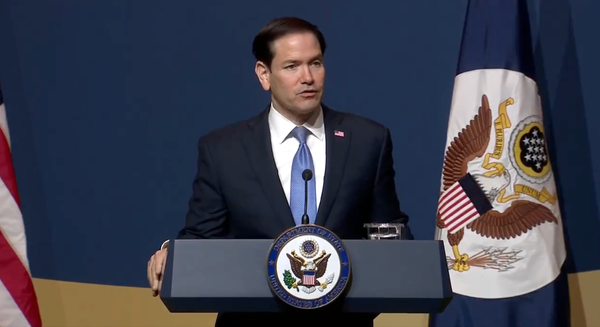
Secretary of State Marco Rubio acknowledged at the close of the meeting that the countries were still far from agreement.
“I wouldn’t pretend to you today that we are close to finding universally accepted solutions to these problems,” Rubio told reporters.
That was visible from the beginning.
Russia was in the room. Ukraine was not.
Russian Foreign Minister Sergey Lavrov attended the Atlanta meeting, while Ukraine — invited to previous G20 gatherings despite not being a formal member — was not invited this year.
The United States said it had "chosen to focus invitations on G20 members".
But that principle was applied unevenly.
South Africa, a founding G20 member and the only African country in the group, was also excluded amid a continuing dispute with the Trump administration.
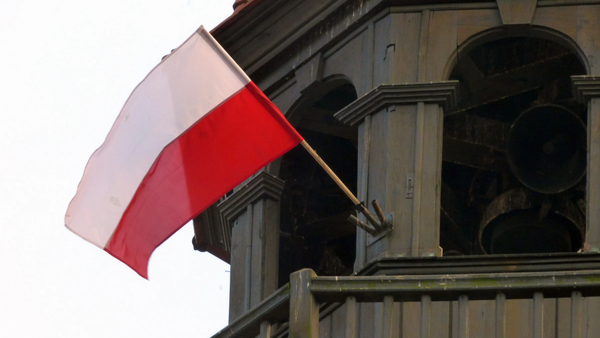
Poland, meanwhile, attended as a guest with explicit U.S. backing for eventual full membership.
Russia objected.
Lavrov argued that Poland’s invitation violated the G20’s consensus-based diplomatic practice and said "Warsaw did not meet the economic threshold for membership".
Polish Foreign Minister Radosław Sikorski, however, said Washington has proposed making Poland a permanent member and that Warsaw is actively lobbying for that outcome.
That dispute is unlikely to disappear quickly. G20 membership changes generally require consensus, meaning Russia could effectively block Poland’s accession.
The family photo became a diplomatic line.
The most visible rupture came before substantive negotiations had even begun.
The traditional G20 “family photo” was canceled after European, Australian and Canadian officials objected to appearing alongside Lavrov.
Roughly one-third of participants opposed the photograph, according to reporting from Reuters.
Germany’s foreign minister said there could be no image suggesting normal relations with Moscow while the war in Ukraine continues.
U.S. officials considered holding two separate photographs — one with Lavrov and one without — before Rubio canceled the event entirely.
The symbolism was difficult to miss.
Washington has increasingly reopened political and economic engagement with Moscow. Several European governments are signaling that they are not prepared to visually normalize that relationship.
And yet Ukraine disappeared from the final statement.
The chair’s statement released Saturday speaks broadly about “geopolitical tensions” and stresses secure energy flows, maritime navigation and critical infrastructure.
It discusses the Strait of Hormuz and Bab el-Mandeb. It addresses fertilizer, critical minerals, nuclear energy and what it calls the “weaponization” of food supply chains. But it does not name Russia or Ukraine.
That omission is particularly notable because the war was one of the central sources of disagreement inside the meeting. European officials publicly challenged Lavrov’s positions, while EU foreign policy chief Kaja Kallas accused him of presenting false narratives about the war. European officials also pushed for a ceasefire in the Black Sea to protect agricultural shipping.
Sikorski separately called for a rapid Black Sea ceasefire and insisted that Ukraine must be included in negotiations over ending the war. Russia showed no sign of softening its position. Lavrov said Moscow would not accept an outcome in which Ukraine posed what he called "a military threat to Russian security interests".
Energy became the common language.
Where ministers could find more common ground was around economics.
The chair’s statement repeatedly emphasizes energy abundance, affordability and security, including nuclear power and emerging reactor technologies. It also focuses heavily on supply-chain resilience — fertilizers, raw materials, critical minerals, processing and refining capacity.
That reflects the broader theme of the U.S. G20 presidency: narrowing the forum back toward economic questions even when those questions are increasingly inseparable from geopolitics.
Rubio opened the meeting by framing disruptions to energy, food, trade and freedom of navigation as interconnected threats to the global economic system. The final chair’s statement follows that logic. Rather than attempting agreement on the wars themselves, it focuses on their "economic consequences".
The Quad used Atlanta to go further.
On the sidelines, the United States, Australia, India and Japan held a separate Quad meeting and produced considerably more concrete commitments.
The four governments emphasized protecting navigation through the Strait of Hormuz, the Red Sea and Bab el-Mandeb, announced more than $85 million in technical and financial assistance for trusted artificial intelligence systems across the Indo-Pacific, and expanded cooperation on critical minerals, ports, undersea cables, semiconductors and maritime surveillance.
They also announced the first Quad Business Leaders’ Forum and additional work on fuel security, digital infrastructure and maritime monitoring.
The contrast is telling.
The G20 struggled to reach political consensus. Smaller groups of countries with more closely aligned interests continued building practical coalitions around it.
Get The Daily: five geopolitical developments worth knowing, the context that changes how you understand them, and what comes next. Monday through Friday, delivered to your inbox for free.
Get The Daily
What comes next
Attention now shifts to the G20 Leaders’ Summit in Miami in December.
Trump has invited Vladimir Putin, although it remains unclear whether the Russian president will attend. Poland is pushing for permanent membership. South Africa remains in dispute with Washington over its exclusion. And Ukraine, central to one of the largest security crises affecting the G20, was not invited to the Atlanta ministerial, and as of October 31 there is no public confirmation that Kyiv has been invited to the December leaders’ summit in Miami.
The Atlanta meeting demonstrated that the G20 can still provide a room in which adversaries sit together. What it could not demonstrate was that those adversaries are getting any closer to agreement.