Russia Gets Relief, Europe Pushes Back, and Canada Moves Closer to the EU

– 3 min read

Here are five geopolitical developments worth knowing today and where the details matter.
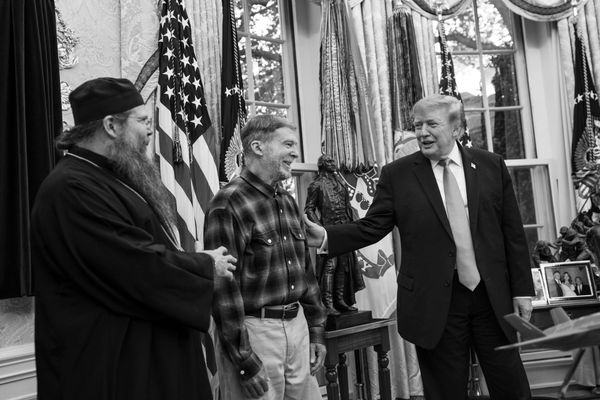
President Trump welcomed recently freed American Stephen Hubbard to the Oval Office today and criticized those who had pushed him to impose additional sanctions on Russia while negotiating Hubbard’s release.
But the sanctions story began well before Hubbard came home. Washington has repeatedly eased or waived economic restrictions on Russia, opened the U.S. market to Russian diesel, discussed future economic cooperation with Moscow, and pressed Ukraine to stop striking Russian refineries.
The administration is also reportedly pushing Lithuania to consider reopening its port to Belarusian potash despite European sanctions.
Foreign ministers gathered in Atlanta today, but the traditional group photo was scrapped after European and other Western officials objected to appearing alongside Russian Foreign Minister Sergey Lavrov.
Secretary of State Marco Rubio opened the substantive meetings around freedom of navigation and food security, arguing that both now sit at the center of wider disruptions to energy, trade and global supply chains.
Rubio also highlighted Poland’s inclusion as a full participant in this year’s U.S.-hosted G20 process.
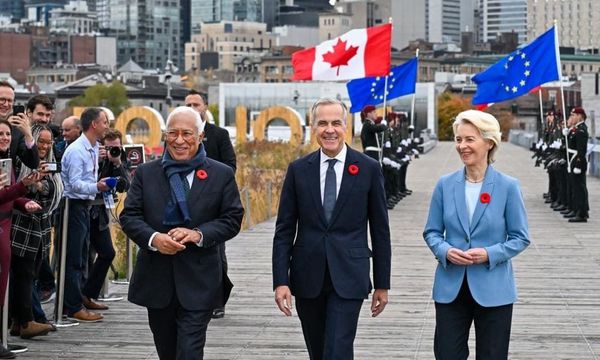
Canada and the European Union launched an “Alliance for the Future” and will now work toward what they describe as the deepest possible relationship short of EU accession.
The agenda is unusually broad: digital trade, critical minerals, defense, AI and supercomputing, payments, satellites, energy, research and greater student and worker mobility.
The two sides will also explore a new form of association that could eventually make Canada the EU’s first Associate Member.
China’s Fifth Plenum concluded with another sweeping endorsement of Xi Jinping’s political direction and a strong emphasis on party discipline, oversight and anti-corruption.
The meeting also confirmed that the Communist Party’s 21st Party Congress will take place in the second half of 2027 — the gathering that will help determine China’s next leadership cycle and Xi’s political future.
Thirty-four disciplinary decisions were also confirmed, including the expulsion of senior figures.
On the sidelines of the G20, the three countries signed a new Trilateral Arctic Pacific Partnership to explore maritime and economic cooperation in the Pacific Arctic.
They also discussed North Korea’s nuclear and missile programs, Taiwan, China’s actions in surrounding seas, supply-chain security and cooperation on small modular nuclear reactors.
Saudi Arabia: The United States formally signed on to participate in Expo 2030 Riyadh, which Saudi Arabia expects to attract more than 42 million visitors.
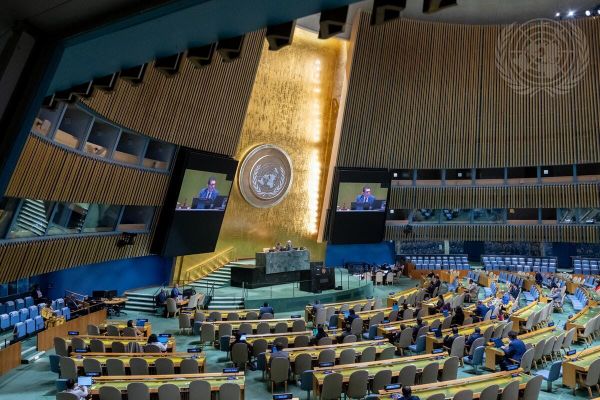
DR Congo: The U.S., EU and several European governments urged parties to the conflict in eastern DRC to respect existing ceasefire commitments as fighting and drone use continue.
Russia at the G20: The photo dispute may be symbolic, but it captures a much larger divide: Washington is increasingly reopening engagement with Moscow while many European allies are insisting that relations with Russia are still nowhere near normal.
G20: Ministers continue talks tomorrow, with Russia, Ukraine, navigation, energy and economic security likely to remain the main fault lines.
Russia-U.S.: The question now is whether Washington keeps easing pressure on Moscow while asking Ukraine to make more concessions.
UN mine action: Ukraine protested the appointment of a Russian ambassador to a leading UN mine-action role, arguing that Russia bears responsibility for making Ukraine one of the world’s most mine-contaminated countries after years of war. Kyiv called the appointment “deeply troubling” and said it undermines trust in the UN system.
Canada-EU: The important question now is what “Associate Member” would mean in practice. The two sides say they will begin defining the scope of the relationship over the coming months.
China: Attention now shifts toward the political maneuvering ahead of the 2027 Party Congress.
Poland: A separate constitutional confrontation is escalating in Warsaw tonight. We’ll break down what happened and why it matters — tomorrow.
That’s what mattered today.
— Olga
Not a subscriber?