Good evening,
Ukraine is asking for tangible results from the next negotiations: protection for energy infrastructure, secure maritime trade, prisoner exchanges and a path to decisions by leaders. Moscow is pursuing a much wider discussion about Europe’s security order.
Israel votes tomorrow amid reports that Netanyahu sought another strike on Iran. Venezuela’s opposition leader has returned home as Washington outlines a staged transition. Canada is exploring a First Nations sovereign wealth fund, while new currency arrangements show how countries are adapting financially to conflict.
Here’s what mattered today.
1. Ukraine wants results. Moscow wants to reshape European security.
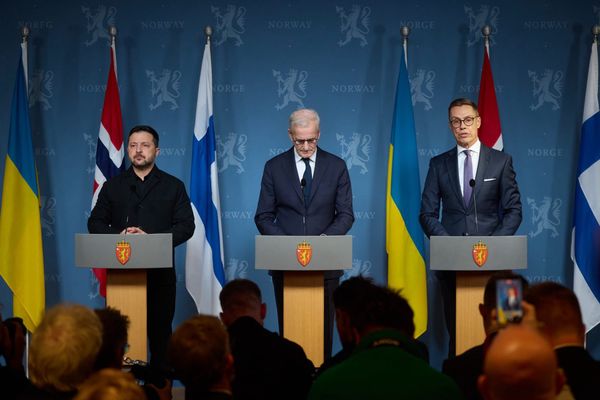
President Volodymyr Zelenskyy warned against lifting Russia sanctions before negotiations deliver an end to the aggression:
“Sanctions were imposed for aggression, not for an opportunity to have a chat.”
He said Ukraine should not arrive at a meeting with having already lost its leverage through sanctions relief, depleted financing or the release of frozen Russian assets. Reassembling the international coalition needed to impose those measures would be difficult.
For the proposed November technical talks, Zelenskyy identified concrete outcomes: an energy ceasefire, maritime and grain arrangements, an all-for-all prisoner exchange, or a leaders’ meeting capable of resolving outstanding questions.
In his first call with Estonia’s new president, Ülle Madise, he also reiterated that Europe must participate in formats producing substantive decisions. He highlighted Russia’s attacks on Ukrainian railways and the need for additional locomotives.
The urgency remains immediate. Russian attacks overnight into October 25 killed at least four people, according to Ukrainian authorities. Zelenskyy called for the delivery of Patriot missiles to be unblocked.
Moscow’s agenda extends beyond Ukraine. Reporting by The Telegraph says Russia is expected to seek a reduction of NATO’s military presence to 1997 levels, potentially affecting allied deployments in Poland, the Baltic states and Finland. This concerns military deployments and infrastructure across NATO’s eastern members.
Putin has said negotiations should address "guarantees for Russia" and the broader European security framework, attributing the expanded agenda to U.S. envoy Steve Witkoff.
What Russian commentators are advocating
A Kyiv Post analysis of Russian commentary describes ambitions reaching well beyond a ceasefire:
- Stanislav Tkachenko advocates reviving Moscow’s December 2021 demands on NATO deployments and enlargement, alongside recognition of territorial seizures, sanctions relief and the return of frozen assets.
- Dmitri Trenin argues that a frontline freeze does not suit Russia, but talks with Washington are already useful; he envisages fighting potentially continuing into 2027.
- Fyodor Lukyanov portrays Ukrainian proposals as an effort to manage pressure from Trump, preparing an explanation that blames Kyiv and Europe if talks fail.
- Oleg Matveychev treats Russia’s recognition as an equal global interlocutor as a success in itself. Leonid Slutsky points to sanctions relief and the diesel arrangement as gains already secured.
- Gevorg Mirzayan and Boris Mezhuev see Trump’s electoral timetable and interest in energy cooperation as opportunities for Moscow.
These positions show how influential Russian voices assess the negotiations: a means to secure concessions and status while military pressure continues.
Inside Russia
The government reshuffle has also removed a close Mishustin ally, Dmitry Grigorenko, from leadership of the government apparatus, replacing him with Irina Okladnikova.
Ukrainian analyst Vadym Denysenko interprets the changes — and the reported detention of tax-service official Aleksandr Blikman — as part of an FSB effort to weaken the technocratic networks surrounding Mishustin and other senior officials. His assessment identifies the forthcoming decision over FSB director Alexander Bortnikov’s tenure as a significant indicator of the balance of power.
Why it matters: Russia is seeking changes to the security arrangements of countries far beyond Ukraine while benefiting from concessions before a settlement. Europe’s role in those negotiations, and the leverage retained when they begin, will shape the outcome.
Watch next: The November agenda, European participation, Patriot deliveries (if any) and whether sanctions decisions are tied to verifiable Russian actions.
2. Israel votes tomorrow amid reports of pressure for another Iran strike
The New York Times reports that Benjamin Netanyahu sought for weeks to arrange another airstrike on Iran, encountering resistance from military chief Eyal Zamir.
Related Israeli reporting describes a dispute over proposed military action that officials feared could reignite the conflict before the election. Netanyahu’s office denied reports of a confrontation; Defense Minister Israel Katz said Israel had no intention of initiating an attack before the vote.
Meanwhile, representatives from Saudi Arabia, Türkiye and Pakistan visited Tehran as regional governments tried to prevent renewed warfare. Iran also confirmed a separate Qatari mediation visit.
The United States has prepared further attack options, while The Wall Street Journal reports that intelligence about advanced Iranian preparations to target Americans contributed to departures from regional diplomatic and military facilities.
In Saudi Arabia, two Riyadh airport terminals resumed operations Sunday. The Houthis nevertheless claimed further attacks on the airport and East-West oil pumping stations.
Why it matters: Israel’s election is taking place alongside military preparations, threats to regional infrastructure and urgent mediation. The next government’s composition will influence both the Iran strategy and its relationship with Washington.
Watch next: Tomorrow’s vote, coalition arithmetic and whether diplomacy preserves the pause in direct attacks.
3. Machado returns as Washington outlines Venezuela’s transition
María Corina Machado returned to Venezuela Sunday after months in exile, increasing pressure for elections and a democratic transition.
Washington says it told the authorities in Caracas weeks ago that she should be able to return without interference.
A senior State Department official outlined the administration’s intended sequence:
- Replace the Supreme Justice Tribunal: A jointly constituted nominating committee would select 32 magistrates, with the goal of installing the court before year-end.
- Reform the electoral council: Replace its membership and narrow its role to administering elections, removing its power to decide which political actors may compete.
- Declare a permanent presidential vacancy: Washington says this would trigger the process toward a new election.
- Expand political freedoms: Parties and candidates must be able to organize, campaign, travel and access media without retaliation.
The official emphasized that institutional changes must accompany economic stabilization and work with existing authorities, including those controlling security forces.
Why it matters: Washington is setting out a transition that depends on cooperation from institutions and officials inherited from the old system. Machado’s return makes the question of timing and how long Venezuelans are expected to wait more immediate.
Watch next: The judicial nominees, changes to electoral rules, political prisoners’ releases and a binding election timetable.
4. Canada explores a First Nations sovereign wealth fund
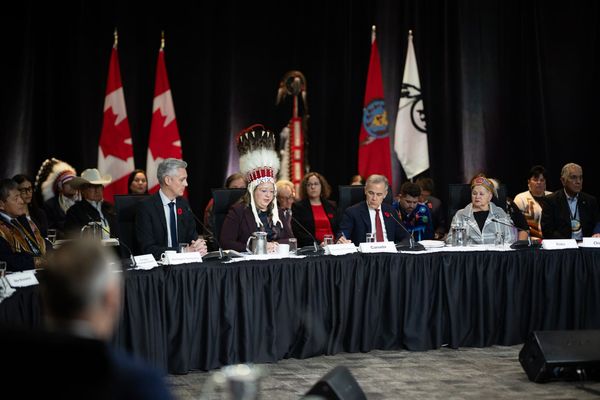
Prime Minister Mark Carney met First Nations leaders and provincial and territorial premiers to discuss participation in major infrastructure projects, community services and revenue sharing.
The government will work with First Nations on the potential creation of a sovereign wealth fund, intended to give communities a direct stake in major projects. It also plans to expand the First Nations Finance Authority’s lending powers.
Announced funding includes:
- C$260 million over four years for Indigenous workforce readiness.
- More than C$2.5 billion over five years, plus ongoing funding, for emergency management and fire protection.
- More than C$630 million over four years, alongside ongoing annual funding, for First Nations and Inuit policing.
- C$140 million over four years for community safety and crime prevention.
Leaders also discussed a path beyond the Indian Act.
Why it matters: The proposed fund would give First Nations an ownership and investment mechanism alongside employment opportunities. Its governance, capitalization and distribution of returns will determine what that means in practice.
Watch next: First Nations’ role in designing the fund, proposed legislative changes and funding delivery.
5. Conflict is changing the financial support network
An update accompanying CFR’s Central Bank Currency Swaps Tracker highlights new arrangements shaped by geopolitical pressure:
- The UAE and Bahrain: A dirham swap facility provides support as Bahrain faces fiscal pressure and reduced oil revenues.
- Russia and Kazakhstan: A new facility gives Russia access to tenge through a bilateral arrangement.
- China and Argentina: Beijing renewed its swap line in August despite Washington’s stated ambition to reduce Chinese influence in Argentina.
A currency swap allows participating central banks to exchange currencies and provide liquidity under agreed terms. Such facilities can help countries manage funding shortages and reinforce financial relationships.
Why it matters: Sanctions, energy disruption and debt pressures influence where governments seek financial backing. Those relationships can deepen even when political leaders publicly advocate closer alignment with another power.
New today
Who does the ocean actually belong to? I asked Otto Spijkers, Assistant Professor of International and European Law at Leiden University College in The Hague, to explain how territorial waters, the high seas, fishing rights, deep-sea resources and international disputes are governed. The full Simply Put conversation is now live, alongside a public glossary breaking down the key terms and examples discussed.
Also worth knowing
- Comey charged again: DOJ brought charges accusing former FBI director James Comey of transmitting and conspiring to transmit national defense information to a New York Times reporter in 2016. He denies wrongdoing. His lawyers say the matter was previously investigated without charges and have sought dismissal.
- Brazil: Lula won reelection, securing a fourth presidential term. Flávio Bolsonaro refused to concede and said he would seek annulment of the runoff. The result keeps Latin America’s largest economy under left-wing leadership amid a regional shift to the right.
- Serbia: Aleksandar Vučić conceded defeat following Sunday’s parliamentary election, ending his long hold on power. Reported turnout approached 70%.
- UN leadership: A Wall Street Journal editorial, citing sources in three countries, reports that Trump administration officials have advocated Viktor Orbán for secretary-general and see potential Russian and Chinese support. The position requires Security Council recommendation and General Assembly appointment.
- Slovakia-Russia: Foreign Minister Juraj Blanár traveled to Moscow for economic and scientific cooperation meetings and talks with Lavrov, including energy relations and Ukraine.
- Sudan: Britain imposed travel bans and asset freezes on 15 commanders from the RSF and Sudanese Armed Forces suspected of responsibility for sexual violence.
- Ebola: Africa CDC is investigating the origin of Nigeria’s imported case because the patient’s documented travel does not place her in the outbreak’s epicenter. Identifying her exposure could reveal an undetected transmission chain.
- Jordan: Authorities arrested three suspects after a shootout in connection with the church attack. The reported death toll has risen to nine.
- Saudi Arabia-Singapore: Riyadh plans to store crude at Jurong Rock Caverns from the second half of 2027, strengthening supply arrangements for Asian markets.
- Satellite alternatives: Ukraine is exploring sovereign communications satellites with ICEYE and Nokia, while U.S. allies are accelerating alternatives to SpaceX following restrictions on Ukrainian access.
- AUKUS: The partners designated USS Colorado as the first Virginia-class submarine assigned to Submarine Rotational Force-West, beginning in late 2027.
- China: The Communist Party opened a major meeting focused on discipline and governance. Separately, Kim Jong Un visited China for a new cross-border bridge.
- France: Marine Le Pen launched her presidential campaign amid continuing protests and political turmoil.
- Algeria: Parliament approved a troop deployment to Niger, described as the country’s first foreign deployment since 1973.
Tomorrow, we’ll do this again. Thank you for reading.
This Monday edition is public. To receive The Daily throughout the week — and access ONEST’s reporting, interviews and explainers — become a member. Your membership supports independent reporting that helps you understand the world without overwhelming you.
— Olga
Written by

Comments