Marco Rubio’s line was blunt: “The UN must open the Strait of Hormuz for us. What is the purpose of the UN?! The UN was supposed to be a place where you could peacefully resolve global conflict. We are taking it to the UN.”
But that raises the real question.
Take it to whom?
Because if the United States defunds the UN, weakens alliances, pressures institutions, and then turns around demanding that the UN deliver results in a global crisis, it should not be surprised when the institution no longer moves primarily through Washington.
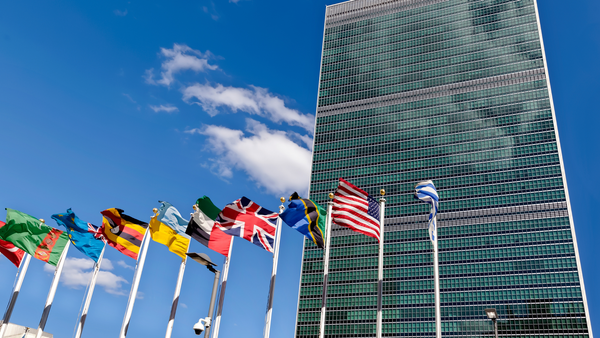
That is the uncomfortable reality now facing U.S. diplomacy. The United Nations is not some abstract building in New York. It is an institution powered by money, influence, coalitions, personnel decisions, and political leverage. And when the United States stops paying, someone else gains space.
Right now, that someone is China.
The U.S. reportedly owes the UN just under $2 billion in regular budget arrears, while broader unpaid U.S. obligations across the UN system are far higher. At the same time, the UN is warning of a severe liquidity crisis, with questions now being asked openly about whether the organization could run out of cash by August.
In today’s press briefing, when the UN spokesperson was asked about that cash crisis, the answer pointed to China’s recent partial payment — roughly $800 million.
That matters.
Because money at the UN is never just money. It is access. It is leverage. It is credibility. It shapes who can demand reform, who can block appointments, who can quietly influence senior personnel choices, and who can present itself as the responsible power while others are withholding funds.
I was told off the record that China’s financial influence already gives it a quiet role in whether some senior UN officials are approved or blocked. That does not mean China controls the UN. It means influence inside the UN is often exercised through pressure, timing, budgets, posts, and political consent — not dramatic public speeches.
And that is exactly why the Rubio line is so revealing.
The United States wants the UN to function when it needs the UN. It wants the Security Council when Hormuz becomes urgent. It wants international law when shipping lanes are threatened. It wants the legitimacy of multilateral process when unilateral action becomes costly.
But Washington cannot simultaneously defund the institution, attack its legitimacy, alienate allies, and expect the same level of influence inside the system.
The UN’s financial crisis is not only an accounting problem. It is a geopolitical shift.
If the UN runs short of cash, meetings are reduced. Translation is rationed. Staff posts are cut. Mandates slow down. Peacekeeping reimbursements are delayed. Humanitarian coordination suffers. Smaller countries lose access faster than powerful ones. And the states that do pay — or that time their payments strategically — gain political weight.
That is the broader story.
China is not simply “supporting the UN.” China is positioning itself inside the UN at a moment when the United States is choosing absence, arrears, and conditional engagement.
So when Rubio asks, “What is the purpose of the UN?” the answer is: the UN is still a place where conflict can be handled peacefully — but only if powerful states actually sustain it.
You cannot starve the system and then demand that it rescue you.
And you cannot walk away from the table and then complain that someone else is sitting at the head of it.