ONEST Global Briefing — May 23, 2026
NPT fails to reach consensus, NATO faces new pressure, Canada builds resilience, and the military-tech economy accelerates.

– 14 min read

NPT fails to reach consensus, NATO faces new pressure, Canada builds resilience, and the military-tech economy accelerates.
“Together with President of Latvia Rinkēvičs and President of Lithuania Nausėda, we issued a joint statement rejecting Russia’s disinformation and condemning its threats against the Baltic States regarding recent airspace violations. We in NATO stand united in the defence of the alliance and in supporting Ukraine.”
— Estonian President Alar Karis
The statement came as NATO faces growing pressure on its eastern flank, amid Russian threats, airspace violations, drone incidents, and broader uncertainty over how much U.S. military support Europe can count on in a future crisis.

The 2026 Nuclear Non-Proliferation Treaty Review Conference closed at UN Headquarters without consensus on a final document. The outcome is not surprising. It continues the pattern seen in 2015 and 2022, when previous review conferences also failed to adopt consensus final documents.
The disputes this year reflected the larger fractures in the nuclear order. Language on attacks or threats against nuclear facilities became politically sensitive after U.S. and Israeli strikes on Iranian nuclear sites. NATO states and many non-nuclear-weapon states remained divided over nuclear sharing, extended deterrence, and forward-deployed nuclear weapons. Some states objected that language on North Korea had been weakened in later drafts. Nuclear-weapon states still did not offer the kind of concrete Article VI disarmament progress many non-nuclear states have long demanded. And language urging the United States and Russia to maintain New START limits remained one of the more practical arms-control elements under discussion.
The NPT is not collapsing because one paragraph failed. It is struggling because the political bargain underneath the treaty is under strain: non-nuclear states are asked to remain restrained while nuclear-armed states modernize, expand deterrence doctrines, and fail to show credible disarmament momentum.
For ONEST, this is the central takeaway: the treaty still matters, but the trust required to sustain it is weakening.
House Republican leaders scrapped a vote that could have directed President Trump to end the Iran war or seek congressional authorization for it, after lacking the votes to defeat the measure. Senate Republicans also delayed a vote on Trump’s immigration crackdown and a $1.8 billion fund likely to benefit Trump allies. Senator Susan Collins called the fund “in real trouble — and it should be” after a contentious meeting with Acting Attorney General Todd Blanche.
The same week, a federal panel filled with Trump appointees approved his plan to build a 250-foot triumphal arch in Washington, while the administration slowed restrictions on planet-warming chemicals used in air conditioners and refrigerators. Trump also changed his schedule, canceling a planned trip to New Jersey and returning directly to the White House for the weekend.
The pattern is familiar: major decisions involving war powers, immigration enforcement, political compensation, climate regulation, and symbolic architecture are all moving through a system increasingly shaped by loyalty, spectacle, and executive control.
The U.S. defense system is reorganizing around a new reality: high-end munitions are being depleted quickly, drone warfare is reshaping procurement, and allies want faster access to American systems.
According to Defense Department assessments described to The Washington Post, the U.S. military has depleted much of its inventory of advanced missile-defense interceptors after using far more high-end munitions defending Israel during hostilities with Iran than Israeli forces used themselves.
At the same time, the U.S. Army is preparing an online Foreign Military Sales Marketplace — described by Army Secretary Dan Driscoll as looking like “Amazon” for offensive and defensive weapons systems. The marketplace is expected to open first to 25 foreign nations and initially feature unmanned aerial systems and counter-drone technology. It follows Trump’s February executive order establishing an “America First Arms Transfer Strategy,” designed to streamline weapons sales to allies and boost U.S. defense production.
Space is also moving deeper into military planning. A new paper from the Mitchell Institute argues that the U.S. Space Force must begin preparing now to put Guardians in orbit and on the moon in future decades to counter Chinese ambitions. The Space Force is also planning on-orbit refueling and maneuver demonstrations in 2027, with officials seeking to move those capabilities from demonstration to operations quickly.
Other developments reinforce the same trend: the Air Force pulled a KC-135 tanker out of storage after another Stratotanker crashed during Operation Epic Fury; U.S. Naval Air Forces issued a safety stand down for four tactical aviation teams after two EA-18G Growlers collided at an air show; two people were injured at an explosives research facility at Eglin Air Force Base; and a study found the Space Force needs a third launch site to manage surging government and commercial launch demand.
The defense economy is not slowing down. It is being restructured for speed, exports, drones, space, missile defense, and sustained conflict.
Secretary of State Marco Rubio met with Turkish Foreign Minister Hakan Fidan on the margins of the NATO foreign ministers’ meeting. The two discussed the upcoming NATO Summit in Ankara, the importance of increasing defense spending, expanding defense production, and reopening the Strait of Hormuz.
The Hormuz discussion matters because the Strait remains central to the Iran war, global energy flows, China’s oil access, Gulf security, and the risk of wider escalation. It also shows how NATO conversations are no longer only about Europe. They increasingly connect the Arctic, the Middle East, defense production, maritime security, and burden-sharing into one strategic map.
Rubio’s remarks before meeting NATO Secretary General Mark Rutte exposed contradictions in U.S. strategy: demanding NATO support after unilateral action, invoking the UN after escalation, and stretching defense production across Ukraine, Europe and the Middle East.
CBS News reports that the U.S. intelligence community has been exploring how Cuba might respond to American military action. Earlier this month, as U.S. officials tracked the Universal, a sanctioned Russian-flagged oil tanker bound for Cuba, Pentagon and Defense Intelligence Agency analysts began assessing what Cuba’s response might be to a U.S. attack on the Caribbean country.
This is significant because it suggests the Iran war and sanctions enforcement are not the only flashpoints being studied. The administration’s posture toward Cuba, Russian-linked oil transport, and the Caribbean could become another area where military planning and economic pressure intersect.
Tulsi Gabbard, Director of National Intelligence, said she will leave office on June 30 because her husband has been diagnosed with a rare bone cancer. Her resignation comes at a sensitive moment for U.S. intelligence, with the administration managing multiple crises involving Iran, Cuba, China, Russia, NATO, and domestic security.
SpaceX is preparing for a potential public offering that could raise up to $80 billion at a valuation as high as $2 trillion. Elon Musk would reportedly retain 85 percent of the company’s voting control, and the listing could help propel him toward becoming the world’s first trillionaire.
The filing also shows the scale of SpaceX’s current financial picture. In Q1 2026, SpaceX reported $4.69 billion in revenue and a $4.3 billion net loss. Starlink brought in $1.19 billion, while the space/rockets division lost $619 million and the AI/xAI/Grok/Colossus unit lost $2.5 billion. The company has spent $15 billion on the updated Starship program.
Musk’s 1 billion restricted shares reportedly vest only if SpaceX establishes a permanent Mars colony of 1 million people. SpaceX also claims a $28.5 trillion total addressable market.
SpaceX’s IPO is expected to be the first of three massive public offerings, followed by OpenAI and Anthropic. OpenAI is reportedly preparing to file confidential IPO paperwork with a valuation of $850 billion.
The numbers are staggering, but the strategic question is larger: defense, space, AI, satellites, data centers, and public markets are converging into a new industrial order where private companies increasingly sit inside national-security priorities.
A series of explosions on a barge at a commercial shipyard on Staten Island killed one person and injured 34 firefighters and emergency medical workers. The first explosion occurred around 3:25 p.m. in the Arlington neighborhood on the North Shore. A second explosion erupted at 4:19 p.m. while firefighters were inside, on top of, and near the barge fighting the fire and searching for trapped workers.
Mayor Zohran Mamdani said first responders “ran towards danger so others could escape to safety.” One fire marshal was in serious condition with a brain injury and head fracture; another firefighter was also hospitalized in serious condition but was recovering by Friday evening. An investigation into the cause will begin after the fire is extinguished.
Canadian Foreign Minister Anita Anand said she received information detailing the “appalling abuse” of Canadians detained in Israel. The Canadians have arrived in Türkiye, where Global Affairs consular officials are helping ensure they receive urgent medical care before returning home. Anand said Canada “unequivocally condemns” the grave mistreatment and called for those responsible to be held accountable.
The statement comes amid continuing tensions involving Gaza, aid flotillas, sanctions, Israeli military actions, and growing diplomatic scrutiny of treatment of foreign nationals.
Canada continued rolling out a broad resilience agenda today, with announcements spanning Indigenous consultation, housing, disaster preparedness, infrastructure, steel, youth mental health, and World Cup legacy planning.
Ottawa announced $1.8 million in additional funding to support First Nations in Northern Manitoba and British Columbia, helping communities participate in federal consultations, particularly on major projects affecting their traditional territories. The funding is part of a $10.1 million Budget 2025 commitment over three years to continue the Federal Initiative on Consultation.
As hurricane season approaches, Environment and Climate Change Canada said the 2026 North Atlantic season is expected to be below average, with 8 to 14 named storms, 3 to 6 hurricanes, and 1 to 3 major hurricanes. Officials stressed that even a single storm can have major impacts and urged Canadians to prepare.
Canada also announced more than $20 million for the Wellington Extended Aeration Wastewater Treatment Plant in Prince Edward County, Ontario. The project will expand a plant built in 1975 and increase capacity from just over 2,100 people to supporting an additional 6,000 residents.
In Sault Ste. Marie, Ontario, Canada announced a $76.2 million investment through the Strategic Response Fund toward Tenaris’s $305.9 million project to modernize its industrial center, expand specialized steel capacity, and create or maintain more than 1,000 jobs. The investment is part of Canada’s effort to protect steel manufacturing, strengthen domestic supply chains, and respond to tariff pressure.
In Yukon, Canada and the territorial government entered two agreements worth approximately $350 million for housing and infrastructure. The partnership includes nearly $157 million under the Build Communities Strong Fund and up to 500 shovel-ready homes through Build Canada Homes and the Yukon Housing Corporation.
Canada also announced over $1 million in combined funding with New Brunswick to help build nine supportive homes for youth at risk of homelessness in Saint John, and a $10 million Youth Mental Health Fund investment to expand Integrated Youth Services in New Brunswick, including mobile and virtual care for youth in rural and remote communities.
Taken together, these announcements show Canada’s current governing frame: resilience is not only military. It includes housing, infrastructure, Indigenous consultation, climate adaptation, health, supply chains, and community capacity.
Canada announced new initiatives tied to the 2026 FIFA World Cup, which it will co-host with Mexico and the United States. The government is supporting 335 communities across Canada to celebrate soccer through a $1.5 million one-year Celebrate Canada initiative.
Additional World Cup-related funding includes $800,000 for the Canada Celebrates the FIFA World Cup 2026 initiative, with tournament-related activities planned across dozens of communities; $300,000 for Canada Soccer youth engagement; $2.165 million to help build 25 community soccer pitches; and up to $9.826 million for planning, design, and pre-construction of the Canada Soccer National Training Centre.
The Spring Economic Update also proposes $755 million over five years for Canada’s sport system, including support for hosting world-class events, athletes, mental health, safe sport, and youth participation. Up to $145 million in federal funding is proposed for enhanced security operations related to World Cup hosting in Toronto and Vancouver.
For ONEST, the World Cup is not only a sports story. It is a public infrastructure, security, tourism, community, and national identity story — and Canada is trying to make the event a national celebration rather than only a Toronto-and-Vancouver tournament.
President Volodymyr Zelenskyy held meetings in Rivne, Slavutych, and with regional leaders from Rivne, Zhytomyr, Volyn, Kyiv, and Chernihiv, focused on security threats in Ukraine’s north. Ukrainian officials are closely watching intelligence signals related to Russia’s planning of offensive operations in the Chernihiv-Kyiv direction. A Staff meeting analyzed available intelligence, and decisions were made to reinforce personnel, strengthen fortifications, and improve air defenses near the northern border.
Zelenskyy said Ukraine must be prepared for possible threats from the north and stressed that “no direction will be left without attention.” He also discussed regional energy resilience, road repairs, support for border-region businesses, school construction, school buses, and the expansion of free hot meals for students.
At the same time, Zelenskyy spoke with leaders of the United Kingdom, France, and Germany in the E3 format. He said there may be an update on U.S. readiness by the end of the week, but that America remains focused on Iran. He said Ukraine is working to reinvigorate diplomacy while ensuring Europe has a seat at the negotiating table.
Zelenskyy also said Ukraine has liberated 590 square kilometers since the beginning of the year and continues long-range strikes against Russian oil infrastructure, including a recent strike on an oil refinery in Yaroslavl about 700 kilometers from Ukraine’s border.
The message is clear: Ukraine is preparing for renewed northern threats while trying to move diplomacy forward, deepen European involvement, and maintain pressure on Russia’s oil revenue infrastructure.
Chinese scholars at a China Daily seminar described the recent Trump-Xi summit in Beijing as pointing toward a goal of keeping rivalry within boundaries, strengthening communication, and reopening space for cooperation. The discussion centered on the idea of “constructive strategic stability,” meaning competition that remains managed rather than uncontrolled.
Yuan Zheng of the Chinese Academy of Social Sciences said the framework should mean “cooperation as the main direction, competition within bounds, differences under control and peace within reach.” Fred Teng of the America China Public Affairs Institute said the summit should be judged not only by trade announcements, but by whether it creates mechanisms to manage disputes before they become crises. “The real choice before China and the United States is not friendship or confrontation,” he said. “The real choice is managed competition or unmanaged rivalry.”
This framing matters because Beijing is now presenting the relationship less as reconciliation and more as controlled competition. For many countries, especially those that do not want to choose between Washington and Beijing, the difference between managed rivalry and unmanaged confrontation is not abstract. It shapes development, trade, public health, climate action, and security choices.
The World Health Organization confirmed that the Ebola disease epidemic caused by Bundibugyo virus in the Democratic Republic of the Congo and Uganda constitutes a public health emergency of international concern, but does not meet the criteria for a pandemic emergency.
The first meeting of the IHR Emergency Committee aligned with that determination and emphasized that the outbreak is unfolding in one of the most difficult operational environments possible. The UN is rushing emergency personnel, funding, and supplies into eastern DRC to respond to the fast-growing outbreak in conflict-ravaged provinces.
This matters because public health emergencies rarely exist in isolation. Conflict, weak infrastructure, misinformation, displacement, and lack of access can turn a containable outbreak into a broader regional crisis.
NASA announced an agencywide realignment to increase mission focus and implement the National Space Policy. The changes are designed to accelerate the Artemis program, establish a Moon Base, develop a nuclear space reactor, support the orbital economy, and expand science and discovery missions.
Mission directorates will now report directly to the administrator, while the associate administrator also becomes NASA’s chief engineer. NASA will unify the Exploration Systems Development Mission Directorate and Space Operations Mission Directorate into a new Human Spaceflight Mission Directorate. Aeronautics and space technology will merge into a Research and Technology Mission Directorate, which will include nuclear power and propulsion development. The Science Mission Directorate remains unchanged.
NASA Administrator Jared Isaacman said there will be no reduction in force, program cancellations, or closures, but the agency will seek cost savings through more efficient execution and a stronger focus on mission delivery.
The broader context is clear: space policy is now inseparable from national power, industrial capacity, scientific leadership, military competition, and the next phase of public-private space development.
Hundreds marched through Nuuk, Greenland’s capital, to protest the opening of a larger U.S. consulate, amid ongoing tensions around U.S. interest in Greenland and Arctic influence.
After a mountain temple burned down in Japan, spiritual leaders announced that the site’s “eternal flame,” said to have been lit for more than 1,200 years, had been salvaged.
UN agencies warned that dire conditions in Gaza — including continuing violence, rodent infestations, and the spread of infectious disease — are being worsened by blockages of essential medical supplies.
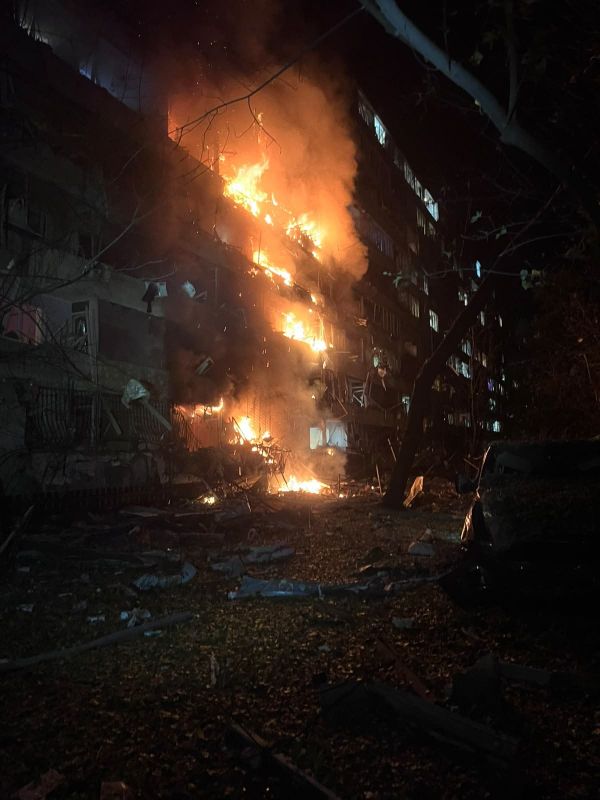
The UN voiced alarm over reports of an overnight attack on a vocational school and dormitory in Starobilsk in Ukraine’s occupied Luhansk region, which killed and injured multiple civilians, including children. Russia requested a Security Council meeting and accused Ukraine of targeting the site. Kyiv denied targeting a civilian building and said it struck a Russian military drone command headquarters.
The World Urban Forum closed in Baku after drawing more than 57,000 participants, the largest gathering in its history. The forum ended with an urgent call to rethink how the world houses people amid a global housing crisis affecting billions.
The World Health Assembly decided to establish a joint process led by Member States, hosted by WHO and involving global health partners, to support reforms of the global health architecture.
In Mumbai, thousands of cat lovers gathered for Cat Expo India, a celebration of feline companionship, animal care, and the growing community of people who treat pets as family.
The event brought together cat owners, veterinarians, pet-care brands, and animal lovers for beauty contests, adoption awareness, nutrition, accessories, and veterinary guidance.
After a week of heavy global news, it is a reminder that care also shows up in quieter places — in the way people gather around animals, build communities of affection, and make room for gentleness in public life.
Next, I invite you to explore the ONEST+ Library — a growing space for readers who want to go deeper into diplomacy, security, law, policy, and the global decisions shaping our future.