ONEST Brief: U.S. cuts Korea drills and escalates its fight with the ICC

– 9 min read

Before the news: something new from ONEST.
I’m launching People Behind the Moment — a new series built around a simple idea: behind every institution, business, crisis, headline and ordinary day are people doing work we rarely stop to notice.
We spend so much time talking about systems, technology, politics and power. I want to spend a little more time seeing the people inside them, what they do, what they value and what the rest of us might be missing.
The first NYC filming is this Sunday.
Come answer three short questions on camera and help me begin this experiment with the people it is actually about.

📍 Washington Square Park
🗓 Sunday, August 23 | 1–2 PM
18+
No special job, title or following required. Just come as you are.
President Trump has delayed planned 50% tariffs on roughly $20 billion of Canadian goods, giving Washington and Ottawa several more days to negotiate.
The tariffs, imposed under Section 338 of the Tariff Act of 1930, are now scheduled to take effect after August 21.
Prime Minister Mark Carney said the countries had made “substantial progress,” while acknowledging that significant work remains.
For now, another major escalation between two historically close trading partners has been postponed, not resolved.
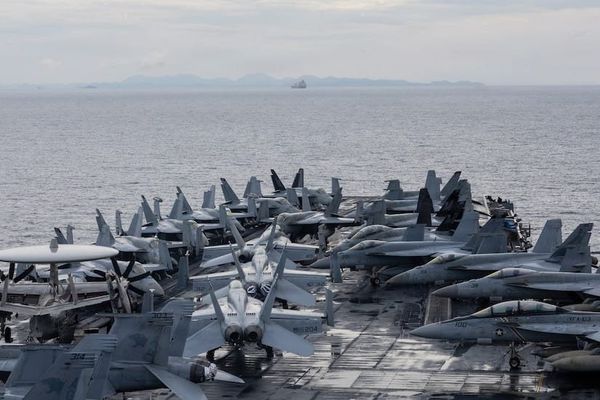
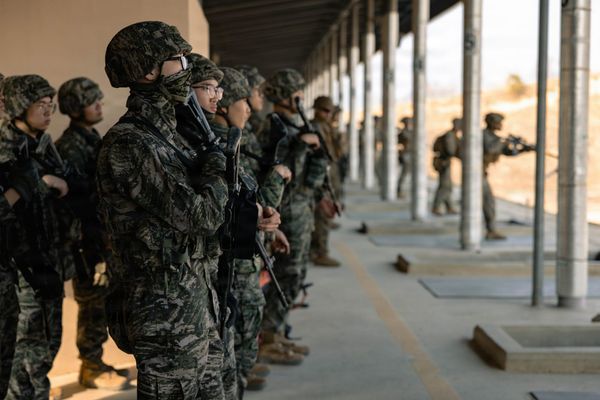
The U.S. and South Korea have agreed to shorten their ongoing joint military exercises at Washington’s request.
The drills will now end August 21 instead of August 27, with some field exercises also scaled back.
The change came days after Trump called for reducing the drills while emphasizing his relationship with North Korean leader Kim Jong Un.
North Korea’s answer: no change.
Kim Yo Jong, the powerful sister of Kim Jong Un, said Wednesday that Trump’s decision to sharply scale back the annual U.S.-South Korea exercises changes nothing in Pyongyang’s position.
That makes the diplomatic picture more complicated.
Washington is reducing the military exercise footprint and Trump is reportedly pushing for another meeting with Kim as soon as this fall — but Pyongyang is publicly signaling that the concession has not yet changed its posture.
At the same time, Chinese Foreign Minister Wang Yi arrived in Seoul Wednesday, beginning talks with South Korean Foreign Minister Cho Hyun that are expected to include developments on the Korean Peninsula.
The military footprint is getting smaller just as diplomatic activity around North Korea is getting larger.
READ ONEST Explained: what happens in Asia as Washington creates more strategic space in the region.
Australia and Japan have successfully conducted field trials of a jointly developed high-energy laser system.
The technology could ultimately be deployed aboard ground vehicles or naval vessels, adding another layer to growing defense cooperation between the two countries.
China’s Unitree Robotics, one of the world’s largest producers of humanoid and quadruped robots, reportedly built elements of its highly successful robot-dog designs on innovations originally funded by the U.S. military.
The claim comes from a former U.S. defense technology official and researchers involved in the earlier work — another case raising questions about how publicly funded American technology migrates into strategically important Chinese industries.
China’s Ministry of Justice has ordered organizations and individuals not to implement or assist with elements of the EU’s foreign-subsidies investigation into JD.com.
Beijing says the EU investigation constitutes “improper extraterritorial jurisdiction.”
This moves the dispute beyond one Chinese company: Beijing is directly challenging Brussels’ ability to apply European regulatory tools to Chinese entities.
A vessel attempting to exit the Strait of Hormuz was attacked August 18, according to UKMTO.
Shipping through the waterway slowed again Wednesday as major shipowners remained reluctant to return without clearer indications that the route is genuinely safe.
Trump says the Strait is open.
Iran says it remains shut.
Commercial shipping appears to be making its own assessment, and staying cautious.
The UAE also said it detected two ballistic missiles launched from Iran, the first such incident it has reported since the May 4 strike on Fujairah port.
Iran also says its ambassador in Kuwait has met four Iranian nationals detained there for roughly three months, days after an Iranian military official accused Kuwait of withholding information about their fate.
Israel struck a defunct Syrian military air base in the northwest of the country on August 18.
The United States condemned the attack as a threat to regional stability, another unusually public expression of frustration with Israeli actions.
U.S. Syria envoy Tom Barrack says Washington is now working on a deconfliction mechanism involving Israel, Türkiye and Syria.
Türkiye, meanwhile, rejected Israeli claims surrounding Ankara’s military position in Syria after the strikes near the Turkish border.
The emerging problem is increasingly clear: the post-Assad security order in Syria is creating direct friction among states that all operate — or want to operate — inside the same shrinking space.
An Israeli airstrike killed at least six Palestinians in Gaza Tuesday, according to health officials, one day after Jared Kushner concluded a regional visit without a breakthrough on Trump’s plan to end the war.
Separately, Israel’s military says it will launch criminal investigations into two prominent wartime incidents: the killing of 5-year-old Hind Rajab and her family, and the deaths of 15 Palestinian paramedics.
The Houthis say they launched several drones at an Aramco refinery in Jizan, Saudi Arabia.
Lebanon is reviewing security restrictions affecting roughly 600,000 Syrians, as Beirut seeks a new framework for relations with Damascus.
At least 12 people were reported killed in North Kordofan as fighting intensified between the Sudanese army and the Rapid Support Forces.
At least 30 miners were killed after an artisanal gold mine collapsed in western Central African Republic. Others remained trapped.
Britain and Egypt have signed a new migration and border-security agreement.
The UK says Egyptian nationals with no legal right to remain in Britain could now be returned up to 90% faster.
London will also provide Egypt with expertise, training and technical assistance on border security.
A Ukrainian man has been arrested in Croatia over the 2022 Nord Stream pipeline sabotage.
German prosecutors allege that the suspect participated in the dives used to plant explosives on the pipelines near Bornholm.
He would become another Ukrainian suspect pursued by German authorities after former Ukrainian military officer Serhiy Kuznetsov, who was arrested in Italy in 2025 and later extradited to Germany.
Kyiv has repeatedly denied involvement in the attack.
The investigation remains politically explosive: Nord Stream was opposed for years by Ukraine, Poland and the United States, while Germany had become heavily reliant on the Russian gas route.
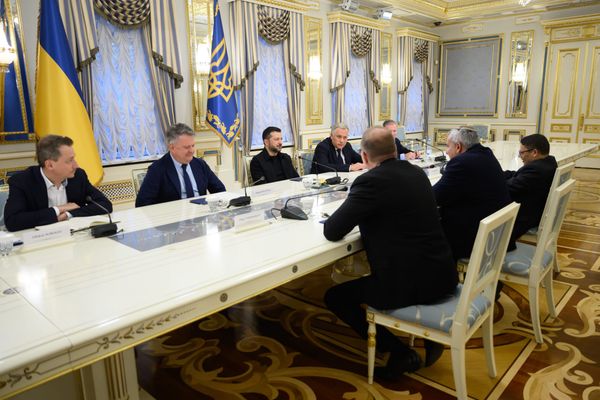
Ukraine’s parliament has approved Yevheniy Khmara as defense minister with 312 votes.
Khmara outlined three core priorities:
The front line. Human capital. The defense industry.
He also emphasized deep-strike capabilities, saying Ukraine had effectively erased the idea of geographical sanctuary for infrastructure supporting Russia’s war and pointing to strikes reaching as far as Siberia.
Meanwhile, ousted Defense Minister Mykhailo Fedorov has called for elections despite the ongoing Russian invasion, following protests surrounding his dismissal.
That adds a new political dimension to an already turbulent reshuffle in Kyiv.
Ukraine’s major new anti-corruption investigation has moved directly into the presidential orbit.
NABU and SAPO searched premises linked to deputy presidential office head Iryna Mudra as part of an investigation into an alleged criminal organization involving current and former lawmakers, presidential-office figures and others.
Zelenskyy dismissed Mudra the same day.
Investigators have dubbed the case “Forest Gump” and released excerpts from intercepted conversations appearing to discuss hiding ownership through relatives, including children.
The probe has also widened toward figures linked to the Energoatom corruption investigation, including former Energy and Justice Minister Herman Halushchenko and Zelenskyy ally Timur Mindich.
Mudra and other suspects are accused of laundering $3.4 million posted as bail for Halushchenko, while NABU tapes reportedly allege that Mindich exercised influence over state-owned Sense Bank.
Important distinction: searches, allegations and dismissal do not establish guilt.
But politically, this is one of the biggest tests yet of whether Ukraine’s anti-corruption institutions can investigate people close to the presidency while the country remains at war.
For Ukraine, this is not separate from national security. Corruption affects public trust, EU accession and the confidence of governments providing Kyiv with extensive military and financial assistance.
The next question is not simply who gets fired.
It is who gets charged, what evidence emerges and whether investigators are allowed to follow it wherever it leads.
Belgium says it is open to using frozen Russian assets to help Ukraine if European partners share the legal and financial risks.
Foreign Minister Maxime Prévot said Belgium has no fundamental objection to using the money for Ukraine, but warned that the risks previously identified have not disappeared.
A U.S. Navy destroyer reportedly operated for four days without electrical power while deployed in the South China Sea.
Northrop Grumman has completed a critical design review for upgrades to the Navy’s airborne early-warning fleet, keeping the program on track for modernized aircraft before the end of the decade.
The U.S. Space Force is increasingly preparing not simply to use space to support wars on Earth, but for scenarios in which space itself becomes a combat domain.
The Space Force will keep its aging weather-satellite fleet operational until at least 2028 while transitioning toward a replacement architecture.
The Air Force wants a new family of aerial targets ranging from cheap expendable quadcopters to reusable aircraft capable of mimicking fifth-generation fighters.
The Air & Space Forces Association is urging Congress to fully fund the Space Force’s $71.1 billion FY2027 request, while also pushing for more F-35 procurement and changes to military housing allowances.
IAEA Director General Rafael Grossi visited Syria August 17-18, including Deir ez-Zor and another site linked to nuclear material recently identified by Syrian authorities.
The agency called the visit its most significant progress yet toward resolving safeguards questions linked to undeclared nuclear activities under the former Assad government.
That makes Syria’s unfinished nuclear file one to watch again.
Secretary of State Marco Rubio announced new U.S. sanctions against ICC President Tomoko Akane and senior trial lawyer Abdoulaye Seye, accusing the court of exceeding its authority by pursuing officials from countries that have not consented to ICC jurisdiction.
The administration says its broader campaign is designed to pressure other governments to withdraw funding and participation from the court.
Akane is also one of the ICC judges connected to proceedings that produced the arrest warrant for Vladimir Putin.
The backlash is widening.
The European Union formally reiterated its “unwavering support” for the ICC, saying sanctions against the Court and its personnel undermine its work and insisting its judges and officials must be able to operate free from pressure, intimidation or interference.
The Netherlands separately rejected the sanctions and invited Akane for talks on continued Dutch support.
Japan called the measures against Akane “very unfortunate” and reiterated its commitment to the ICC and the international rule of law.
European Commission President Ursula von der Leyen and European Council leadership also publicly backed the Court and its officials.
This fight is becoming larger than Washington versus The Hague.
It is increasingly a test of whether U.S. pressure can weaken the political, legal and financial coalition keeping the ICC operational.
Earlier ONEST Deep Dive: what Washington can and cannot actually do to dismantle the ICC.
The Trump administration is moving to open nearly 45 million acres of national forest land to new roads and logging by removing protections in place since 2001.
Trump plans to nominate Heidi Overton, a senior domestic policy aide and supporter of Robert F. Kennedy Jr.’s Make America Healthy Again agenda, to lead the FDA.
Trump-endorsed Senate candidate Darline Graham, when asked whether Taiwan and the South China Sea represent U.S. national security concerns, said:
“I’m … not that informed on national security.”
She added that she supports the military.
In another exchange, Graham said there are “50 million people” in South Carolina.
The state’s population is roughly 5.5 million.
Moderna + Merck: An mRNA cancer vaccine combined with Keytruda succeeded in a late-stage skin-cancer trial, sending Moderna shares sharply higher.
Meta: Opening arguments began in California’s massive child-safety case against Meta, with the state accusing the company of designing platforms that addict children. Meta denies the allegations.
ABC vs. FCC: Disney-owned ABC and eight stations filed a First Amendment lawsuit against the FCC, alleging the agency has used regulatory powers to punish the network over coverage disliked by the Trump administration.
TikTok: The company is reportedly considering allowing users to send money to each other through direct messages.
Peacock: Prices are rising after NBCUniversal’s streaming service recorded its first profitable quarter.
ESPN: Founder Bill Rasmussen has died at 93 after living with Parkinson’s disease.
Penn State: Students are accused of running a cocaine distribution operation from two off-campus fraternity houses.
VMAs: Madonna leads this year’s nominations with 11, ahead of Taylor Swift.
Please support my independent reporting by subscribing to our YouTube Channel and donating to our Newsroom Fund.