ONEST Brief: Europe boosts Ukraine as AI rivalry intensifies and Middle East tensions grow

Today’s developments point to a common theme: security is becoming increasingly interconnected. Europe is accelerating military support for Ukraine, cyber threats are moving higher on the international agenda, AI competition is becoming a national security issue, and instability in the Middle East continues to affect maritime security and global trade. At the same time, political messaging from Washington on Ukraine remains mixed, highlighting the gap that can emerge between institutional support and political rhetoric.
Ukraine
The European Commission disbursed another €3.47 billion under the defense window of the Ukraine Support Loan, funding drones, missiles, Gripen fighter jets, and additional defense procurement. The latest tranche is intended to accelerate deliveries of critical military equipment as Ukraine continues defending against Russian attacks.
President Volodymyr Zelenskyy held a call with U.S. Vice President JD Vance focused on Patriot interceptors, continued air defense cooperation, and the broader economic consequences of Russia’s war. Separately, Ukraine’s defense technology cluster Brave1 and NATO launched a joint innovation program to support companies developing counter drone technologies.
During a meeting of Ukraine’s Staff of the Supreme Commander-in-Chief, officials reviewed the battlefield situation, Russian strikes on Odesa and port infrastructure, maritime security, export logistics, and additional requests for military support from international partners.
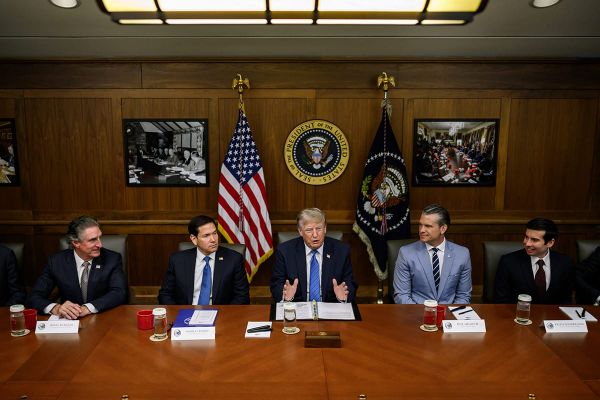
Worth watching: Zelenskyy’s optimistic readout following his call with JD Vance contrasted with President Trump’s remarks at Camp David, where he said the United States must be “very careful” about licensing advanced American weapons because “these people at some point can turn on you.” Trump said discussions are ongoing but indicated he does not think such an arrangement will ultimately happen.
European Union
The European Union condemned the drone attack on Egypt’s Damietta Port, describing it as a threat to regional stability, maritime security, and freedom of navigation while reaffirming support for Egypt.
Brussels also announced sanctions against seven individuals and three entities linked to scam compounds operating in Southeast Asia, accusing them of human trafficking, torture, forced criminality, and large scale online fraud.
The EU warned that North Korean cyber activities continue generating revenue for Pyongyang’s nuclear and ballistic missile programs and pledged additional measures alongside international partners.
Separately, EU representatives used the first substantive session of the UN Global Mechanism on Responsible State Behaviour in Cyberspace to push for stronger international cooperation on ransomware, critical infrastructure protection, AI security, and implementation of international cyber norms.
United States
The United States welcomed Italy as the 25th member of the Pax Silica Initiative, expanding cooperation on semiconductor and critical mineral supply chains.
Washington added 43 Chinese companies to the Uyghur Forced Labor Prevention Act Entity List, bringing the total to 187 entities accused of involvement in forced labor linked to Xinjiang.
The Treasury Department also sanctioned six entities and individuals in China, India, Russia, and Iran accused of supporting Iran’s Islamic Revolutionary Guard Corps, including logistics networks associated with Mahan Air.
The Pentagon formally launched its review of U.S. force posture across Europe, while the USS Minnesota completed its first forward deployment from Guam, underscoring continued U.S. focus on Indo-Pacific operations.
Artificial Intelligence
Chinese startup Moonshot AI released the open-weight version of Kimi K3, triggering renewed debate over China’s AI capabilities and U.S. technology policy.
According to analysis published by the Council on Foreign Relations, Chinese frontier AI models remain approximately six to eight months behind leading U.S. systems, but continue advancing rapidly despite export controls. U.S. officials have alleged that Kimi K3 relied on banned American AI chips and extensive “distillation” of U.S. models.
The debate in Washington is increasingly shifting toward whether Chinese frontier AI models should be restricted from U.S. cloud providers and commercial infrastructure on national security grounds.
Get briefs like this delivered daily — free.
Middle East
Egypt confirmed that the fires aboard two gas vessels at Damietta Port were caused by a drone attack rather than an accident.
Saudi Arabia is reportedly seeking to build an international coalition to protect Red Sea shipping from continued Houthi attacks.
Reuters also reported that Iran could receive up to 400 Chinese-made shoulder-fired air defense systems in the coming weeks as it rebuilds its air defenses.
Jordan announced that its air defenses intercepted five Iranian missiles approaching Jordanian airspace.
Watch: We are monitoring whether Israel formally responds to President Trump’s July 30 announcement regarding a proposed Gaza disarmament framework.
Asia
China’s Politburo announced that the Fifth Plenum of the 20th Central Committee will convene in October, with discussions expected to focus on strengthening Party governance ahead of the politically significant 2027 Party Congress.
China also released its 15th Five-Year Plan for Renewable Energy, setting ambitious targets to expand renewable capacity while improving grid reliability.
Meanwhile, state-backed memory chip producer CXMT completed a record-breaking IPO, highlighting Beijing’s long term investment strategy in strategic technologies.
Around the World
A U.S. State Department presentation displayed during a global conference in Brazil drew criticism after attendees shared screenshots showing multiple African countries placed in incorrect locations.
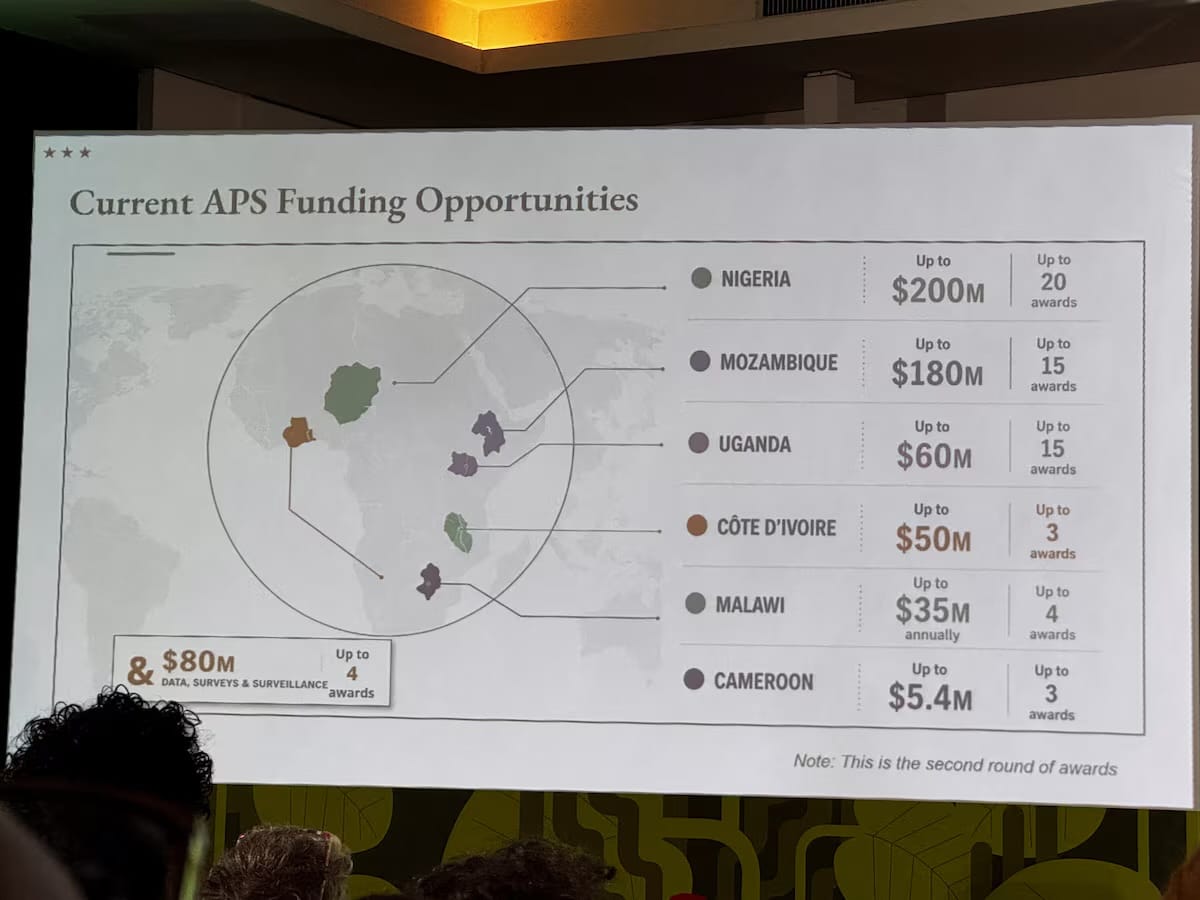
The slide, outlining funding opportunities, appeared to misplace Nigeria, Mozambique, Côte d’Ivoire, Cameroon, Uganda and Malawi, prompting questions about quality control in official presentation materials.
The United Nations warned that Afghans returning from neighboring countries face growing risks of trafficking and exploitation amid overlapping humanitarian and economic crises.
The UN Human Rights Office expressed concern over increasing restrictions on civil society and opposition groups in Uganda.
The UN also warned that increasingly severe wildfires across Europe and North America illustrate the growing impact of climate change combined with human activity.
Hungary warned that exceptionally low water levels on the Danube could force a temporary shutdown of the Paks Nuclear Power Plant, potentially affecting electricity generation.
Sports
A governance dispute is escalating inside world football after multiple UEFA member federations reportedly agreed to boycott FIFA competitions over President Gianni Infantino’s proposal to sell stakes in future World Cups to private equity investors.
Senior FIFA adviser Carlos Cordeiro also resigned, calling the proposal “a bad deal for football.”
Recommended Read
Russia and Iran are forcing the West into an expensive strategic dilemma.
This week’s ONEST Deep Dive examines how sustained Russian and Iranian military operations are steadily draining Western air defense inventories, interceptors, and industrial capacity — and why replenishing those capabilities may become one of NATO’s defining challenges in the years ahead.
Written by