France has intercepted another vessel linked to Russia’s sanctions-evasion network, known as the “shadow fleet.”
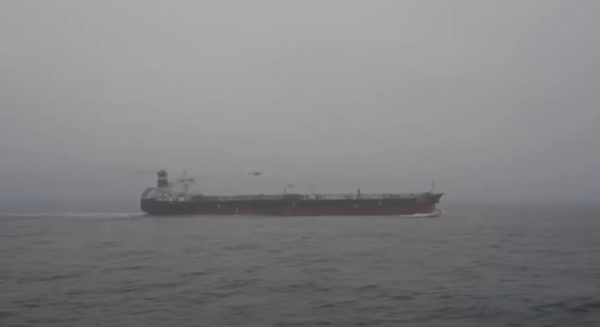
On June 1, French President Emmanuel Macron announced that the French Navy, supported by the United Kingdom and other partners, intercepted the tanker Tagor in the Atlantic Ocean approximately 400 nautical miles west of Brittany. French authorities say the vessel had departed from Murmansk, Russia, and was operating under a false flag while helping transport Russian oil in violation of international sanctions.
According to President Macron, the operation was conducted in international waters under the law of the sea and reflects a growing European effort to disrupt Russia’s ability to finance its war in Ukraine through oil exports.
"This operation was carried out in strict compliance with the law of the sea," Macron said, adding that vessels circumventing sanctions are helping fund Russia's war while also posing environmental and maritime safety risks.
Russia condemned the seizure as illegal and accused France of behavior bordering on piracy.
What Is Russia's Shadow Fleet?
The shadow fleet is a network of aging tankers, shell companies, flag-hopping registrations, false insurance documents, and deceptive shipping practices used to move sanctioned oil around the world.
Many vessels change names, switch flags, disable tracking systems, falsify locations, or conduct ship-to-ship transfers at sea to obscure the origin of Russian oil.
Analysts estimate the network now includes more than 1,000 vessels, with some estimates placing the total above 1,400 ships, making it one of the largest sanctions-evasion operations ever assembled.
Recommended Watch: Public Deep Dive | Who Sponsors Russia’s Aggression?
How Much Russian Oil Is Still Moving?
Despite multiple rounds of Western sanctions, the shadow fleet remains highly active.
According to recent sanctions-monitoring data:
- Russia's shadow fleet is moving approximately 3.7 million barrels of oil per day.
- The fleet carries roughly 65–70 percent of Russia's seaborne oil exports.
- The trade is estimated to generate between $87 billion and $100 billion annually for Russia.
In February 2026 alone:
- 293 vessels exported Russian oil and petroleum products.
- 104 of those vessels were classified as shadow-fleet tankers.
- 56 percent of Russian crude exports were transported by sanctioned shadow vessels.
The numbers illustrate the central challenge facing Europe: individual interceptions attract headlines, but the broader network continues operating at massive scale.
How Many Ships Have Been Seized?
There is no single global enforcement authority, and many countries have adopted different approaches.
France says the Tagor is the fourth Russian-linked shadow-fleet tanker it has detained since September 2025. Previous cases included the Boracay, Grinch, and Deyna tankers.
Other notable actions include:
- Estonia's interception of the tanker Kiwala.
- Finland's seizure of the cargo vessel Fitburg.
- U.S. and Coast Guard operations against the tanker Marinera.
- Additional inspections, escorts, and interdictions by Baltic and North Atlantic states.
At the same time, sanctions lists have expanded dramatically.
The European Union has sanctioned hundreds of vessels connected to the shadow fleet, while Britain and the United States continue adding ships, operators, insurers, and facilitators. Some estimates place the number of identified sanctioned vessels above 500, though the total fleet remains much larger.
The Environmental Risk
The issue is not only sanctions.
Many shadow-fleet vessels are more than 20 years old, often lack transparent ownership, and frequently operate without recognized insurance coverage.
Industry experts warn that more than half of shadow-fleet tankers pose serious environmental risks due to age, poor maintenance, and opaque operating structures.
European governments increasingly argue that these ships are not simply sanctions violators but potential environmental disasters waiting to happen.
The Bigger Question
The interception of the Tagor demonstrates that Europe is becoming more willing to physically enforce sanctions at sea.
But it also highlights a larger reality.
After four years of war, Russia's oil exports continue to reach global markets. The shadow fleet has adapted faster than sanctions have evolved.
The question is no longer whether the fleet exists.
The question is whether Western governments can scale enforcement quickly enough to disrupt a network that now moves the majority of Russia's seaborne oil and generates tens of billions of dollars each year.
Tagor may be one tanker.
The shadow fleet is an entire maritime economy.
Like the ONEST Newsroom? Donate any amount to help keep this reporting going.