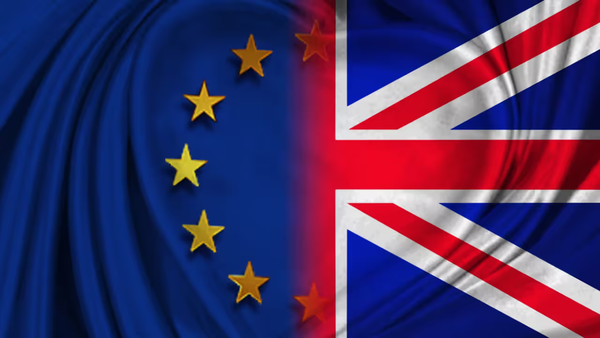
The European Commission and the United Kingdom formally signed the EU–UK Competition Cooperation Agreement, establishing a clear and structured framework for how Brussels and London will coordinate on antitrust and merger enforcement.
It is the first standalone agreement devoted entirely to competition cooperation since the UK’s withdrawal from the European Union — and a signal that regulatory relationships are entering a more operational phase.
What the Agreement Does
At its core, the agreement creates predictability.
It sets out how the Commission and EU Member State competition authorities will interact with the UK’s Competition and Markets Authority (CMA) when investigating major competition cases.
Key provisions include:
- Mutual notifications of significant antitrust and merger investigations
- Coordination of enforcement efforts where appropriate
- Clear confidentiality safeguards for shared information
- A requirement that companies must consent before confidential information is exchanged between authorities
In practice, this means that when a major multinational merger or cartel investigation spans both EU and UK markets, regulators can coordinate earlier and more systematically — reducing duplication and legal uncertainty.
Why This Matters
Since Brexit, the EU and UK have operated as separate competition jurisdictions. Large cross-border deals — particularly in technology, energy, pharmaceuticals, and financial services — can face parallel scrutiny in Brussels and London.
This agreement does not merge authority. It does not dilute sovereignty.
Instead, it formalizes how cooperation works in a post-Brexit reality.
The arrangement functions as a “supplementing agreement” to the broader EU-UK Trade and Cooperation Agreement (TCA), which laid the foundation for continued collaboration but left room for a more detailed competition-specific framework.
Today’s signing fills that gap.
The Legal Path Ahead
The agreement is signed — but not yet in force.
Next steps:
- The Council of the European Union must adopt a decision to conclude the agreement.
- The European Parliament must provide its consent.
- The UK must complete its own ratification process.
Only after these steps will the agreement formally enter into force.
A Broader Pattern of Cooperation
The EU already maintains competition cooperation agreements with:
- The United States (1991)
- Canada (1999)
- Japan (2003)
- South Korea (2009)
- Switzerland (2013)
With this new agreement, the UK joins that group — not as a Member State, but as a third-country partner with structured regulatory coordination.
That distinction matters.
This is not reintegration. It is structured alignment between separate systems.
The Larger Signal
Competition policy rarely makes headlines, but it shapes markets quietly and powerfully — from how tech giants merge, how supply chains consolidate, to how consumers are protected from anti-competitive practices.
The EU–UK Competition Cooperation Agreement reflects something broader:
Brexit separated institutions. It did not eliminate shared economic interests.
In regulatory terms, today’s signing marks another step away from disruption — and toward managed coexistence.
For businesses operating across the Channel, clarity is not symbolic. It is operational.
And in competition enforcement, coordination is often the difference between friction and function.