As Washington Pulls Back in Asia, Who Fills the Space?
The last U.S. aircraft carrier in the western Pacific is heading to the Middle East. Trump is cutting exercises with South Korea while praising Kim Jong Un. North Korea is still testing missiles. Russia is challenging Japan. And China has little reason to object.
Several developments across East Asia over the past few days can look unrelated.
A U.S. aircraft carrier leaves the Pacific.
Donald Trump orders military exercises with South Korea reduced.
North Korea launches ballistic missiles.
South Korea calls again for dialogue with Pyongyang.
Vladimir Putin visits territory claimed by Japan.
China says remarkably little against any of it.
Put them together, however, and a larger picture begins to emerge.
The United States is not leaving Asia. But it is creating more space in Asia — and China is the country best positioned to use it.
The last U.S. carrier in the western Pacific is leaving
The USS George Washington, the U.S. Navy's forward-deployed aircraft carrier based in Japan, is moving out of the western Pacific and toward the Middle East.
Its mission is to relieve the USS Abraham Lincoln, whose deployment has been repeatedly extended as the United States concentrates military resources on its war with Iran.
The result is striking: the western Pacific will temporarily have no U.S. aircraft carrier present.
This does not mean America suddenly has no military forces in Asia.
The United States maintains tens of thousands of troops in Japan and South Korea, extensive air and naval forces, submarines, bases and treaty commitments throughout the region.
Nor are aircraft carriers the only measure of military power.
But presence matters.
Washington has spent years describing the Indo-Pacific as its principal long-term strategic theater because China is the only competitor capable of challenging American military, technological and economic power across multiple domains.
Now a war in the Middle East is pulling one of America's most visible military assets away from precisely that theater.
And that is happening just as Washington is weakening another important element of regional deterrence.
Trump: Kim has been “unthreatening and respectful”
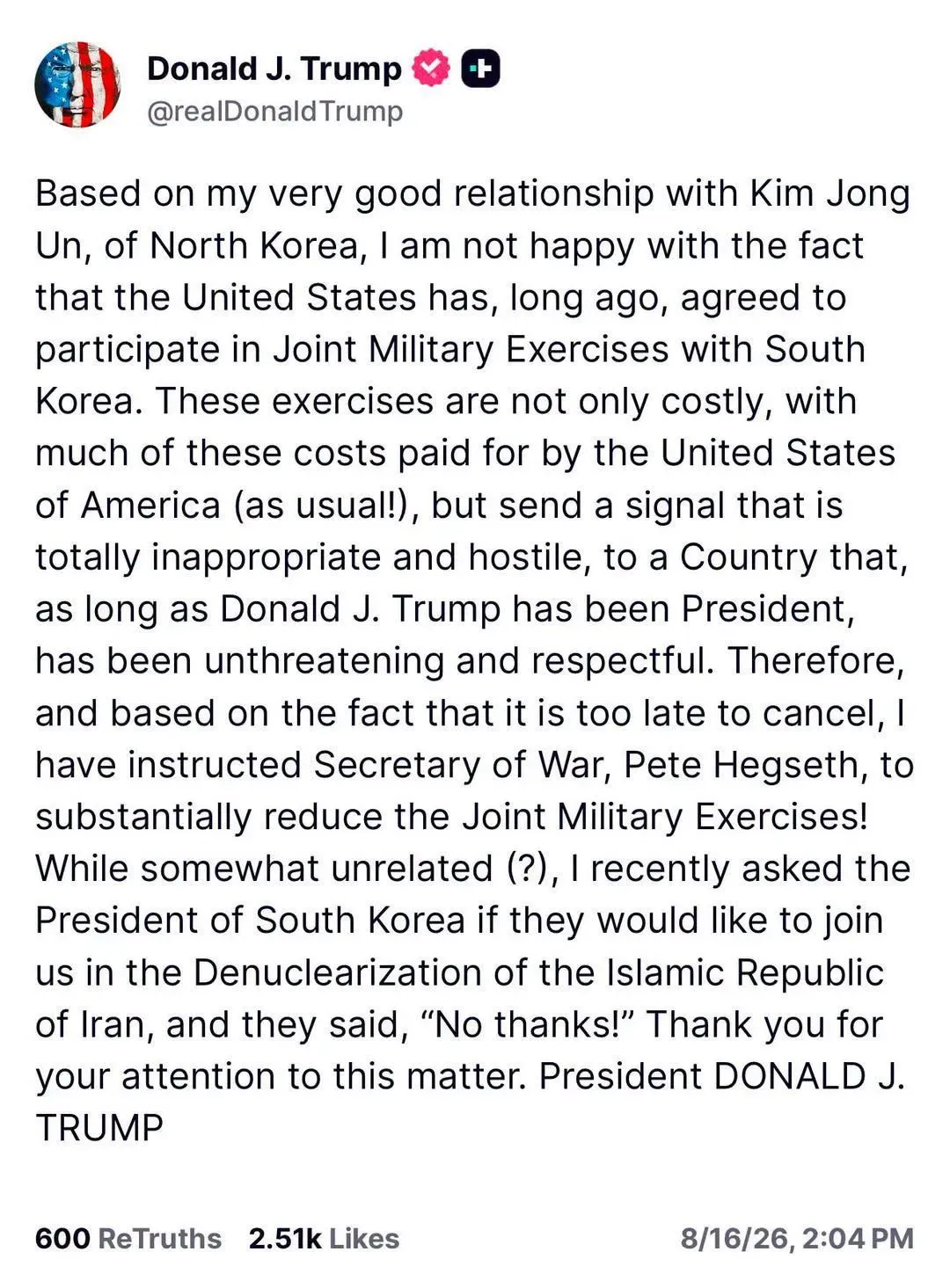
On Sunday, Trump ordered the Pentagon to “substantially reduce” the annual Ulchi Freedom Shield exercises conducted with South Korea.
The 11-day drills began Monday and involve approximately 18,000 South Korean troops. This year's exercises were designed in part around newer threats including drones, cyberattacks and GPS disruption.
Trump offered two reasons for cutting them.
First, cost.
Second — and much more consequential — North Korea.
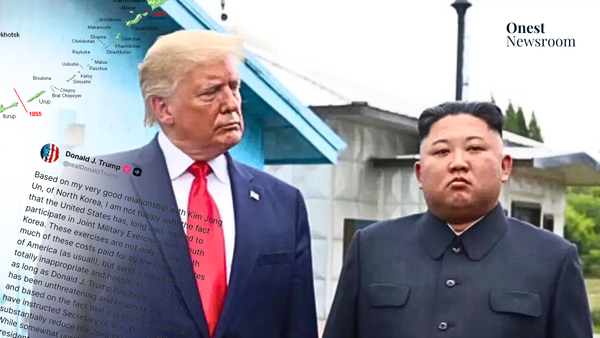
Trump said the exercises sent an unnecessarily hostile signal to Pyongyang and emphasized his “very good relationship” with Kim Jong Un, describing North Korea as having been “unthreatening and respectful” while he has been president.
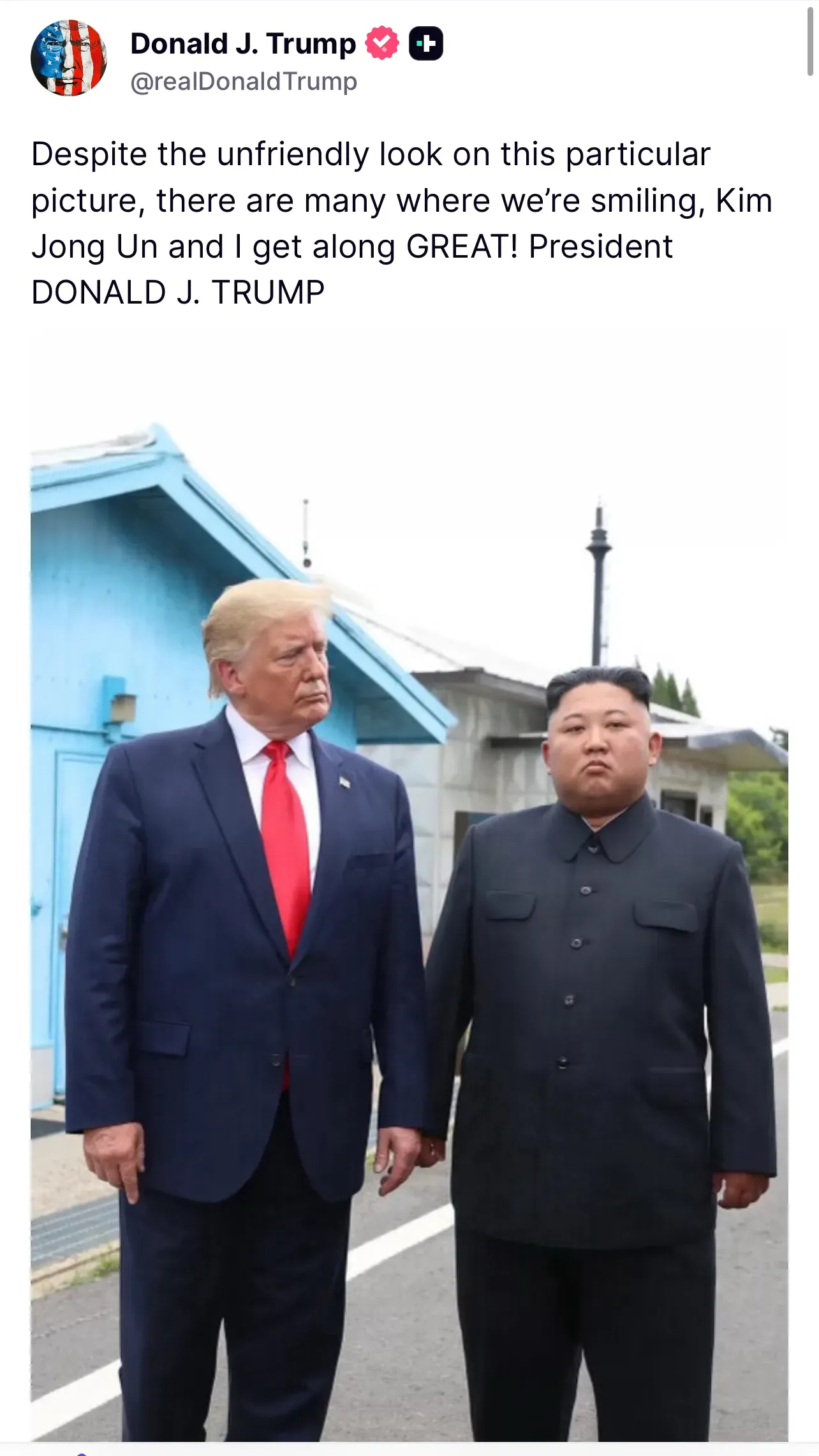
He then separately posted a photograph of himself with Kim, writing that the two “get along GREAT.”
Trump also connected the decision to South Korea's refusal to join U.S. efforts against Iran.
That makes the decision unusual on two levels.
A bilateral military exercise designed to defend South Korea against North Korea is being reduced partly because Washington does not want to antagonize North Korea.
But Trump is also linking the strength of one alliance commitment in Asia to whether the ally supports an American war thousands of miles away — even as North Korea itself deepens military cooperation with Russia and backs Iran politically.
That is a very different concept of "alliance management".
And the timing is remarkable.
North Korea has not stopped behaving like North Korea
Only days before Trump described North Korea as "unthreatening", Pyongyang launched ballistic missiles.
North Korea fired a ballistic missile on August 12, its second such launch in less than a week. The tests came shortly before the U.S.-South Korean exercises and amid increasingly aggressive North Korean rhetoric toward Japan and the trilateral U.S.-Japan-South Korea security relationship.
North Korean ballistic missile activity remains prohibited under multiple U.N. Security Council resolutions.
Pyongyang has also spent recent years dramatically expanding its nuclear and missile capabilities.
And there is another development that makes the current situation fundamentally different from Trump's first round of diplomacy with Kim.
North Korea now has Russia.
North Korean troops have fought alongside Russian forces in the war against Ukraine. Pyongyang has supplied weapons to Moscow, while the two governments have deepened military cooperation. The United States and its allies have said elements of that cooperation violate U.N. Security Council sanctions on North Korea.
Kim therefore enters any new negotiation with Washington from a stronger position than he did in 2018.
He has more weapons.
More battlefield experience.
And a much closer strategic relationship with another nuclear power.
South Korea sees the change too
Seoul's response is revealing.
President Lee Jae Myung has been seeking to reopen dialogue with North Korea for months.
On August 15, he proposed renewed talks aimed eventually at replacing the Korean War armistice with a more permanent peace arrangement.
His government has also revived work on a railway project that could eventually reconnect South Korea with North Korea's eastern rail network — a project that had been stalled for roughly a decade.
And after Trump announced reductions to the joint exercises, Seoul publicly expressed hope that the decision could help reopen U.S.-North Korean diplomacy.
There are good reasons for South Korea to seek dialogue.
It lives beside a nuclear-armed state capable of devastating Seoul.
Reducing the probability of war is not weakness.
But South Korea is also having to confront a more fundamental strategic question:
How predictable is American protection?
If Washington can reduce exercises because Trump wants better relations with Kim — or because Seoul declined to participate in an unrelated American campaign against Iran — South Korea has additional incentive to develop options that do not depend entirely on Washington.
Dialogue with the North becomes one of those options.
Greater South Korean defense autonomy becomes another.
Meanwhile, Russia just challenged Japan
Then look northeast.
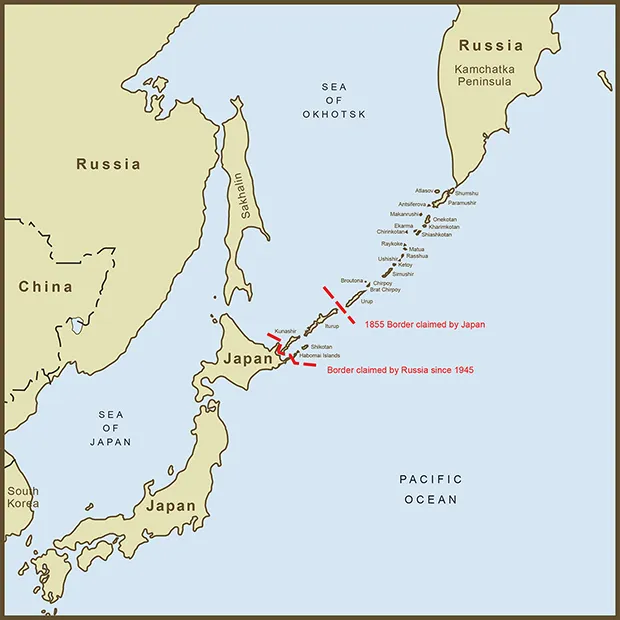
On August 13, Vladimir Putin traveled to Iturup — Etorofu in Japanese — one of four islands controlled by Russia but claimed by Japan.
It was Putin's first visit to the disputed island chain.
Japan reacted furiously.
Prime Minister Sanae Takaichi called the trip “absolutely unacceptable,” while Tokyo summoned the Russian ambassador in protest.
The dispute is not symbolic trivia left over from World War II.
The Soviet Union seized the islands at the end of the war. Russia retained them after the Soviet collapse. Japan continues to claim the four southern islands as its Northern Territories.
The dispute is one reason Russia and Japan have never signed a formal World War II peace treaty.
And the islands are strategically located near Japan and important maritime approaches into the Pacific.
Putin's visit therefore sent a deliberate political message.
Russia has no intention of accommodating Japan.
If anything, Moscow is becoming more assertive in the Pacific while Japan is simultaneously dealing with pressure from China and North Korea.
And where is China?
This is where the regional picture becomes particularly important.
China did not condemn Putin's visit.
In fact, describing Beijing simply as silent understates the alignment now developing.
Russia and China have increasingly coordinated their historical narratives surrounding the settlement of World War II, and Russian and Chinese diplomats recently issued a joint statement warning against attempts to revise the postwar territorial order. Reuters noted that this position aligns Beijing much more closely with Moscow's framing of the dispute.
China officially avoids simply declaring the disputed islands Russian.
But Beijing has little strategic reason to confront Moscow over them.
Japan is one of America's most important Asian allies.
Tokyo is increasing defense spending, acquiring long-range Tomahawk missiles and preparing more seriously for a potential regional conflict.
China considers that military buildup threatening.
North Korea is attacking it rhetorically.
Russia is challenging Japan territorially.
And China benefits from a security environment in which Japan must simultaneously watch three directions.
This is not necessarily a centrally coordinated plan among Moscow, Beijing and Pyongyang.
It does not need to be.
Their interests increasingly overlap.
Look at the map
Now put the developments back together.
North Korea is building nuclear weapons and testing ballistic missiles while deepening its military relationship with Russia.
Russia is asserting its territorial claim directly against Japan.
China continues increasing its own military capabilities and pressure around Taiwan and contested regional waters.
At precisely that moment:
The United States is moving its forward-deployed carrier out of the western Pacific.
Trump is ordering U.S.-South Korean military exercises reduced.
He is publicly emphasizing his friendship with Kim Jong Un.
And South Korea is increasingly searching for its own diplomatic accommodation with the North.
None of those developments individually means the American security architecture in Asia has collapsed.
But alliances are built as much on expectations as treaties.
Deterrence works when adversaries believe capability and political willingness will be there when needed.
And allies make their own decisions based on exactly the same calculation.
If Seoul becomes less certain about Washington, Seoul adapts.
If Tokyo becomes less certain, Tokyo adapts.
And if Beijing concludes that American military attention is increasingly consumed by the Middle East and Western Hemisphere, Beijing adapts too.
The real winner may not be North Korea
Trump may believe reducing exercises can reopen diplomacy with Kim.
Perhaps it can.
South Korea clearly hopes so.
And avoiding unnecessary escalation on the Korean Peninsula is a legitimate objective.
But concessions also change regional incentives.
The important question is not merely what Kim receives.
It is what Beijing observes.
For decades, the central obstacle to Chinese strategic dominance in East Asia has not been any single neighboring country.
It has been the American alliance system.
Japan.
South Korea.
The Philippines.
Australia.
U.S. bases.
Forward-deployed ships and aircraft.
And the credibility that an attack on one country could bring American military power into the conflict.
China does not have to defeat that system militarily if the system gradually becomes less coherent politically.
A carrier moves west because America needs it elsewhere.
An exercise is reduced because Washington wants to appease Pyongyang.
An ally is punished because it would not support an unrelated war.
Another ally faces Russian territorial pressure while Beijing stands beside Moscow.
Each event can be explained individually.
Together, they create a trend.
America is not withdrawing from Asia altogether.
But it is increasingly asking Asian allies to accommodate uncertainty in American policy while China, Russia and North Korea face fewer such doubts about one another.
And power rarely leaves empty space unfilled.
If Washington continues thinning its military attention and making its alliances more conditional, Beijing may not need to push the United States out of Asia.
The United States may gradually create the strategic space for China itself.
Please support my independent reporting by subscribing to our YouTube Channel and donating to our Newsroom Fund.
Olga Nesterova is a journalist and founder of ONEST Network, a reader-supported platform covering U.S. and global affairs. A former White House correspondent and UN diplomat, she focuses on international security and geopolitical strategy.