America Is Redefining What It Means to Be an Ally

– 8 min read

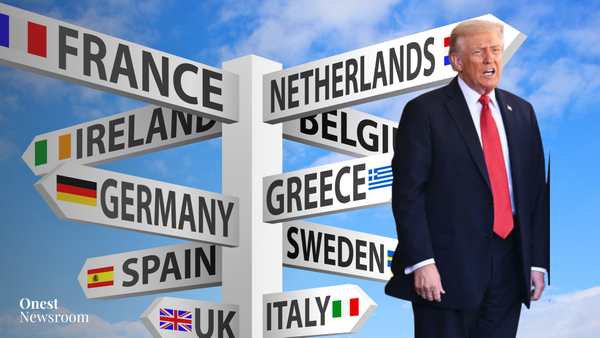
Washington is testing NATO countries for political alignment, putting an outspoken critic of Western Europe atop State Department intelligence, and taxing foreign drones just weeks after promising to buy Ukraine’s. Europe is beginning to respond — but mostly by preparing for a future in which American support can no longer be assumed.
Three developments landed almost on top of one another this week. Taken separately, they can be explained as bureaucratic decisions. Taken together, they look considerably more consequential.
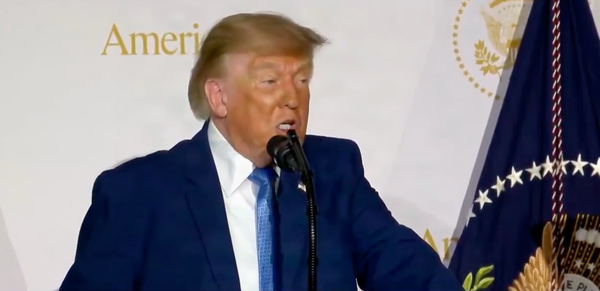
The Trump administration is reportedly asking NATO governments questions about how closely they align with President Donald Trump’s foreign policy as Washington decides where to reduce American military forces.
The Senate has just confirmed Michael Vance — a former adviser to Vice President JD Vance who has sharply criticized Western European governments — to lead the State Department’s Bureau of Intelligence and Research.
And Trump has imposed new tariffs on imported drones and drone components, just weeks after publicly embracing the idea of buying Ukraine’s battle-tested drones for the United States.
The connecting thread is not simply “America First.”
It is conditionality.
Military protection is increasingly discussed in terms of what allies contribute; but also, apparently, whether they politically support Washington.
Intelligence leadership is moving toward officials whose publicly expressed ideological judgments about Europe closely resemble those of the administration they are supposed to advise.
And even cooperation with countries whose battlefield technology the United States wants may now pass through an explicitly protectionist trade system.
None of this means NATO has ceased to exist.
It does mean that the definition of an American ally appears to be changing.
The most striking evidence comes from a document recently circulated to NATO members and obtained by Bloomberg.
According to Bloomberg, Washington is asking allies questions that include whether a government has been “publicly supportive” of U.S. foreign policy and what restrictions it has placed on American forces operating from bases on its territory.
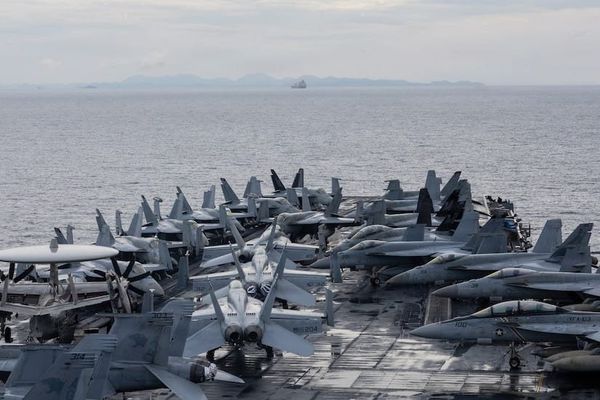
That information is reportedly feeding into a broader review of U.S. military deployments as Washington determines where forces and military assets should remain, be reduced or potentially be repositioned.
There are perfectly legitimate strategic questions buried inside that exercise.
The United States has spent years asking European governments to contribute more to their own defense.
Trump has made that demand considerably more aggressively, but the underlying burden-sharing debate predates him by decades.
European NATO members have responded. At the Ankara NATO summit this summer, the alliance highlighted the commitment to spend 5 percent of GDP on defense and security by 2035. NATO Secretary-General Mark Rutte said European allies and Canada were already investing roughly 4 percent collectively, only one year into that process.
Washington also has genuine global constraints.
The United States cannot assign unlimited aircraft, ships, surveillance assets and troops simultaneously to Europe, the Indo-Pacific and the Middle East.
But asking whether a country permits American forces to use its territory is a strategic question.
Asking whether that government has been publicly supportive of U.S. foreign policy is something different.
It introduces political alignment into a process that determines the distribution of American military power.
And there is already precedent suggesting why Europeans might take that seriously.
Earlier this year, Trump ordered the U.S. military presence in Europe reduced by about 5,000 personnel, initially framing the move as a withdrawal from Germany. The Pentagon subsequently canceled planned deployments to Germany and Poland as it worked to implement that reduction, including a rotation of roughly 4,000 troops to Poland and a long-range missile unit bound for Germany.
European officials were especially disturbed because U.S. officials linked the Germany decision to Trump’s anger over Chancellor Friedrich Merz’s criticism of the U.S. war in Iran.
But the policy quickly became muddled. Days after the Poland deployment was halted, Trump announced that the United States would instead send an additional 5,000 troops to Poland, leaving NATO allies uncertain about Washington’s ultimate force posture in Europe.
The Pentagon argues that Europe must take greater responsibility and that U.S. resources need to be available for other theaters.
That argument can be strategically coherent.
But if military deployments also become a mechanism for rewarding governments that support Washington politically and penalizing those that criticize it, burden-sharing becomes something else.
It becomes leverage.
That shift matters even more when considered alongside another development.
On August 7, the Senate confirmed Michael Vance as Assistant Secretary of State for Intelligence and Research.
That title sounds bureaucratic.
The institution is not.
The Bureau of Intelligence and Research — INR — is the State Department’s in-house intelligence organization. Its job is to provide the secretary of state and American diplomats with independent intelligence analysis.
Its value is precisely that analysis is supposed to remain analysis even when its conclusions are politically inconvenient.
During Vance’s confirmation process, Senator Jeanne Shaheen highlighted that responsibility explicitly, describing INR as responsible for “objective, fact-based analysis.”
She then raised concerns about Vance’s own record.
Vance has written that Western Europe is succumbing to “soft authoritarianism” and has compared some European practices with those of the Soviet Union. Shaheen also questioned his refusal to affirm that Joe Biden won the 2020 presidential election.
Reporting on his confirmation hearing found that Vance defended his writings criticizing European governments as consistent with current U.S. foreign policy.
He also previously served as a special adviser to JD Vance.
That matters because the vice president has become one of the administration’s most outspoken critics of contemporary Europe.
At the Munich Security Conference in 2025, JD Vance told European leaders that the threat he feared most for Europe was not Russia or China but a “threat from within,” attacking European approaches to migration, speech and democracy. He subsequently met Alice Weidel, leader of Germany’s AfD, during the German election campaign.
There are also claims that Michael Vance helped draft that Munich speech.
Those claims should be treated carefully.
Michael Vance was advising the vice president at the time, but there is no authoritative public evidence establishing that he was one of the speechwriters.
What is documented is more important anyway.
The person now responsible for the State Department’s intelligence bureau has publicly advanced a deeply critical interpretation of Western European politics — and defended those views before the Senate.
That does not prove INR analysis will become politicized.
But it makes independence something worth watching.
Especially when the administration is simultaneously asking European allies how supportive they are of American policy.
The third development looks at first like a trade story.
It is also a security story.
On August 13, Trump signed a proclamation imposing sweeping tariffs on foreign drones and drone components.
Certain larger drones, thermal-imaging systems and sensitive components will face tariffs of 100 percent.
Smaller systems and other components can face a 25 percent tariff.
Drones and components substantially originating in the European Union, Japan, South Korea, Switzerland, Liechtenstein and Taiwan receive a 15 percent rate under specified conditions, while qualifying British products receive a 10 percent rate. Most of the measures begin taking effect 21 days after signing.
The White House makes a straightforward national-security argument.
Modern warfare has demonstrated that drones are indispensable, the United States remains dependent on foreign components, and Washington wants to build a domestic supply chain capable of supporting a major conflict.
That objective is not irrational.
Ukraine has spent four years demonstrating exactly why it matters.
The awkward part is the timing.
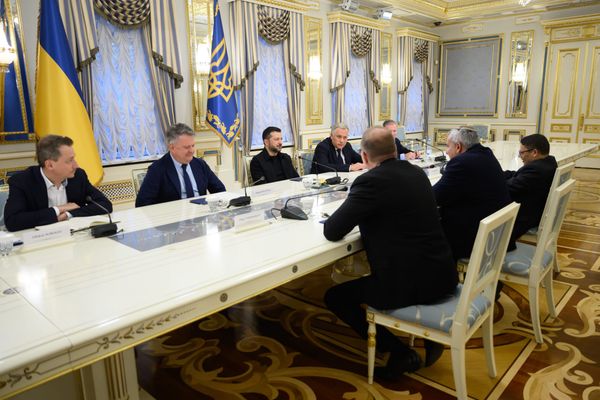
Only weeks ago, Zelenskyy said he and Trump had reached an agreement under which the United States could purchase Ukrainian drones.
Kyiv estimated possible contracts at between $10 billion and $30 billion.
Trump himself had publicly reversed his earlier skepticism about Ukrainian drones, saying at the NATO summit that the United States wanted to buy them because they could provide America with “great protection.”
Then, one day before Trump announced the tariffs, the Wall Street Journal reported something even more remarkable.
During an exercise in Germany, Ukrainian troops using the tactics and drone systems developed during the war reportedly defeated American forces in a simulated confrontation.
Ukraine was not merely asking the United States to buy unproven technology.
It had demonstrated technology and operating concepts that the U.S. military itself is trying to learn from.
Now comes the unresolved question.
Does the new tariff regime apply to the Ukrainian systems Washington just agreed to purchase?
The White House proclamation does not publicly provide Ukraine with the country-specific preferential treatment given to the EU, United Kingdom, Japan and several other partners.
But neither Washington nor Kyiv has yet explained exactly how the tariffs interact with the proposed Ukrainian drone agreement.
So it would be premature to say Trump has killed the deal.
It is entirely fair to say he has introduced a major new uncertainty into it.
That distinction matters.
The contradiction is not that America wants domestic drone production.
It should.
The contradiction is that Washington is simultaneously telling Ukraine, we want to learn from and purchase the technology "your war" has produced, while building tariff walls around the very sector in which Ukrainian experience is most valuable.
There may eventually be exemptions, licensing arrangements, joint ventures or American production.
But those mechanisms now have to be negotiated.
So far, there has been no major coordinated European response to the Bloomberg loyalty questionnaire, nor an EU response specifically tying the drone tariffs to the wider deterioration in the transatlantic relationship.
The Bloomberg report is only hours old.
But Europe has been answering the larger question for months.
And increasingly, its answer is: prepare to need America less.
European Defence Commissioner Andrius Kubilius has been remarkably explicit.
His formulation is not withdrawal from NATO.
It is what he calls “defence independence” — Europe becoming capable of defending itself inside NATO, but with much less American presence in Europe.
That is already translating into policy.
The EU’s ReArm Europe effort and Readiness 2030 agenda are aimed at dramatically expanding European defense capacity.
In July, the European Commission proposed five large-scale joint defense projects designed to strengthen European industrial capabilities and fill NATO capability gaps.
European NATO governments and Canada have sharply increased defense expenditure, with NATO estimating spending rose by nearly 20 percent in one year.
And at Ankara, NATO allies pledged €70 billion in military equipment, assistance and training for Ukraine during 2026, with a commitment to sustain at least an equivalent level in 2027.
There has also been a political shift.
Polish Prime Minister Donald Tusk said earlier this year that Europe’s most important question is whether the United States would actually behave as a loyal NATO ally if Russia attacked.
His proposed answer was not to abandon NATO, but to turn the European Union itself into a more credible defense alliance.
Spain’s foreign minister went further in April, saying American attacks on NATO and threats to leave the alliance were already pushing European governments to examine alternative security arrangements.
Those statements would have sounded extraordinary only a few years ago.
Today they increasingly describe European defense planning.
None of these developments alone proves that Washington has abandoned Europe.
America still has tens of thousands of troops on the continent.
Article 5 remains in place.
The United States still provides capabilities — intelligence, nuclear deterrence, strategic transport, command systems and long-range strike — that Europe cannot quickly replace.
And Washington has a legitimate argument that wealthy European countries should carry more of that burden themselves.
Europe should.
But burden-sharing and political obedience are not the same thing.
There is a fundamental difference between saying:
Spend more on your defense.
and saying:
Demonstrate that you publicly support our foreign policy while we decide how much defense you receive.
There is also a difference between appointing officials who share a president’s worldview — every administration does that — and allowing political assumptions to shape intelligence assessments whose purpose is to challenge policymakers when the evidence demands it.
And there is a difference between rebuilding American drone manufacturing and making cooperation with the country that has become the world’s most experienced drone warfare laboratory more difficult.
This is why the three stories belong together.
They show an American foreign policy increasingly built around transactions.
Security can be conditional.
Trade can override strategic partnership.
And political compatibility can become part of how allies are evaluated.
Europe’s answer, so far, has been strangely restrained rhetorically but increasingly significant materially.
Spend more.
Build more.
Depend less.
Remain inside NATO for as long as NATO works.
But prepare for the possibility that American protection is no longer an automatic consequence of alliance membership.
That may ultimately be the most important change.
For most of NATO’s history, allies argued about policy while treating the alliance itself as the fixed point.
Washington now appears increasingly willing to make the relationship itself part of the negotiation.
And Europe is beginning to plan accordingly.
Please support my independent reporting by subscribing to our YouTube Channel and donating to our Newsroom Fund.