North Korea Is No Longer Just Arming Russia. It Is Becoming Part of Russia’s War Machine.

– 8 min read

For much of the war in Ukraine, North Korea’s role could be described relatively simply: Pyongyang supplied weapons that Moscow needed.
That description is becoming obsolete.
North Korean artillery shells are feeding Russian guns. North Korean ballistic missiles are striking Ukraine. North Korean soldiers have fought alongside Russian forces. North Korean sappers and military construction workers are being brought in to clear mines and rebuild Russian territory.
Now, Ukrainian intelligence says a North Korean missile unit is deploying to western Russia, while North Korean civilian workers — including growing numbers of women — are appearing in Russian factories, farms, kitchens and other workplaces.
Look at these developments separately and they can seem like disconnected stories.
Put them together, and something much larger emerges:
North Korea is gradually becoming integrated into Russia’s military and wartime economy.
And Russia is giving North Korea something potentially just as consequential in return.
The relationship initially attracted attention because of artillery.
Russia's war requires ammunition on an extraordinary scale, and North Korea possesses enormous stockpiles compatible with Soviet-designed Russian weapons.
Over time, those shipments became strategically significant. Western, South Korean and Ukrainian assessments have attributed millions of artillery rounds to North Korea; Reuters reported this week that North Korean supplies have at times accounted for roughly half of Russia's frontline munitions.
Think about what that means.
Russia is one of the world's largest military powers and historically one of its largest weapons producers.
Yet sustaining its largest European war since World War II has made North Korean factories an important part of Russia's ammunition supply chain.
Then came ballistic missiles.
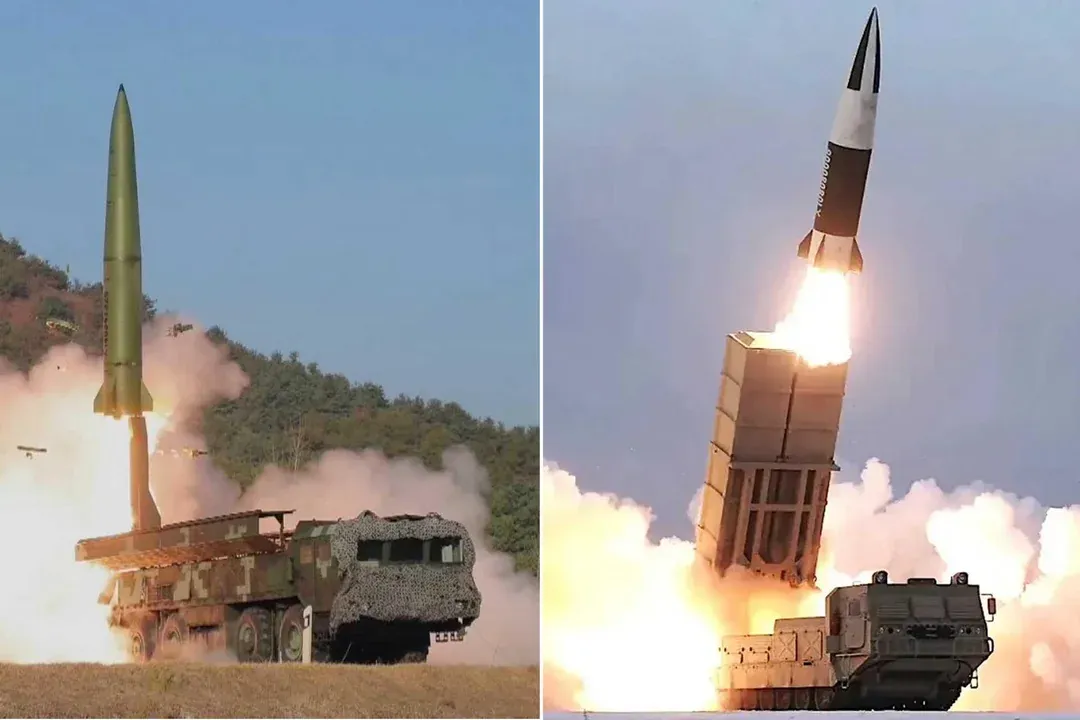
North Korea began supplying KN-23 and KN-24 short-range ballistic missiles, giving Moscow another weapon with which to strike Ukrainian targets and pressure Ukraine's limited stocks of sophisticated air defense interceptors.
But the newest development represents another step.
North Korea may no longer simply be sending Russia the missile. It may be sending the people who know how to operate it.
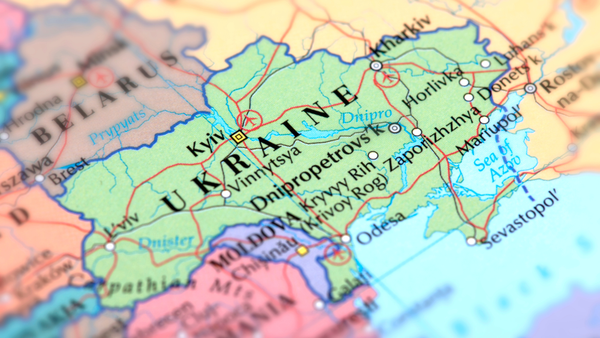
According to Ukrainian intelligence cited by Reuters, roughly 90 North Korean personnel are expected to deploy to Russia's Voronezh region, around 300 kilometers from Ukraine.
The personnel could be integrated with Russia's 112th Missile Brigade.
Ukraine says Moscow plans to build a force there containing as many as 120 North Korean ballistic missiles and six launchers, with at least 40 missiles from a new shipment already delivered.
The distinction they raise is important.
Until now, a North Korean missile could be shipped to Russia and fired by Russian personnel.
Now North Korean missile specialists themselves may be stationed alongside a Russian missile brigade.
It remains unclear whether North Koreans would actually launch weapons against Ukraine or instead provide maintenance, preparation and technical or operational support.
That unanswered question matters.
There is a substantial difference between:
North Korea sells Russia a missile.
and
North Korean personnel participate in the system that launches that missile at Ukraine.
The second represents a much deeper level of military integration.
Weapons were followed by people.
Beginning in 2024, North Korea deployed thousands of troops to Russia. Roughly 14,000-15,000 North Korean soldiers have since been sent, principally for operations associated with Russia's Kursk region, according to estimates compiled by Reuters. Around 9,500 were believed still to be present as of this month.
For months, Moscow and Pyongyang avoided publicly acknowledging what was happening.
Eventually, both did.
North Korean troops had fought Ukrainian forces alongside Russia.
It was an extraordinary development: North Korea's largest foreign military involvement since the Korean War.
And there are indications the deployment could expand further.
Ukrainian officials have repeatedly warned that Russia may seek tens of thousands of additional North Korean personnel. Those projected numbers remain intelligence assessments rather than confirmed deployments, so they should not be confused with the approximately 14,000-15,000 already sent.
But even the confirmed deployment fundamentally changes North Korea's role.
Pyongyang is no longer simply supporting Russia's war.
Its citizens are participating in it.
This is where the relationship becomes even more interesting.
Russia has also announced plans for approximately 1,000 North Korean sappers and 5,000 military construction workers to work in Kursk.
Their jobs are different.
The sappers can clear mines.
Construction personnel can repair and rebuild infrastructure damaged during fighting.
Neither necessarily needs to fight Ukrainian troops to contribute to Russia's military capacity.
Every North Korean who clears a minefield, rebuilds military infrastructure or performs logistical work is potentially doing a job that would otherwise require Russian personnel or resources.
North Korea, in other words, is beginning to provide Russia with something even more basic than weapons:
manpower.
And that manpower relationship increasingly extends beyond the battlefield.
Brigades of North Korean workers — including women — are appearing in Russian workplaces.
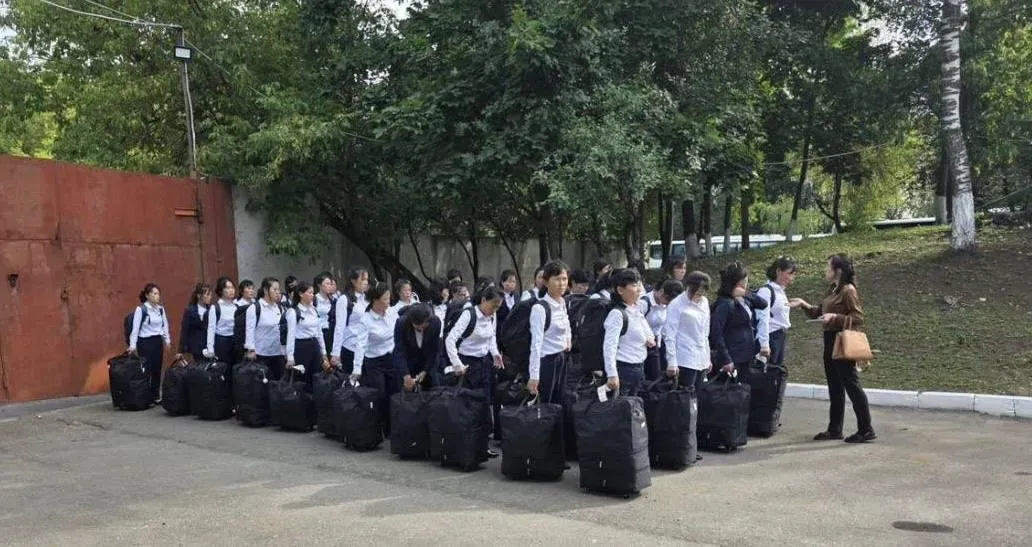
Reports describe North Koreans employed in agriculture, garment production, assembly operations, construction, kitchens and other labor-intensive sectors.
On paper, this can look like ordinary labor migration.
It isn't.
Human Rights Watch recently highlighted research based on interviews with North Koreans who had worked on Russian construction sites.
Workers described having their passports confiscated upon arrival.
Some said they worked 12 to 16 hours per day, as many as 364 days per year.
Although nominal monthly wages could reach around $800, workers reported that the North Korean government typically extracted roughly $600 through mandatory quotas, with additional deductions for living costs and travel debt. Some were ultimately left with as little as $10 per month.
Workers also described embedded informants and extensive surveillance.
Trying to escape can potentially expose relatives remaining in North Korea to punishment.
Human Rights Watch describes North Korea's forced-labor system more broadly as systematic and state imposed.
So when photographs emerge of groups of North Korean women arriving for jobs in Russia, the advertised hourly wage tells only part of the story.
North Korean overseas labor isn't merely a human rights issue.
It is a sanctions issue.
In 2017, the UN Security Council adopted sanctions requiring countries to repatriate North Korean workers earning income abroad, because overseas labor had become an important mechanism through which Pyongyang generated foreign currency.
And Russia voted for those sanctions.
That fact illustrates just how dramatically Moscow's North Korea policy has changed.
Russia once participated in the international sanctions architecture designed to constrain Pyongyang.
Today it increasingly benefits from the very activities that architecture was designed to stop.
And in March 2024, Moscow went further.
Russia used its Security Council veto to terminate the mandate of the UN Panel of Experts responsible for monitoring implementation of sanctions against North Korea.
The sanctions themselves did not disappear.
The UN's principal independent mechanism for investigating their implementation did.
That happened just as Russia-North Korea military cooperation was rapidly expanding.
Factories and construction sites are the visible part.
North Korea has another global labor export operating largely behind computer screens.
The United States says Pyongyang dispatches highly skilled IT workers abroad who conceal their nationality, obtain employment using fabricated identities or stolen credentials and funnel income back to North Korea.
Russia has been one of the countries associated with these networks.
The scale is remarkable.
In March, the U.S. Treasury said North Korean IT-worker schemes generated nearly $800 million in 2024 alone, helping finance the country's weapons programs.
Treasury has separately sanctioned individuals and companies based in Russia and elsewhere for facilitating North Korean financial networks and overseas IT workers.
So Pyongyang's exports are unusually diverse.
It can export: artillery shells, ballistic missiles, soldiers, military specialists, construction workers, factory and agricultural labor, and IT workers.
Different mechanisms. Similar purpose.
They generate money, resources, military benefits or political leverage for the North Korean state.
This is the other half of the story — and possibly the more consequential one.
North Korea is not doing this out of charity.
Russia can provide money, food, fuel, raw materials and diplomatic protection.
It can weaken enforcement of international sanctions.
And potentially, it can provide military technology and expertise that North Korea has struggled to acquire elsewhere.
But there is something else Moscow can offer that money cannot easily buy: a battlefield.
North Korean soldiers are now gaining experience in one of the world's most technologically intensive wars.
They are encountering drones on an enormous scale.
Electronic warfare.
Western artillery.
Precision weapons.
Modern reconnaissance.
Networked battlefield intelligence.
Mine warfare.
Western-equipped Ukrainian formations.
And the brutal reality of operating under constant aerial surveillance.
North Korean missiles are likewise being tested not on a proving ground but in actual combat — including against Ukrainian air defenses.
Failures can be examined.
Accuracy can be measured.
Components can be modified.
Tactics can be adjusted.
North Korean officers can return home with knowledge accumulated through experience rather than military exercises.
That matters far beyond Ukraine.
Imagine the difference between designing a missile based on theoretical expectations and receiving battlefield information about how that missile actually performed against modern defenses.
Or between training soldiers to deal with drones in exercises and sending them into an environment where inexpensive FPV drones hunt individual troops and vehicles.
Russia has spent more than four years adapting to that environment.
North Korea is getting access to those lessons.
And eventually, many of those soldiers, engineers, missile specialists and officers will return home.
The Korean Peninsula will therefore inherit some of the consequences of a war taking place thousands of kilometers away.
South Korea, Japan and American forces stationed in the region could someday face a North Korean military whose doctrine has been influenced by direct experience fighting a Western-equipped army.
That may ultimately prove more strategically valuable to Pyongyang than the money it receives for artillery shells.
There is a reason this relationship has deepened so quickly.
Each country possesses things the other increasingly needs.
Russia has money, natural resources, advanced military knowledge, diplomatic power and a permanent seat — and veto — on the UN Security Council.
North Korea has enormous ammunition stocks, weapons factories, ballistic missiles and a highly controlled population from which the state can extract soldiers and workers.
Russia needs ammunition.
North Korea has ammunition.
Russia needs manpower.
North Korea can provide manpower.
North Korea needs revenue.
Russia can pay.
North Korea needs military experience.
Russia has a war.
North Korea needs diplomatic protection.
Russia can provide it.
The exchange is therefore no longer simply transactional arms trading.
It is becoming structural.
Seen alone, a group of North Korean women arriving in Russia to work in a garment factory might seem peripheral to the war in Ukraine.
It isn't.
Neither are the construction workers.
Neither are the sappers.
Neither are the IT workers.
Neither are the missile technicians.
They are different manifestations of a relationship in which North Korean weapons and human labor increasingly help Russia absorb the costs of prolonged confrontation with the West.
Meanwhile, Russia helps Pyongyang earn revenue, acquire experience and escape some of the isolation the international sanctions regime was designed to impose.
A few years ago, Russia was officially part of the system intended to contain North Korea's military ambitions.
Today, North Korean ammunition is sustaining Russian forces, North Korean missiles are hitting Ukraine, North Korean troops have fought for Russia, North Korean workers are entering its economy — and North Korean missile personnel may soon be embedded alongside a Russian missile brigade.
That is more than an alliance of convenience.
North Korea is becoming part of Russia's war machine.
And Russia may be helping build a considerably more capable North Korea in return.