49,000 Crossings. One Border. Three Political Narratives.

– 3 min read


When Spain estimated that roughly 49,000 migrants crossed from Morocco into the Spanish territory of Ceuta in a single day, the images quickly spread across Europe. Within hours, the debate had shifted far beyond the border itself.
Italy’s Foreign Minister Antonio Tajani declared he supported “closing the Schengen Area to Spain,” arguing that Spain’s decision to regularize around 500,000 undocumented migrants had encouraged irregular migration and posed a security risk.
The statement generated headlines across Europe.
There is just one problem.
Italy cannot suspend Spain from the Schengen Area.
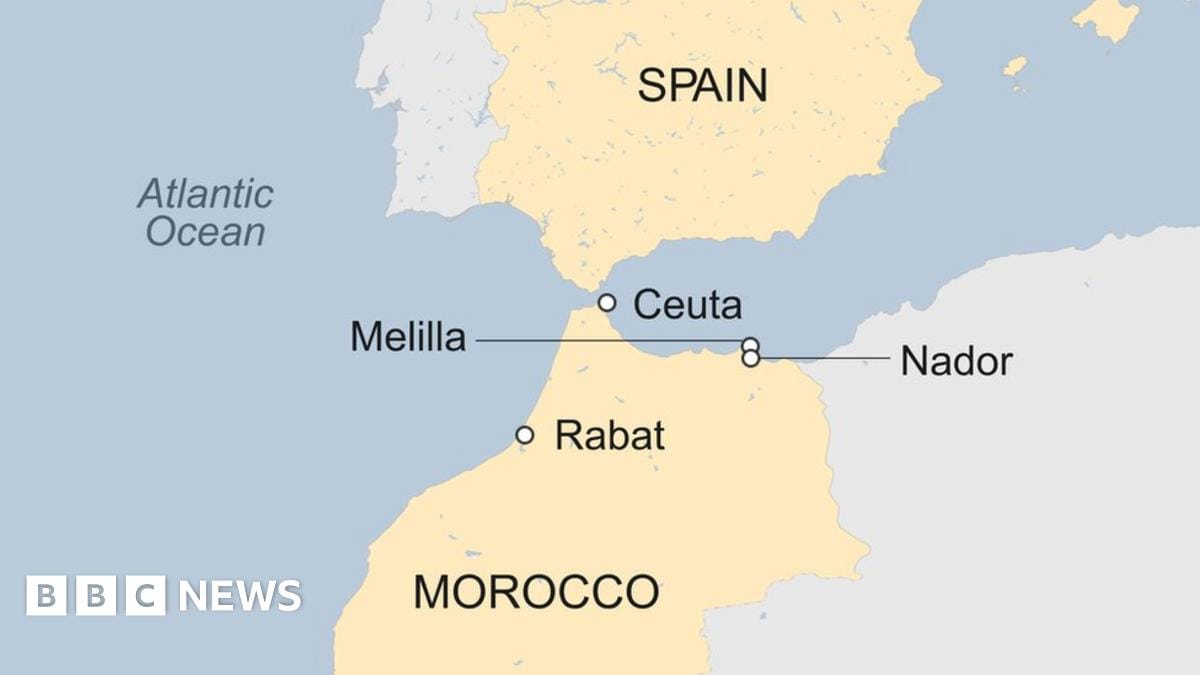
Ceuta is one of two Spanish enclaves on the northern coast of Africa. Although geographically in Africa, it is sovereign Spanish territory and therefore part of the European Union.
That also makes it one of the EU’s external borders.
Following the mass crossings, Spain announced additional security deployments, accelerated repatriation procedures, and continued cooperation with Moroccan authorities while investigating the networks involved in organizing the crossings.
The humanitarian and security dimensions of the event are real.
But they should not be confused with the legal debate that followed.
For many Americans, Schengen is often misunderstood as simply “Europe without borders.”
In reality, the Schengen Area is an agreement between participating European countries that removes routine passport checks at internal borders while establishing common rules for managing the external border.
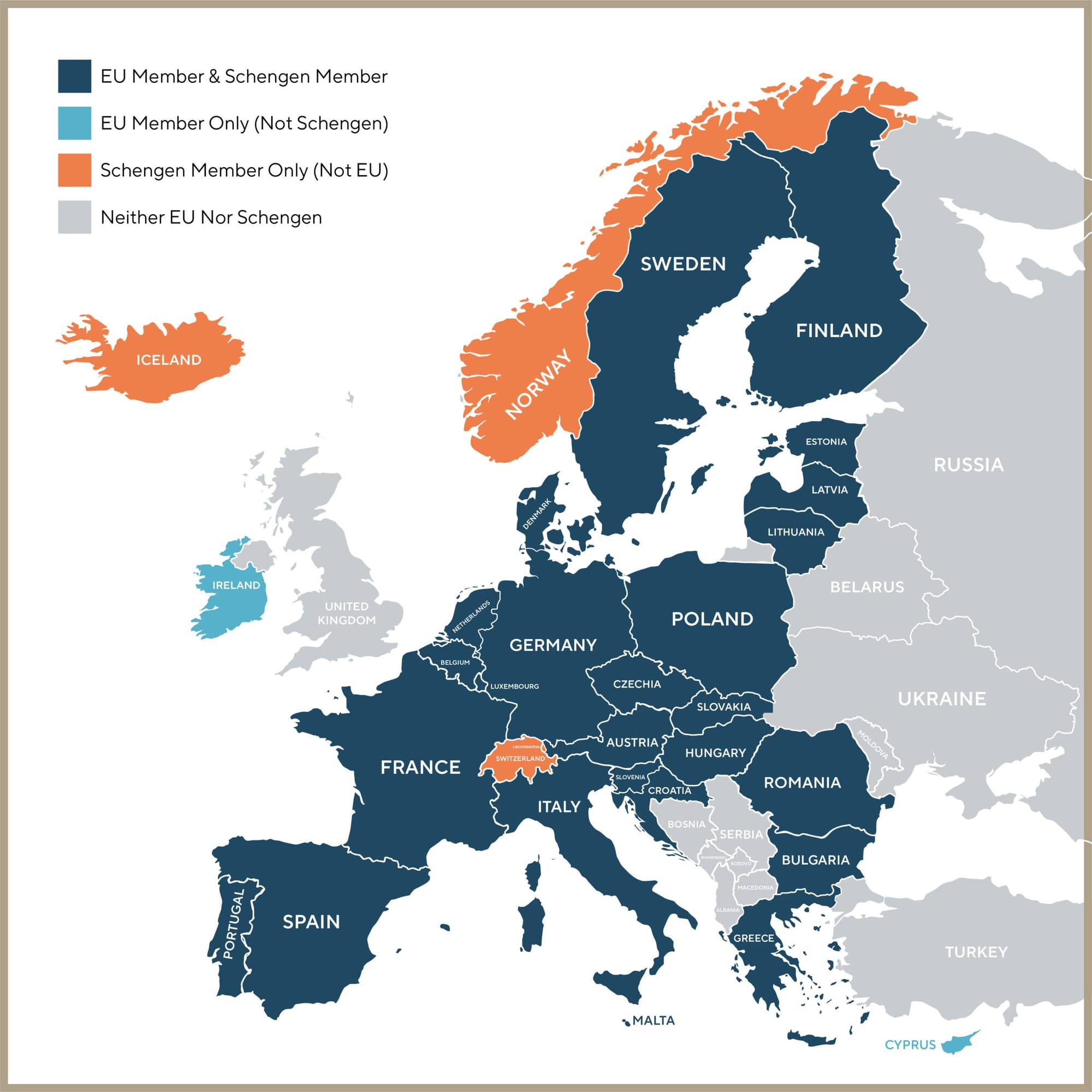
Member states can temporarily reintroduce border controls under specific circumstances, such as serious threats to public policy or internal security.
What they cannot do is unilaterally expel another member state from the Schengen Area.
That legal mechanism simply does not exist.
In other words, Italy may choose to increase checks at its own border if the legal conditions are met.
It cannot remove Spain from Schengen.
Those are two very different actions.
Italy’s criticism goes beyond what happened in Ceuta.
Italian officials argue that Spain’s decision to regularize roughly 500,000 undocumented migrants already living in the country sends the wrong signal and encourages irregular migration.
Whether that policy was wise is a legitimate political debate.
But it remains separate from Schengen membership.
Domestic immigration policy and participation in Schengen are governed by different legal frameworks.
There is another part of this story that deserves equal attention.
While criticizing Spain’s migration policy, Italy has also expanded legal migration through successive decreti flussi, authorizing roughly 500,000 foreign worker permits over recent years to address labor shortages in sectors such as agriculture, construction, tourism, and care work.
These are not identical policies.
Spain regularized people already living inside the country.
Italy authorized legal work permits for foreign workers.
But both acknowledge the same underlying reality:
Europe’s economies continue to depend on migrant labor even as migration becomes one of the continent’s most politically divisive issues.
That tension is rarely captured in the headlines.
On the same day Europe was debating the events in Ceuta, the U.S. State Department published a statement congratulating the Kingdom of Morocco on Throne Day, reaffirming the partnership between Washington and Rabat.
As of publication, however, there was no comparable public State Department statement specifically addressing the reported mass crossings into Ceuta.
That contrast does not necessarily imply a policy position.
It simply illustrates how diplomatic priorities and public messaging can focus on different aspects of the same relationship.
The images from Ceuta have already become ammunition in Europe’s migration debate.
Some blame Spain.
Others blame Morocco.
Still others point to organized trafficking networks or broader geopolitical dynamics.
But before assigning responsibility, one question deserves far more attention:
Why did tens of thousands of people attempt the crossing in the first place?
That answer lies beyond a single border crossing, beyond one political speech, and beyond Schengen itself.
It’s also the question that deserves the deepest reporting — and the one we’ll examine next.