The Daily: UNGA81, Day 4 of 5

– 7 min read

Good evening,
Welcome to Day 4 of 5 of ONEST’s public UNGA81 Daily Briefs.
Today took me through three very different parts of High-Level Week.
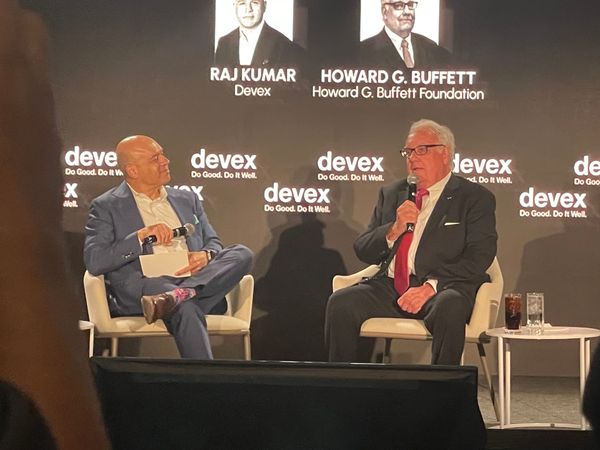
I began at the Ukraine Prosperity Forum, hosted by the Howard G. Buffett Foundation and Devex, continued at Asia Society, and finished the day monitoring Xi Jinping’s state visit to the White House.
And while New York remained focused on Ukraine, Gaza, the future of the international system and the realities of financing all of it, Washington was putting the U.S.-China relationship on full display, complete with military ceremony, business leaders and a carefully choreographed message of stability.
Here’s what mattered.
The Ukraine Prosperity Forum began with a question that increasingly sits beside the military one:
How do you invest in a country while it is still fighting for its survival?
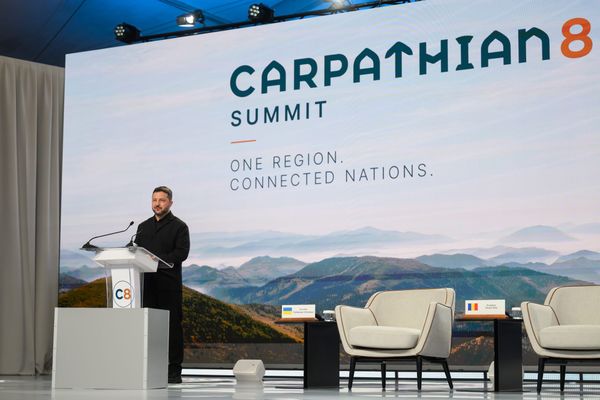
The forum brought together philanthropy, business, development institutions and Ukrainian voices around reconstruction, agriculture, investment and the long-term economic future of Ukraine. The Howard G. Buffett Foundation has now committed more than $1 billion to Ukraine since Russia’s full-scale invasion, making Ukraine one of the foundation’s largest areas of work.
But reconstruction is not happening after the war. It is happening while Russia continues to attack Ukraine’s infrastructure and while Ukraine is still trying to secure the weapons needed to defend it.
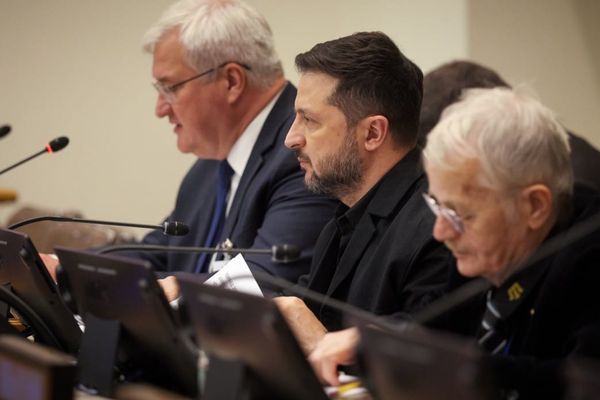
President Volodymyr Zelenskyy met NATO Secretary General Mark Rutte in New York after Russia launched three waves of ballistic attacks on Kyiv. Their discussion focused specifically on Patriot interceptors and a winter air defense package.
That gets to the uncomfortable reality behind every reconstruction conversation here: you cannot separate Ukraine’s prosperity from Ukraine’s ability to survive the next attack.
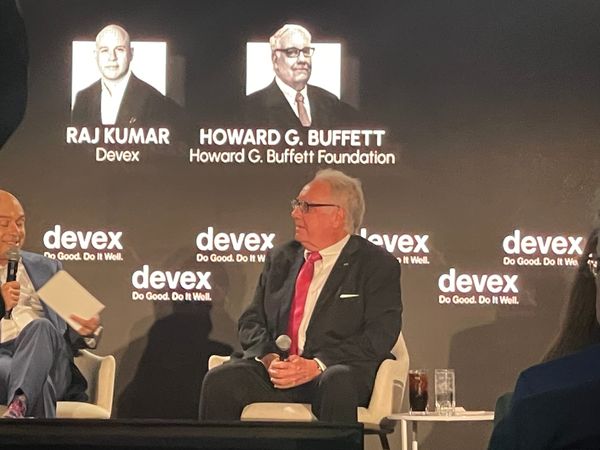
I published a new Diplomatic Note from today’s Ukraine Prosperity Forum, including my observations from the room and Howard Buffett’s remarks on why supporting Ukraine was never, in his words, really a choice.
The public Daily gives you the developments.
Diplomatic Notes give you what I’m hearing and seeing inside the rooms where those conversations are happening.
ONEST members can unlock today’s note and every Diplomatic Note from UNGA81 immediately.
Zelenskyy continued to argue that Ukraine is prepared for a reciprocal halt to attacks on energy infrastructure. He told members of the Ukrainian community in the United States that Ukraine would be ready for an energy ceasefire, while arguing that Ukrainian strikes have significantly damaged Russia’s refining capacity.
The important word is reciprocal.
Ukraine’s position is not that it should stop attacking Russian energy infrastructure while Russia continues striking the Ukrainian electrical grid. Rather, Kyiv is presenting energy as a possible limited negotiating track: Ukraine stops hitting Russian oil and refining infrastructure if Russia stops attacking Ukraine’s energy system.
That is also broadly consistent with what Secretary of State Marco Rubio said yesterday: both sides have expressed some interest in a limited energy arrangement, even though energy infrastructure serves very different strategic purposes for each side. For Ukraine, the immediate issue remains winter survival. For Russia, oil and refining capacity are also sources of state revenue.
Canadian Prime Minister Mark Carney met Vietnamese General Secretary and President Tô Lâm in Ottawa today, and the two governments elevated the relationship to a new Strategic Partnership.
The scope is unusually broad, spanning trade and investment, supply chains, artificial intelligence and emerging technologies, energy, defense, maritime security, aerospace and food security. Canada and Vietnam also signed or renewed agreements covering energy, maritime transport, environmental cooperation and food safety.
Canada highlighted LNG alongside clean energy as an area for deeper cooperation, while the two sides agreed to work toward concluding the Canada-ASEAN Free Trade Agreement this year. They also expanded their air transport agreement to allow direct passenger and cargo flights between the countries.
There is a larger Canadian strategy behind this.
Earlier this month, Carney used an address to the European Parliament to call for deeper cooperation with Europe across critical minerals, defense production, AI, energy, space and payments; explicitly framing diversification as a way to preserve strategic autonomy.
Today’s Vietnam agreement applies much of the same logic in the Indo-Pacific. Canada is building more routes out. More markets. More energy relationships. More supply chain partners. More security relationships.
Not isolation from the United States, rather diversification beyond dependence on any single relationship.
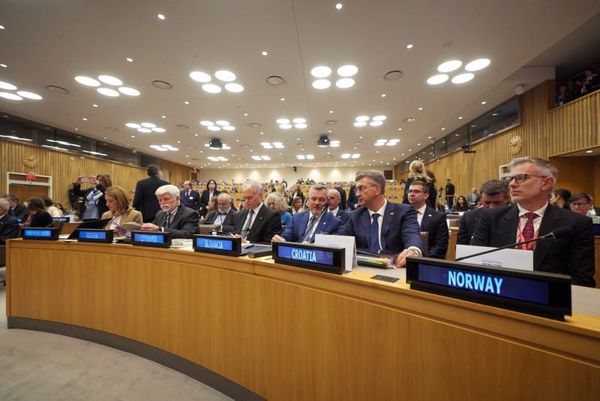
Inside the UN today, the discussion over Israel and Palestine increasingly shifted from whether governments support a two-state solution to what they are prepared to do to preserve one.
British Foreign Secretary Ed Miliband told a ministerial meeting that settlement expansion — particularly the E1 project — is creating facts on the ground that could make a viable Palestinian state increasingly difficult.
The UK, France and Canada have already announced coordinated measures targeting economic links with Israeli settlements, including restrictions on settlement goods.
Miliband argued today that those measures are not enough.
He called for greater political pressure on the Israeli government while also saying that Hamas must have no role in the future government of Gaza and must disarm. The UK continues to support the U.S.-led Gaza plan.
His warning was straightforward: governments could return to this same meeting next year, still declaring support for two states, while the conditions required to create one have deteriorated further.
I have heard versions of this conversation before. I was sitting in meetings at the same United Nations in 2011, hearing many of the same arguments about preserving the possibility of two states.
That is the actual test now: not how many governments say “two states,” but whether policy begins changing the facts on the ground.
Palestinian President Mahmoud Abbas addressed the General Assembly by prerecorded video after the United States denied him a visa to attend in person. Abbas said legislative elections would be held on November 28, which would be the first Palestinian parliamentary election in two decades if it takes place. Reuters noted substantial domestic uncertainty over whether the vote will ultimately happen.
Hours later, Israeli Prime Minister Benjamin Netanyahu addressed the same General Assembly. Representatives from numerous countries walked out as he took the podium in protest over Israel’s military operations in the Palestinian territories. Netanyahu rejected allegations that Israel is committing genocide in Gaza and defended Israel’s military campaign.
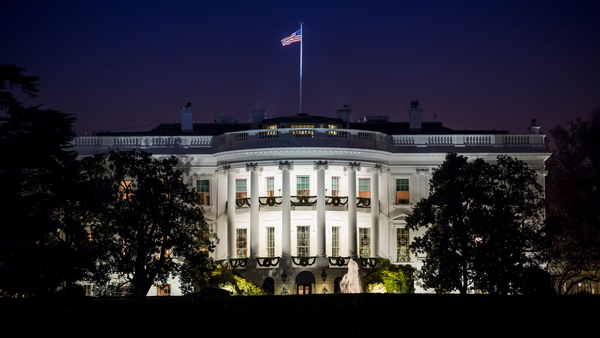
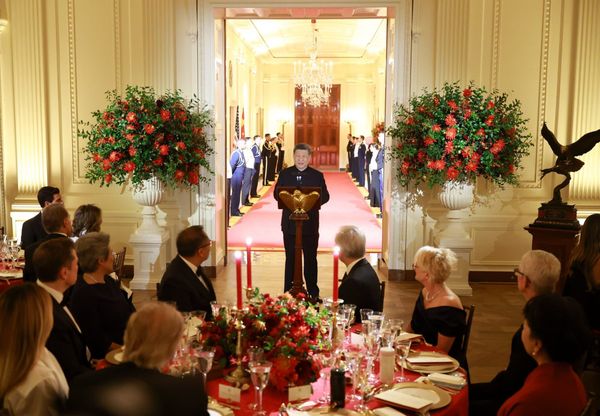
While all of this was unfolding in New York, Chinese President Xi Jinping was at the White House for a state visit with President Trump. The ceremony was elaborate: hundreds of U.S. military personnel, a formal military review and flyover, followed later by a state dinner. Xi used his public remarks to emphasize stability, cooperation and what Beijing describes as a constructive U.S.-China relationship. But beneath the ceremony, the substance remains much harder: trade, AI, critical minerals, supply chains, Taiwan and Iran. The wider question is how the two largest economies manage competition without allowing it to turn into confrontation.
Main development: the two governments extended their existing trade truce by another two months, buying time for negotiations rather than resolving the major disputes over tariffs, rare earths and technology restrictions.
That may be the clearest distinction between the choreography and the policy. Today was designed to show stability. The unresolved issues remain.
There is another part of this visit that I think tells us something important.
Tonight’s White House state dinner includes a substantial roster of American business leaders, but the anticipated equivalent delegation of major Chinese CEOs did not materialize. Xi instead arrived with senior officials overseeing finance, commerce, economic planning and the bilateral relationship.
I published a separate Diplomatic Note looking at the room Xi Jinping walked into and what the guest list itself says about the relationship between corporate America and the Chinese state.
That note is now available to ONEST members.
Another revealing development emerged around Yemen. U.S. officials met Houthi representatives in Oman despite the group remaining designated by Washington as a foreign terrorist organization. The Houthis told U.S. officials they intended to maintain the existing ceasefire with Washington and would not attack American vessels. They also said they would avoid Israeli and other commercial shipping, with Saudi vessels treated differently.
That contact matters because the Houthis have simultaneously expanded their position in Yemen and continued attacks connected to the Saudi conflict. It is another example of something we have seen repeatedly this week: terrorist designation, military pressure and diplomatic contact can all exist at the same time. The public language and the private negotiating channel are not always the same thing.
The European Commission’s priorities for the coming year also make clear how quickly Europe’s economic agenda is becoming a security agenda.
The Commission is focusing on energy security, diversification of critical supply chains, AI, defense capabilities, critical infrastructure and protection against hybrid threats. The language is familiar because we have heard versions of it all week from Canada, the United States and other governments: resilience, diversification, strategic autonomy. Different governments are pursuing those objectives differently. But increasingly, they are responding to the same problem: a global economy in which dependence itself can become leverage.
The Clinton Global Initiative concluded its 2026 meeting with 60 new Commitments to Action, valued at more than $603 million if fully funded and implemented. More than $212 million has already been secured.
Microsoft announced a new Middle East technology framework initially covering the UAE, Kuwait, Qatar and Saudi Arabia, as AI remained a major subject around UNGA.
Ukraine and Finland discussed another support package as Kyiv continues trying to assemble the air defense, energy and financial support needed for winter.
That’s Day 4 of 5.
See you tomorrow,
Olga
All five UNGA81 editions of The Daily are public this week.
ONEST members get the reporting beyond the public brief: Diplomatic Notes from inside the rooms — interviews, conversations, observations, audio and transcripts where available.
Become an ONEST member and unlock every UNGA81 Diplomatic Note immediately — including today’s Ukraine Prosperity Forum note and The Room Xi Jinping Just Walked Into.