What You’re Helping to Build: The Simply Put Documentary Slate

– 4 min read

Politics may dominate the headlines, but it is never the whole story.
Behind every policy, institution, product, tradition or cultural moment are people, systems, history, economics, design choices and decisions most of us rarely get to see.
And nuance matters.
That is where Simply Put. is going next.
We’re developing a series of reported mini-documentaries built around one clear question at a time — questions that sound simple, but open the door to something much bigger.
We’ll go places. Talk to the people who actually know. Look at the history, the numbers, the economics and the human stories behind things we recognize but rarely stop to understand.
Each film will combine original reporting, on-the-ground footage, interviews, research and explanation — followed by shorter videos, behind-the-scenes reporting and conversations around what we find.
And the first documentary is already in production.
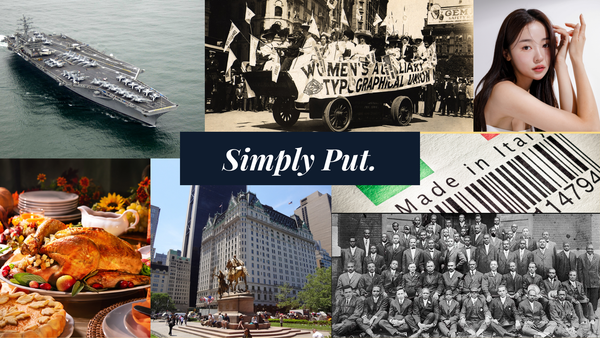
Earlier this year, I spent the day aboard the USS Nimitz during celebrations marking the United States’ 250th anniversary.
The film combines original footage, interviews, history, and the human side of life aboard the ship — while looking at what this milestone meant from the deck of one of America’s most recognizable aircraft carriers, as Nimitz approaches the end of its service.
What we now think of as a traditional Thanksgiving table was shaped over generations.
We’ll look at the history behind the holiday, the origins of its iconic dishes, and the communities and minorities that helped shape the foods people now look forward to every November.
We’ll also look at the economics behind the table: how many turkeys are sold, which ingredients spike in demand, what supermarkets prepare for, how much Americans spend, and how one holiday moves through farms, supply chains, stores and kitchens across the country.
From historic recipes to modern chefs — and, inevitably, some very serious debates about what actually belongs on the Thanksgiving table.
The Plaza Hotel is woven into New York’s idea of Christmas.
Now one of the city’s most recognizable landmarks is preparing for a years-long restoration.
We want to understand why, what it takes to preserve a building like the Plaza, what the hotel has represented culturally and economically, and what happens when an institution so closely tied to New York prepares to disappear from everyday life for several years.
How did Korean culture become so influential in the United States?
From beauty and food to entertainment and consumer culture, we’ll explore what makes it stand out — and speak with experts who can help explain what is genuinely different, what is brilliant marketing, and why global audiences embraced it.
This film will look at Black wealth, ownership and community: what was built, what was destroyed, and what was rebuilt.
From Seneca Village in New York to Greenwood — often called Black Wall Street — in Tulsa, we want to explore the history of communities that created extraordinary economic and cultural power, the forces that displaced or destroyed them, and what their legacy means today.
Historians, community voices, institutions and the economics of memory and preservation will all be part of the reporting.
March brings Women’s History Month and the UN Commission on the Status of Women, the United Nations’ major annual gathering focused on women’s rights and equality.
Rather than a generic story about empowerment, we want to look at the economics underneath it:
Who gets paid?
Who owns?
Who leads?
Who benefits from women’s labor?
And how do supply chains, access to capital, institutions and opportunity shape economic power?
What does “Made in Italy” actually mean — and why is it worth so much?
We’ll look at craftsmanship and manufacturing, but also the business behind the label: how Italian companies enter the U.S. market, how products are priced and distributed, how tariffs and trade affect them, and why Italy invests so heavily in protecting and promoting the value of its national brand.
The Economics of the Birkin Bag — scarcity, craftsmanship, resale, psychology, branding and why one handbag became an economic phenomenon.
What Is Fashion Week Actually For? — what runway shows mean today, how designers make money, how buyers and media fit into the system, and what New York Fashion Week is actually meant to accomplish.
And there will be more.
If there is a question, place, tradition, institution or industry you think deserves this kind of reporting, supporters are very welcome to suggest future topics.
We’re raising $5,000 to help produce Simply Put., and we’re now approaching the first $1,000 raised.
That support helps cover travel and transportation, research, filming, production tools, archive and licensing costs where needed, and eventually additional editing and production support.
The goal is not simply to make more content.
It is to make reporting worth watching, remembering, discussing and returning to.
If you believe the world could use more curiosity, more context and more reporting that takes complicated subjects seriously without making them impossible to understand, I hope you’ll help us build it.
Thank you for helping make this possible,
Olga
Topics, order and release timing may evolve as reporting, access and production develop. The core editorial direction remains the same.