Editor’s Note: Demo•cracy

– 2 min read

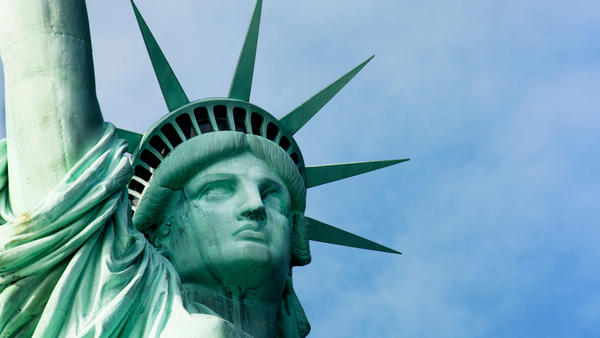
The word democracy comes from two ancient Greek words: dēmos — the people, and kratos — power.
Through the years, we’ve been conditioned to focus on one half of that equation: presidents, institutions, wars, elections, negotiations, and the people who hold power.
It’s understandable. Kratos dominates our news feeds, television screens, podcasts, YouTube channels, and social media. We analyze every speech, every summit, every election, every crisis, trying to understand where the world is heading.
But democracy cannot exist without dēmos.
Without people, there are no votes. No marches. No questions. No discoveries. No communities. No institutions to lead.
History rarely changes because power simply decides to change. Again and again, it moves because people challenge accepted limitations, question prevailing norms, and imagine a better future long before institutions catch up. The civil rights movement did not begin in the Oval Office. Women’s suffrage did not begin in parliament. Every generation inherits its freedoms because someone, somewhere, decided that “this is how it’s always been” was no longer good enough.
And yet, dēmos often enters the conversation only when something goes wrong — or when someone becomes impossible to ignore.
People, however, are driven by something far more enduring than headlines.
They are driven by their values.
Lately, I’ve caught myself feeling like I belong to a generation from the past. Not because I want to return to the past, but because it sometimes feels as though attention has become more valuable than truth, and certainty more attractive than curiosity.
Then I step away from my screen.
I talk to people.
And I leave with a different impression.
I’m not going to pretend we aren’t divided. We are. We don’t all share the same beliefs, experiences, or politics.
But I continue to meet people whose lives are guided by dignity, curiosity, compassion, integrity, professionalism, and a genuine commitment to doing their work well. Scientists. Sailors. Teachers. Engineers. Public servants. Artists. Volunteers. Workers whose names may never appear in a headline, yet whose values quietly shape our communities every single day.
Most of them aren’t competing for attention online.
Which means we rarely hear from them.
When people are reduced to demographics, they stop being people and become statistics.
The stories we choose to tell shape the futures we imagine. If we celebrate fame above contribution, attention above service, and visibility above experience, we shouldn’t be surprised when the next generation aspires to be seen more than to build.
Perhaps we’ve misunderstood democracy all along.
We’ve become exceptionally good at focusing on kratos — those who hold power.
But democracy was never just about power.
It was always about people.
The people who vote.
The people who question.
The people who build.
The people who discover.
The people who teach.
The people who serve.
The taxpayers who elect the kratos, finance it, and ultimately live with every decision it makes.
The people whose values quietly shape every generation that follows.
Perhaps it’s time we gave you the attention you have always deserved.
And from now on, we will.
Journalism that values context over noise.