Washington Needs $1.4 Trillion, Iran Floats a Hormuz Deal, and Poland’s Court Fight Deepens

– 2 min read


Here are five geopolitical developments worth knowing today.
The Treasury now expects $618 billion in net marketable borrowing this quarter and another $800 billion in the first quarter of 2027 — roughly $1.4 trillion over six months. This adds important context as President Trump describes the U.S. economy as "booming" and makes new spending promises.
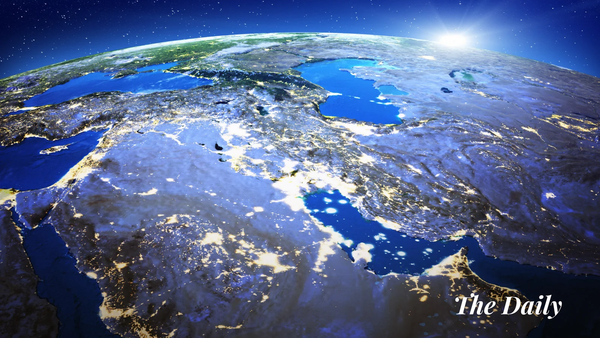
Iran says its proposal to reopen the Strait could now be implemented within two days if Washington meets Tehran’s conditions. Iranian negotiators have left three days of talks with Qatari mediators, but officials say a draft proposal is circulating and contacts continue.
There is still no agreement: major disputes remain over U.S. sanctions, the naval blockade and Iran’s nuclear program. Oil prices fell Monday as markets priced in renewed hopes of diplomacy.
Prime Minister Donald Tusk called on President Karol Nawrocki to recognize judges elected by parliament, arguing that doing so could resolve the Constitutional Tribunal crisis without changing Poland’s constitution.
Meanwhile, Judge Anna Korwin-Piotrowska, who says she has assumed leadership of the court after suspending its president and vice-president, has called a judges’ assembly for Tuesday. Whether enough judges will attend for a legal quorum remains unclear.
The fight raises a bigger question: what does an “independent” court actually depend on?
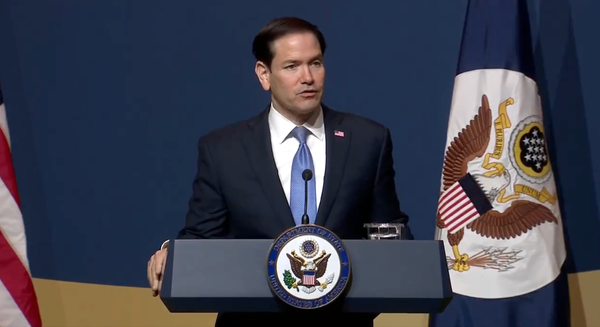
Secretary of State Marco Rubio met Venezuelan Foreign Minister Oliver Blanco and discussed Washington’s three-stage approach: stabilization, economic recovery and political reconciliation, followed by democratic transition. Rubio also pressed for the release of remaining political prisoners.
Treasury Secretary Scott Bessent separately discussed rebuilding Venezuela’s economy, including increasing energy production and reconnecting its financial sector to attract investment.
The Trump administration notified Congress that it intends to terminate both countries’ eligibility for preferential trade under the African Growth and Opportunity Act beginning January 1, 2027.
USTR cited trade and investment barriers and national security and foreign policy concerns; it also cited corruption in South Africa and rule-of-law, political and human rights concerns in Rwanda.
Russia-Ukraine: Emergency-alert systems in both countries were hit by cyberattacks overnight, sending false warnings ranging from radiation threats in Ukraine to Ukrainian drones carrying “nuclear payloads” in Russia. Neither government has admitted responsibility for the attack on the other.
China: Foreign Minister Wang Yi met Iranian and Saudi officials in Beijing and urged political solutions rather than renewed fighting. A Chinese envoy is expected to visit Iran, Oman and Saudi Arabia later this month.
Yemen: Houthi forces have reportedly advanced to within roughly 50 miles of Aden — their closest approach to the internationally recognized government’s temporary capital since 2015.
United States: Americans vote in the midterm elections Tuesday. Treasury follows Wednesday with more detail on how it plans to finance its borrowing.
Iran: Watch whether the draft circulating through Qatari mediation becomes an actual U.S.-Iran agreement or whether military escalation returns after the U.S. election.
Poland: The Constitutional Tribunal’s judges are due to meet Tuesday. The first question is simply whether enough of them show up for the meeting to legally proceed.
That’s what mattered today.
— Olga