ONEST Brief: Canada Surges Ahead, Ukraine's Air Defense Crisis, New NATO Warning

– 7 min read

North America's two largest economies delivered dramatically different employment reports today.
Canada added 75,000 jobs in July, more than four times economists' expectations, while unemployment fell to 6.4%, its lowest level in two years. Job growth was broad-based across retail, finance, professional services and construction.
Meanwhile, the United States lost 23,000 jobs, while previous months were revised sharply downward. Labor force participation also fell to its lowest level in more than five years.
Bloomberg Editor-in-Chief Matt Winkler argues Canada has outperformed the United States, the Eurozone and most major economies since Prime Minister Mark Carney took office.
While Canada's unemployment rate remains higher than America's overall, today's reports point to two economies currently moving in very different directions.
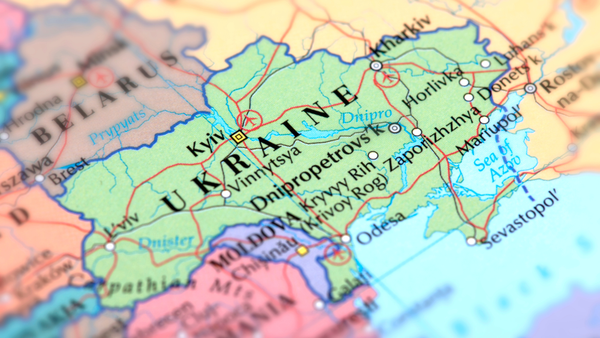
Russia launched another large overnight drone assault against Ukraine, with Ukrainian officials reporting more than one hundred drones intercepted.
Across the past day, Russian attacks killed and injured civilians across multiple regions while Ukrainian forces continued long range strikes inside Russia targeting military and energy infrastructure.
President Volodymyr Zelenskyy says Ukraine's most urgent challenge remains Russian missile and drone attacks.
Ukraine's Ministry of Defense says deliveries of anti ballistic interceptors from partners have fallen dramatically this year, estimating supplies are roughly three times lower than during 2025.
"We understand how many missiles for air defense systems are available worldwide... If each of our partners helps now, it will save many lives."
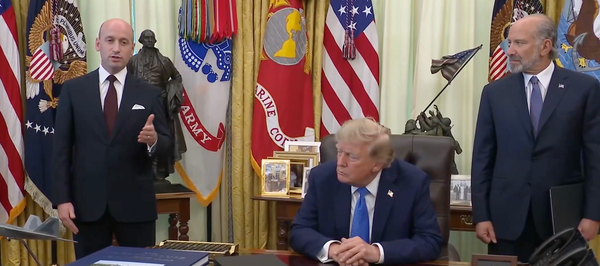
President Trump, when asked about increasing Russian attacks on civilian targets, responded:
"We're not involved. We're separated by an ocean."
The administration has also sent mixed signals on Patriot production licenses for Ukraine, first suggesting they could move forward before later indicating they would not.
The central question is becoming increasingly difficult to ignore:
Does Washington lack the political willingness to provide more interceptors, the available inventories to do so, or both?
NATO Supreme Allied Commander Europe Gen. Alexus Grynkewich welcomed Lt. Gen. Guillaume Beaurpere as the new commander of NATO Security Assistance and Training for Ukraine (NSATU).
The organization coordinates military equipment, training and long-term support for Ukraine from NATO territory.
Although Lt. Gen. Guillaume Beaurpere is a U.S. Army officer, NATO has agreed that a European or Canadian commander is expected to take over the mission in about a year, as the Alliance gradually shifts responsibility for coordinating military support to Ukraine toward European allies.
According to new U.S. intelligence assessments, Russia could attempt a limited operation against a NATO member within the next several years, potentially ranging from cyberattacks to a small territorial incursion designed to test the Alliance's willingness to invoke Article 5.
The assessment reportedly represents a shift from previous U.S. estimates that Moscow was unlikely to challenge NATO directly while the war in Ukraine continued.
The warning comes as reports suggest the United States has significantly depleted key missile inventories during the conflict with Iran.
According to reporting this week, U.S. forces have used a substantial share of their THAAD and Patriot interceptor inventories, highlighting the growing strain on Western air defense stockpiles.
Saudi Arabia, Türkiye and Pakistan signed the Mecca Joint Defense Agreement, declaring that an attack against one member would be regarded as an attack against all three.
Although details remain limited, the agreement brings together:
The agreement reflects growing concern among regional powers following months of conflict involving Iran and continued disruption around the Strait of Hormuz.
The S&P 500 reached another record after Treasury Secretary Scott Bessent suggested the United States could reach an agreement with Iran to reopen the Strait of Hormuz "today or tomorrow."
Secretary of State Marco Rubio also said an agreement could come "very shortly," while Qatar confirmed draft language is circulating among the parties.
Reuters additionally reported that a proposed arrangement could grant Iran greater authority over ships entering the Gulf through Hormuz.
Shipping traffic through both the Strait of Hormuz and Bab el-Mandeb nevertheless declined this week.
Markets have repeatedly reacted to optimistic diplomatic statements throughout recent months.
Ultimately, shipping traffic — not political rhetoric — will determine whether any agreement changes reality.
Iran warned Gulf countries that any future U.S. military action against Iranian territory would trigger retaliation against critical regional energy infrastructure.
Meanwhile, President Masoud Pezeshkian acknowledged communication with Supreme Leader Ayatollah Mojtaba Khamenei has become "very difficult," raising questions about wartime decision-making inside Iran's leadership.
Two Israeli soldiers were killed in southern Lebanon while Lebanese authorities reported retaliatory Israeli strikes killed at least one person, coinciding with another round of negotiations.
France, Germany, Italy and the United Kingdom reaffirmed support for Georgia's sovereignty on the 18th anniversary of Russia's 2008 invasion.
The joint statement condemned Russia's continued occupation of Abkhazia and South Ossetia and expressed concern over recent agreements further integrating South Ossetia with Russia.
The four governments also welcomed Naoero's (formerly Nauru's) decision to withdraw recognition of Abkhazia and South Ossetia, encouraging other countries to follow.
The statement also reaffirmed support for the Geneva International Discussions and the EU Monitoring Mission in Georgia.
European authorities continue examining whether Russian-linked networks amplified online narratives surrounding the recent Ceuta migration crisis.
French Interior Minister Bruno Retailleau argued the problem was not the Schengen system itself.
"Schengen didn't let a single person from Ceuta onto the Spanish mainland."
China is increasing scrutiny of overseas investments and offshore trusts as fiscal pressures continue mounting.
New tax rules impose a 20% levy on certain offshore trust income, while authorities are reportedly reviewing overseas holdings dating back decades.
The measures reflect Beijing's search for new revenue sources as land-sale income continues to decline.
In a rare admission, the Communist Party's leading theoretical journal acknowledged a growing disconnect between China's headline economic growth and how citizens actually experience the economy.
The article argues that while AI and advanced manufacturing are expanding rapidly, they remain too small to fully offset weakness in traditional industries.
Chinese state television revealed an AI-powered battlefield planning system reportedly capable of coordinating more than one hundred tactical units during military exercises.
The development comes alongside growing discussion of "model distillation," allowing advanced AI capabilities to run on smaller military systems with significantly lower computing requirements.
Pentagon policy chief Elbridge Colby has reportedly sought an official visit to Beijing in an effort to stabilize military relations.
China has so far declined to extend an invitation.
North Korea conducted another ballistic missile launch, prompting renewed international condemnation.
Germany called on Pyongyang to comply with UN Security Council resolutions prohibiting its ballistic missile program.
80 Years After Hiroshima: What Actually Changed?
This week's ONEST Deep Dive examines how Hiroshima shaped today's nuclear order, from the Non-Proliferation Treaty and the International Court of Justice to Ukraine, Iran, Saudi Arabia and the future of nuclear deterrence.
President Trump signed executive orders implementing the Supreme Court's recent citizenship ruling while expanding restrictions targeting so-called "birth tourism."
The measures include additional visa enforcement, potential permanent entry bans and actions against facilitators.
U.S. Northern Command is preparing to deploy approximately 200 soldiers to support wildfire operations in the Pacific Northwest.
More than eight million people — over half the country's population — face crisis-level hunger while cholera continues spreading across the country.
UNICEF says approximately 300 children have reportedly been killed during roughly 300 days since the ceasefire came into effect last October.
The UN estimates approximately 14 million Afghans continue facing severe food insecurity.
Palantir shares surged 29% after reporting:
CEO Alex Karp argued companies increasingly prefer keeping their own proprietary data inside Palantir's ecosystem rather than relying on external AI platforms.
Amazon-owned Zoox will begin charging passengers for autonomous rides in Las Vegas starting August 10.
Satellite imagery indicates an oil spill from a UK-sanctioned tanker grounded off Oman continues expanding toward nearby coastlines.
Morocco awarded a $1.5 billion project to build a waste-to-energy facility in Casablanca capable of processing approximately 1.5 million metric tons of waste annually while generating electricity for nearly one million people.
The World Health Organization says work continues on improved treatments and what could become the world's first vaccine targeting the Bundibugyo strain of Ebola, as the Democratic Republic of Congo battles its largest recorded outbreak of that variant.
While Washington debates Ukraine aid, missile inventories and a proposed $1.5 trillion defense budget, President Trump reportedly instructed contractors to redo weeks of work on the planned White House helipad, expressing dissatisfaction with its appearance and the slope of the White House lawn.
It is a reminder that governments rarely focus on only one priority — even when the world expects them to.