Daily Brief: The Iran and Ukraine Wars Converge, Russian Drones Breach NATO and Washington Targets Global Accountability

– 10 min read

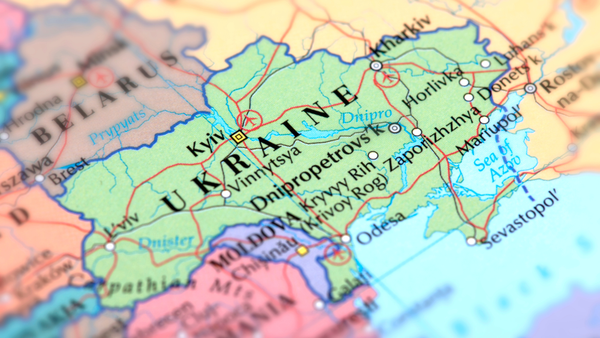
Russia’s war against Ukraine and the expanding conflict around Iran are no longer moving along separate tracks.
Romania has shot down drones breaching its airspace for three consecutive days, with at least one confirmed as a Shahed of the type used by Russia. Ukraine alleges that Russia is supplying Iran with satellite intelligence on American and Gulf military facilities. Kyiv has acknowledged striking vessels it says transported Iran-linked military cargo across the Caspian Sea, while Tehran has threatened consequences.
At the same time, China, Russia and Iran are deepening their separate coordination through meetings around the Shanghai Cooperation Organization; the Houthis and Saudi Arabia have reopened a front around the Red Sea; and Washington is using civil nuclear cooperation to press Riyadh toward normalization with Israel.
The connections between Europe, Ukraine and the Middle East are becoming operational — not merely diplomatic.
A Romanian F-16 shot down another drone over the country’s territorial waters near the Sulina–Chilia area on Sunday morning — the third interception in three consecutive days.
Romanian President Nicușor Dan said an investigation established that the drone destroyed on Friday was a Shahed of the type used by Russia against Ukraine. Investigations into the drones intercepted on Saturday and Sunday remain underway.
Romania says drones have violated its airspace 33 times since Russia launched its full-scale invasion of Ukraine. Friday marked the first time Bucharest destroyed one of the intruding aircraft.
Romania has summoned the Russian ambassador and is preparing a formal diplomatic protest. Canada expressed solidarity with its NATO ally, calling the repeated violations unacceptable and stressing the importance of collective defense and the protection of allied territory.
Successfully defending NATO airspace matters. But repeatedly using F-16s against Shahed-type drones is not a sustainable long-term counter-drone architecture.
Ukraine has spent years developing a layered system combining radar and acoustic detection, electronic warfare, mobile fire groups, interceptor drones, helicopters, aircraft and conventional air-defense systems.
That experience was built under conditions NATO has never faced: hundreds of drones arriving night after night while expensive interceptors must be preserved for cruise and ballistic missiles.
Romania’s response demonstrates readiness. Three consecutive days of incursions demonstrate the problem.
NATO now has an opportunity to move beyond praising individual interceptions and systematically integrate Ukraine’s combat-tested counter-drone methods across its eastern flank.
The question is not whether an F-16 can destroy a Shahed. It is whether Europe can afford to scramble fighters every time Russia sends one — and what happens when one drone becomes 200.
This week’s ONEST+ Deep Dive will examine the strategy of draining an adversary’s finite military and financial resources through sustained, multi-theater pressure — focusing above all on NATO’s defense of Europe and the mounting cost of U.S. operations across the Middle East.
Join ONEST+ to receive the full Deep Dive and support independent global-affairs reporting.
France and Spain are confronting some of the most destructive wildfires of the European summer, driven by prolonged drought, extreme heat and strong winds.
As of Sunday, fires had burned approximately 42,000 hectares in France’s Gironde region and were moving toward the Bordeaux area. More than 220,000 people had reportedly been evacuated across France, with thousands of firefighters, military personnel and police deployed.
Spain has evacuated tens of thousands of people as fires burn across Ávila, Valencia and other affected regions. More than 150,000 hectares have burned across the country this year — approximately six times the area recorded at the same point in 2025. At least one death has been reported.
The European Union deployed five aircraft and two helicopters from the rescEU fleet to France, with four additional aircraft sent to Spain. Copernicus is supplying emergency satellite maps. Germany has also dispatched helicopters, an A400M aircraft and personnel to assist France.
The fires are another demonstration of why pooled European emergency capacity matters. National systems are increasingly being forced to confront climate disasters that exceed national scale.
Get briefs like this delivered daily — free.
The UN General Assembly approved a second four-year term for High Commissioner for Human Rights Volker Türk by a vote of 144–10, with 13 abstentions.
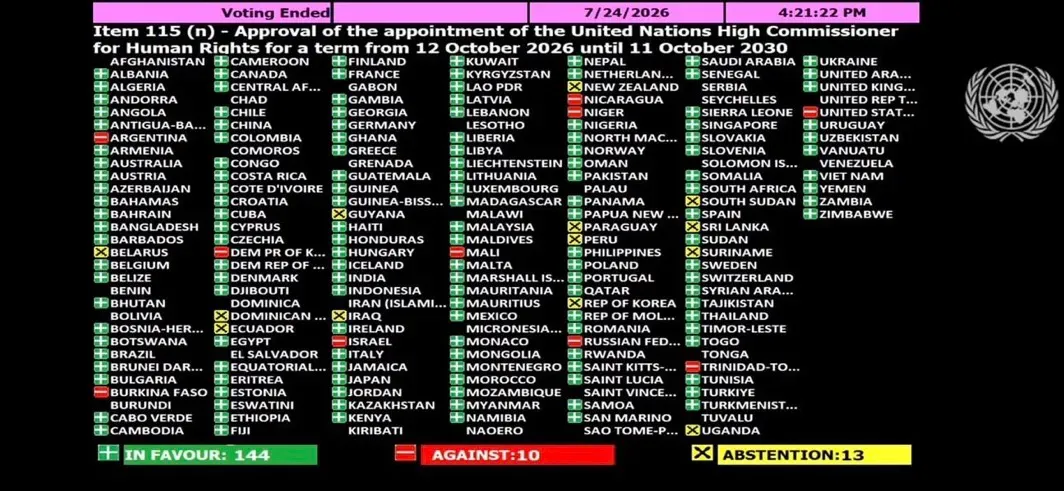
Türk will serve from October 12, 2026, through October 11, 2030. He becomes the first UN human rights chief to receive two complete four-year terms since the office was created in 1993.
The United States voted against the appointment alongside Argentina, Burkina Faso, Israel, Mali, Niger, Nicaragua, North Korea, Russia and Trinidad and Tobago.
Washington accused Türk of undermining the credibility of the UN human rights system and disproportionately criticizing the United States, Britain and Israel. Russia, from the opposite direction, has accused him of serving Western political interests. Israel has objected to his scrutiny of its conduct in Gaza.
France responded that the United States, once regarded as a human rights beacon, had isolated itself alongside governments including Russia, North Korea and Nicaragua.
U.S. Ambassador Mike Waltz accused France of supporting an official who lectures “free, sovereign democracies” while accommodating authoritarian governments.
The vote revealed something larger than disagreement over one official.
The United States and Russia both opposed Türk, but for different and often contradictory reasons. Washington argues that the system unfairly targets democracies and Israel. Moscow argues that it serves Western interests. Both ultimately reject scrutiny they cannot control.
That convergence matters.
The UN human rights system is imperfect, selective and deeply politicized. But responding to those weaknesses by dismantling independent scrutiny does not correct selective enforcement. It leaves enforcement to individual powerful states — each deciding which alleged crimes deserve prosecution and which allies deserve protection.
The State Department welcomed Venezuela’s decision to withdraw from the International Criminal Court and called on every ICC member state to leave the Rome Statute.
Washington accused the court of political bias, selective enforcement and institutional overreach. It pointed to former Venezuelan leader Nicolás Maduro facing proceedings in a U.S. court as an alternative to ICC justice.
Venezuela formally notified the United Nations of its withdrawal after accusing the court of bias against countries in the Global South. The ICC had been investigating alleged crimes against humanity by Venezuelan security forces and officials.
Withdrawal does not take effect immediately and does not erase the ICC’s jurisdiction over alleged crimes committed while Venezuela was a member of the Rome Statute. The court’s existing Venezuela investigation is therefore not automatically terminated.
The American position is no longer limited to rejecting ICC jurisdiction over U.S. citizens or opposing particular investigations. Washington is now openly campaigning for the destruction of the institution itself.
The Maduro example also exposes the underlying model: international prosecution is considered unnecessary when the United States can capture and try an adversary domestically.
But that is not a universal justice system. It is enforcement based on American custody, American power and American political selection.
The ICC’s failures are real. Replacing it with justice administered by whichever state possesses the military power to seize a defendant would institutionalize an even greater selectivity.
Chinese Foreign Minister Wang Yi met separately with Russian Foreign Minister Sergey Lavrov and Iranian Foreign Minister Abbas Araghchi during the Shanghai Cooperation Organization foreign ministers’ meeting in Cholpon-Ata, Kyrgyzstan.
The wider meeting addressed regional security, trade, energy, transport connectivity, artificial intelligence and preparations for the SCO leaders’ summit in Bishkek on August 31 and September 1.
In his meeting with Lavrov, Wang called for stronger strategic coordination, deeper practical cooperation and closer alignment at the UN, G20, BRICS and other international institutions.
China and Russia also agreed to “uphold the outcomes of World War II” and “never allow Japan to rearm.” Lavrov accused Japan of accelerated remilitarization and seeking a nuclear-weapons capability.
The statement is not merely historical rhetoric. It places opposition to Japan’s expanding defense role inside the wider China–Russia strategic partnership at precisely the moment Tokyo is strengthening security cooperation with the United States, Europe and other Indo-Pacific partners.
In his meeting with Araghchi, Wang expressed concern about renewed escalation in the Middle East and Gulf, said the door to negotiations must remain open and called for previously agreed arrangements to be resumed.
China is positioning itself simultaneously as Iran’s diplomatic partner, Russia’s strategic partner and a proponent of negotiations — while opposing the Western security structures now linking Europe and the Indo-Pacific.
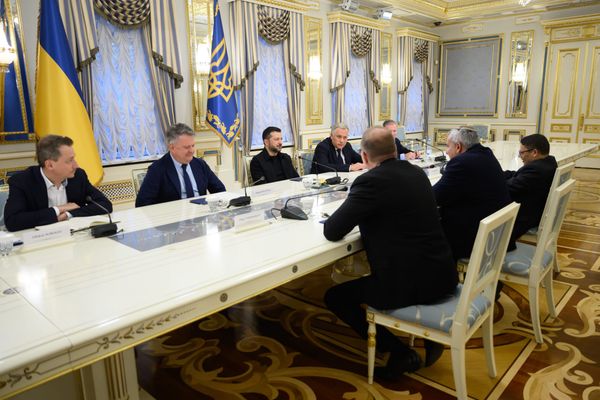
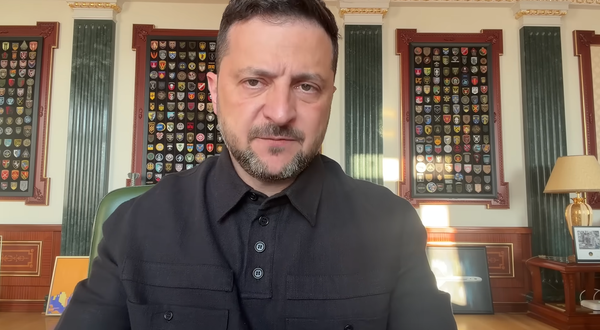
President Volodymyr Zelenskyy says Ukrainian intelligence has identified active Russian satellite surveillance of Gulf states and American military facilities since the beginning of July.
According to Zelenskyy, Russian satellites monitored two air bases in Bahrain, one in Jordan and one in Kuwait on July 19 and 20.
He alleged that the resulting imagery was transferred to Iran and correlated with Iranian strikes — both before attacks, to support preparation, and afterward, to assess the damage.
The allegations have not been independently verified. Zelenskyy said Ukrainian intelligence would share its information with partners.
Separately, Ukraine says Russia is preparing to receive another 30,000 North Korean troops and that North Korea is preparing additional ballistic missile launchers for transfer to Russia.
If confirmed, these developments would demonstrate relationships operating in several directions:
This is no longer a collection of isolated bilateral partnerships. It is becoming an ecosystem.
Iran says a Ukrainian strike against an Iranian commercial vessel in the Caspian Sea killed one sailor and injured another.
Tehran summoned Ukraine’s chargé d’affaires, while Foreign Minister Araghchi said the attack “cannot go unanswered.”
Araghchi accused Zelenskyy of acting at Israel’s behest to pull Europe into the war but supplied no evidence of Israeli involvement.
Ukraine has acknowledged conducting long range strikes against vessels in the Caspian Sea that it says were involved in transporting Iran-linked military cargo supporting Russia’s war.
The strike followed years of Iranian-designed Shahed drones being used against Ukrainian cities and infrastructure, as well as Iran’s 2020 downing of Ukraine International Airlines Flight PS752, which killed all 176 people aboard.
The two wars are beginning to converge operationally through intelligence, weapons supply chains, maritime logistics and long range strikes.
Russia’s cooperation with Iran created the logistical connection first: Iranian-designed drones were integrated into Russia’s campaign against Ukraine. The alleged transfer of Russian satellite intelligence to Tehran would extend that connection directly into Iranian operations against American and Gulf facilities.
Ukraine’s Caspian strikes now carry the conflict in the other direction, targeting the maritime routes connecting Russia and Iran.
Tehran’s attempt to portray Ukraine as an Israeli proxy appears designed to separate Kyiv from European partners and recast Ukraine as an aggressor within the Middle East conflict.
Russia has every reason to encourage that narrative. Weakening European support for Ukraine would serve Moscow even if the immediate confrontation occurs hundreds of kilometers from the Ukrainian front.
Europe therefore faces a difficult balance. It cannot pretend that the theaters remain separate, but allowing the Middle East conflict to consume European military capacity would create precisely the strategic overstretch Russia can exploit.
Get briefs like this delivered daily — free.
The United States paused its nightly strikes against Iran for a second consecutive night, but the broader conflict continued to expand geographically.
The Houthis launched missiles and drones toward Saudi oil installations in Yanbu and Jizan. A Patriot system operated by Greek military personnel in Saudi Arabia intercepted two ballistic missiles heading toward refineries in Yanbu.
The Saudi-led coalition responded with strikes against Houthi targets in Hodeidah. The escalation threatens to reopen the Saudi-Houthi front after a ceasefire that had largely held since 2022.
The conflict is now applying pressure across three connected maritime spaces:
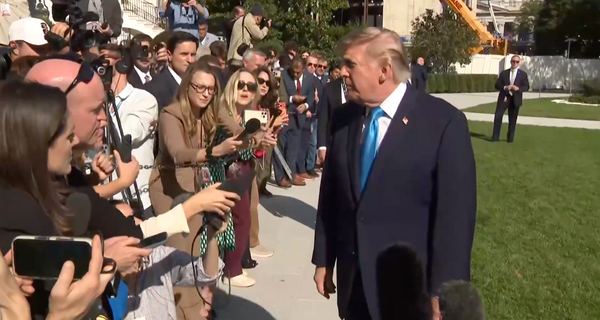
President Donald Trump said the United States would not proceed with its civil nuclear cooperation agreement with Saudi Arabia unless Riyadh joins the Abraham Accords and normalizes relations with Israel.
The condition came after Washington and Riyadh signed an agreement allowing Saudi Arabia to develop civilian nuclear reactors using American technology and potentially enrich uranium. Congress now has 90 legislative days to review the arrangement.
Saudi Arabia has maintained that normalization requires an irreversible pathway toward a Palestinian state. Saudi officials have not publicly accepted Trump’s new condition.
The agreement already raises significant nonproliferation questions because it reportedly permits enrichment and reprocessing while omitting the IAEA Additional Protocol, which would provide more intrusive inspections.
Linking the agreement to the Abraham Accords turns nuclear cooperation into direct leverage over regional diplomatic recognition. But it could also leave Riyadh searching for alternative nuclear partners if the political condition proves unacceptable.
Iran’s Revolutionary Guards warned that Britain would become a “definite and legitimate target” if it supported American military operations against Iran.
Araghchi separately warned that any state contributing to attacks on Iranian infrastructure would be treated as a legitimate target, describing Iran’s doctrine as “an eye for an eye.”
The warning follows Britain’s continued permission for the United States to use UK facilities. It also broadens the risk for European states providing basing, intelligence, logistics or air defense assistance without directly participating in strikes.
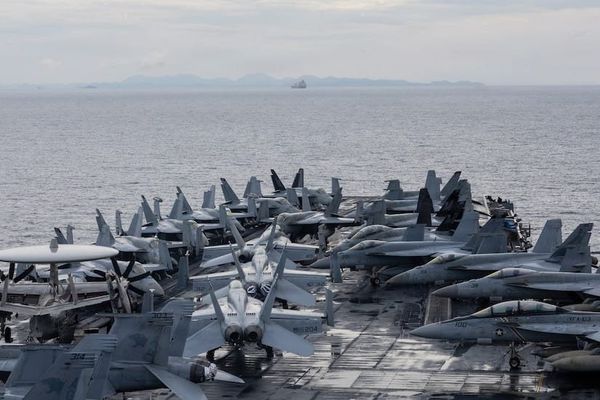
This weekend’s developments are connected by the movement of war across the boundaries that previously contained it.
Russian drones are moving into NATO airspace. Russian intelligence is allegedly moving into Iranian targeting operations. Iranian-linked cargo is moving across the Caspian. Ukrainian strikes are following it. Houthi attacks are moving the Iran conflict into Saudi Arabia and the Red Sea. European aircraft and personnel are already intercepting missiles in the Gulf.
The danger for Europe is not simply that it could be dragged into another war. Europe is already connected to it through bases, air defense, energy security, maritime trade and Ukraine.
Its challenge is to prevent those commitments from becoming strategic fragmentation.
Russia, Iran, North Korea and China are developing overlapping — though not identical — forms of military, intelligence, economic and diplomatic cooperation across these theaters.
Russia benefits if Europe treats Ukraine, the Gulf, the Red Sea and the Indo-Pacific as unrelated crises competing for the same limited weapons and political attention.
The response must begin by recognizing that the connections between them are already operational.
Get briefs like this delivered daily — free.