The Daily: UNGA81, Day 1 of 5
This edition of The Daily is public.

– 5 min read

This edition of The Daily is public.
Good evening,
Welcome to Day 1 of 5 of ONEST’s UNGA81 Daily Briefs.
This week, I’m making all five UNGA editions of The Daily public.
The goal is simple: you should not have to follow dozens of speeches, side events, bilateral meetings, press releases and declarations yourself to understand what actually mattered.
High-Level Week formally gets underway tomorrow with the opening of the General Debate, but diplomacy across New York is already very much in motion.
Today brought a new multilateral coalition, a U.S.-Italy agreement on critical minerals, a much sharper Arctic-security discussion, new signs of how the Middle East war is affecting future energy supply, movement across ASEAN’s economic architecture, and the opening of Climate Week alongside UNGA.
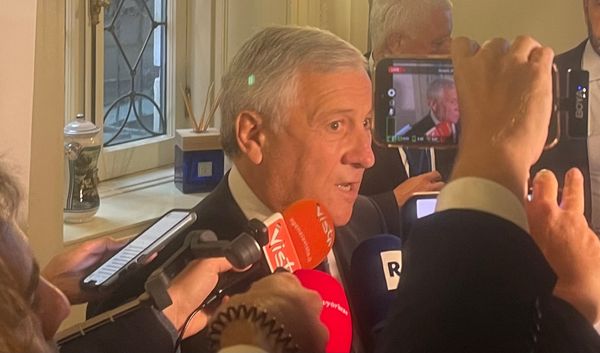
I began my day reporting on the ground in New York, starting with a conversation with Italian Deputy Prime Minister and Foreign Minister Antonio Tajani.
So here’s what mattered today.
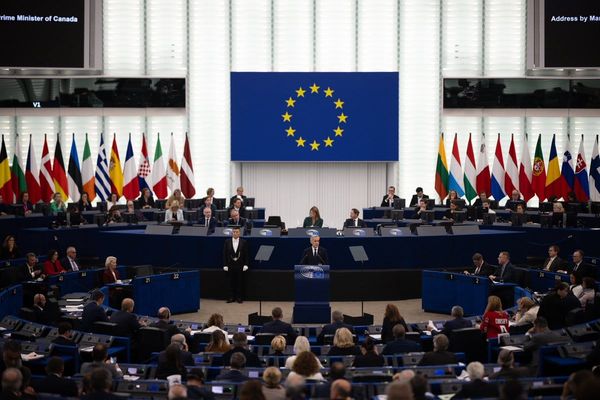
Australia, Barbados, Brazil, Canada, the European Union, India and Kenya opened UNGA81 week with a joint declaration defending multilateralism, international law and a more resilient international economic system.
The composition of the group is as important as the language.
This is not simply Europe, Canada and a collection of traditional Western allies. India and Brazil are among the initial co-sponsors.
The declaration warns about growing polarization, conflict, violations of international law, protectionism, coercion and the use of force. It also states explicitly that economic interdependence is increasingly being used as leverage, disrupting trade, supply chains, investment and development finance.
The signatories call for reform of the United Nations, the multilateral trading system and the international financial architecture, while also emphasizing more diversified and resilient global supply chains.
This is not a declaration arguing that the existing system is working perfectly and merely needs defending; it is an acknowledgment that the system is under pressure and that governments increasingly see trade, technology, investment, energy and supply chains as part of that pressure.
The divide emerging around UNGA this week may therefore be more complicated than a simple “West versus the rest.”
Secretary of State Marco Rubio and Italian Deputy Prime Minister and Foreign Minister Antonio Tajani signed a memorandum on critical minerals in New York today.
Rubio described Italy as an important partner on the issue, while Tajani framed the agreement explicitly around Italy’s industrial competitiveness and the price of raw materials.
Italy is one of Europe’s major industrial economies, and Tajani said access to lower-cost raw materials is central to its industrial strategy.
Critical minerals are no longer being treated simply as commodities, they are increasingly being treated as strategic infrastructure.
..and that connects directly to something else happening today.
Rubio also met today with the foreign ministers of Canada, Denmark, the Faroe Islands, Finland, Greenland, Iceland, Norway and Sweden.
The public readout focused not only on military security but also on sovereign economic capabilities, investment security and resilient critical infrastructure across the Arctic.
Rubio highlighted the U.S.-Canada-Finland ICE Pact, focused on icebreaker cooperation, as a model for industrial cooperation and burden-sharing.
Put that next to today’s U.S.-Italy critical minerals agreement and the pattern becomes difficult to miss: raw materials, shipbuilding, ports, supply chains, energy, infrastructure. These are increasingly being discussed not as separate economic portfolios, but as components of national security.
That theme is going to run through a lot of what happens here this week.
One of the more consequential energy developments today came from Qatar.
QatarEnergy CEO Saad al-Kaabi said disruption around the Strait of Hormuz could delay portions of the company’s LNG expansion because critical equipment needed for those projects is unable to reach Qatar.
That is different from the immediate question of whether tankers can move through the Strait. It means the crisis is beginning to affect future production capacity, not merely current exports.
QatarEnergy still expects the first train of its North Field East expansion to begin production in the first half of 2027, but subsequent trains could depend on how quickly the Hormuz crisis is resolved. That matters because Qatar is one of the world’s largest LNG suppliers and its expansion program is supposed to add significant volumes to the global market over the coming years.
So even if shipping eventually normalizes, the consequences of today’s disruption may not disappear the moment the Strait reopens.
There was another meaningful development today that received far less attention in New York.
ASEAN and the United States have endorsed a new 2026-27 Trade and Investment Framework Arrangement work plan, covering areas including the digital economy, trade facilitation, agriculture, small businesses and supply chain cooperation.
At the same time, ASEAN’s broader economic architecture with China, Japan, South Korea, Australia and New Zealand continues to deepen.
That matters ahead of Trump’s expected meeting with Xi Jinping later this week. Southeast Asia is not simply waiting to see what Washington and Beijing decide, it is building economic arrangements with both. That is increasingly the strategy across the region: maintain access, deepen parallel partnerships and avoid being forced into an exclusive economic camp.
For countries sitting directly inside the U.S.-China competition, diversification itself is becoming a form of security.
Climate Week NYC opened alongside UNGA today, and strikingly, many of the themes sounded very similar.
Australian Prime Minister Anthony Albanese used his opening keynote to argue for faster electrification and expansion of renewable energy systems, framing the transition not only as a climate issue but also through economic and national security considerations.
Icelandic Prime Minister Kristrún Frostadóttir closed the opening program with a very different example: Iceland’s shift away from imported oil and toward geothermal heating after the energy shocks of the 1970s.
Her larger argument was about what resilience actually means. Iceland did not become resilient during the next crisis. It spent decades building the infrastructure, knowledge and domestic capacity that would make the next crisis less damaging.
That idea, "build capacity before you desperately need it", is turning up everywhere right now. Even though UNGA and Climate Week are formally separate gatherings, the economic security conversation increasingly overlaps.
I’ll be following Climate Week alongside UNGA throughout the week and featuring the developments that matter in these briefings.
Secretary of State Marco Rubio met Kenyan President William Ruto, with the discussion covering critical minerals, U.S. commercial opportunities, regional security and the U.S.-Kenya health partnership.
The State Department also announced visa restrictions on 32 people it says are connected to cybercrime and cyber enabled fraud, most of them linked to the Prince Group transnational criminal organization.
And hundreds of flights across the U.S. Northeast were disrupted after communications failures at an FAA facility in Philadelphia affected radar and communications before service was restored Monday evening.
Tomorrow, the UN General Debate begins.
That means the public speeches start, but just as importantly, so do many of the meetings happening around them.
I’ll be watching the U.S. position closely, Ukraine and the Black Sea, continuing Middle East diplomacy, Canada and Europe, and the economic security themes already emerging around critical minerals, energy and supply chains.
I’ll be reporting from New York throughout the day.
That’s Day 1 of 5.
See you tomorrow,
Olga
This week’s five UNGA81 editions of The Daily are public.
ONEST members get the reporting that goes further: Diplomatic Notes from my interviews, conversations and access throughout the week, including audio and transcripts where available.
Become an ONEST member and unlock every UNGA81 Diplomatic Note immediately, including today’s conversation with Italian Foreign Minister Antonio Tajani.