Iran has now put a price on fully reopening the Strait of Hormuz.
And the price is not simply a maritime agreement.
On Saturday, Mohammad Baqer Zolqadr, secretary of Iran’s Supreme National Security Council, said Tehran would not fully reopen the Strait simply because it reaches an agreement with neighboring Oman over navigation through the waterway.
Instead, Iran is tying unrestricted passage through one of the world’s most important energy chokepoints to a much broader political settlement with the United States.
Among Tehran’s demands: an end to U.S. threats and military action against Iran; an end to attacks against Iran and its allies in Lebanon, Palestine, Yemen and Iraq; the lifting of the U.S. naval blockade of Iranian ports; sanctions relief; the release of frozen Iranian assets; and compensation for damages caused during the war.
In other words, Iran is attempting to turn control of Hormuz into leverage over the settlement of the wider conflict.
And that distinction matters.
An agreement over Hormuz is not necessarily an agreement to reopen it
For days, expectations have been building that diplomacy involving Iran, Oman and the United States could restore commercial traffic through the Strait.
U.S. officials have publicly sounded optimistic.
Secretary of State Marco Rubio said this week that progress had been made and that an agreement could come “very shortly.” Treasury Secretary Scott Bessent similarly suggested an agreement could be imminent, helping fuel optimism in financial markets.
But Tehran’s latest statement exposes an important difference between what is actually being negotiated and what markets — and perhaps Washington — want from those negotiations.
Iran and Oman may be approaching an agreement governing navigation through Hormuz.
That does not mean Iran has agreed to return the Strait to its prewar status.
Quite the opposite.
Iran appears to be trying to establish a new system for how the Strait operates.
Reuters reported that the proposed arrangement could create separate navigation routes, with vessels entering the Persian Gulf traveling through waters under Iranian control while outbound vessels would travel closer to Oman.
Iran has also rejected the previous traffic separation arrangement governing passage through the Strait.
That means the negotiation is becoming about considerably more than reopening a shipping lane.
It is becoming a negotiation over who controls it.
The geography explains Iran’s leverage
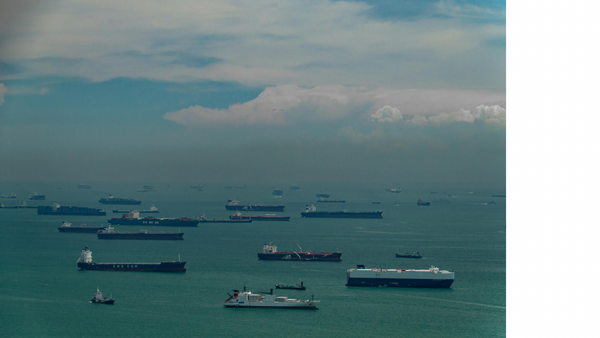
The Strait of Hormuz is narrow, strategically indispensable and extraordinarily difficult for the global economy to bypass.
Iran sits along its northern shore. Oman controls territory along the southern side.
Before the war, roughly one-fifth of global oil and gas shipments passed through Hormuz.
Oil from Saudi Arabia, Iraq, Kuwait, the United Arab Emirates and other Gulf producers depends heavily on the waterway to reach international markets. Qatar’s liquefied natural gas exports also rely on it.
There are pipelines capable of bypassing Hormuz, but not enough capacity to replace all the energy normally moving through the Strait.
That gives whoever can disrupt Hormuz enormous economic leverage.
Iran is now attempting to convert that geographic leverage into political leverage.
The message from Tehran is increasingly explicit:
Restoring the old maritime status quo requires resolving much larger disputes with Iran.
Some Iranian demands may be negotiable. Others are far harder.
One part of Tehran’s demand is already beginning to overlap with Washington’s position.
Iran wants the U.S. naval blockade of its ports lifted.
A U.S. official told Reuters this week that Washington would lift the blockade once commercial shipping through Hormuz resumes without impediment.
That creates the outlines of a relatively straightforward exchange:
Iran restores commercial passage.
The United States lifts the blockade.
But Tehran is asking for considerably more.
Sanctions relief would require Washington to unwind portions of an economic pressure system constructed over years.
Releasing frozen Iranian assets would require decisions about which assets, held where and under what legal authority.
Compensation for wartime damage would be politically explosive in Washington and would immediately raise the question of reciprocal claims for damage caused by Iran.
And Iran’s demand that attacks against its regional allies cease reaches far beyond the Strait itself.
It potentially touches U.S. and Israeli policy toward Hezbollah in Lebanon, Iranian-aligned groups in Iraq, the Houthis in Yemen and Palestinian armed groups.
That is not a maritime concession.
It is a demand for changes to the regional security architecture.
There is also an essential legal question
For decades, the basic Western position regarding Hormuz has been that international shipping has a right to transit the Strait.
The United States has not ratified the UN Convention on the Law of the Sea, but Washington recognizes many of its navigational provisions as customary international law and has consistently defended freedom of navigation through international straits.
The European Union has similarly condemned Iranian interference with lawful transit through Hormuz as contrary to international law.
That makes the emerging negotiations unusually consequential.
If the eventual settlement simply creates practical arrangements allowing ships to move safely through Iranian and Omani waters, the fundamental legal principle may remain intact.
But if commercial vessels effectively require Iranian authorization — or must pay Iran for passage — the implications become much larger.
Washington would have to decide whether restoring energy flows is worth accepting a system that gives Tehran substantially greater practical control over an international chokepoint.
That would be a remarkable outcome.
The United States has previously argued explicitly against allowing any country or organization to impose tolls on passage through Hormuz.
Iran now appears determined to establish exactly the opposite principle: that control of the Strait gives Tehran economic and political rights over the traffic moving through it.
And the precedent would not necessarily remain in Hormuz
Hormuz is not the world’s only strategically important maritime chokepoint.
The Strait of Malacca connects the Indian and Pacific Oceans.
Bab el-Mandeb connects the Red Sea with the Gulf of Aden.
The Turkish Straits connect the Black Sea to the Mediterranean.
The Danish Straits provide access between the Baltic and North Seas.
The Suez and Panama canals play similarly indispensable roles in global commerce, although they operate under different legal regimes.
The circumstances governing each are different.
But the broader principle matters.
If military pressure can successfully transform control over a narrow maritime passage into a permanent right to extract payments or political concessions from international shipping, other strategically positioned states will notice.
That is why the Hormuz negotiations matter far beyond Iran.
Iran is negotiating while continuing to demonstrate its leverage
There is another complication.
Even as negotiations advance, maritime security remains fragile.
The United Arab Emirates said Saturday that Iran struck an ADNOC-affiliated vessel transiting Hormuz with a missile. No injuries were reported.
That creates an extraordinary split-screen.
Diplomats are discussing how to restore commercial navigation through the Strait while ships moving through it remain vulnerable to attack.
From Iran’s perspective, however, that instability is also part of its bargaining power.
A fully secure Hormuz reduces Tehran’s leverage.
A Strait that can be opened, restricted or threatened depending on the progress of negotiations gives Iran something extraordinarily valuable to trade.
Washington now faces a difficult choice
The United States has powerful reasons to restore shipping quickly.
Energy markets dislike uncertainty.
Gulf allies need reliable export routes.
Shipping companies need predictable insurance and security conditions.
And prolonged disruption of Hormuz risks transmitting a regional war directly into global inflation, energy prices and economic growth.
But urgency creates leverage for Iran.
Washington could accept a narrow arrangement: commercial shipping resumes, the U.S. blockade is lifted and both sides establish mechanisms preventing another immediate closure.
Or negotiations could expand into sanctions, frozen assets and broader regional security questions.
Iran clearly prefers the second.
Its demands suggest Tehran no longer views Hormuz merely as a battlefield or defensive tool.
It views the Strait as an asset to be negotiated.
That may ultimately be the most consequential development of all.
Iran does not simply want the war to end and Hormuz to reopen.
It wants the terms under which Hormuz reopens to reflect the leverage it gained by closing it.
And if Washington accepts even part of that proposition, the eventual agreement will determine considerably more than when tankers begin moving normally again.
It could determine who emerges from the conflict with greater control over the strategic waterway through which much of the world’s energy still flows.
Support my independent reporting.