Democrats Take Congress, Trump Blames the Iran War, and Canada Looks East

– 3 min read

Here are five geopolitical developments worth knowing today:
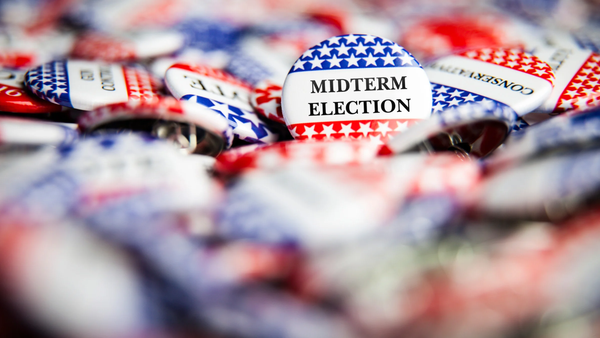
Democrats took control of the House and Senate in Tuesday’s midterms, ending unified Republican control of Washington. They gained at least 28 House seats and won Senate races in traditionally Republican states including Texas, South Carolina and Kansas.
President Trump acknowledged Wednesday that the war with Iran contributed to Republican losses, although he defended the decision to launch it. Vice President JD Vance was even more direct, saying the war was the reason Republicans lost.
The practical consequence is divided government: beginning in January, Democrats will control congressional spending, committees and investigations, while Trump retains the presidency, veto power and substantial authority over trade and military policy.
Trump said he and Israeli Prime Minister Benjamin Netanyahu agreed that the United States would stop providing roughly $4 billion annually in military assistance after 2026.
Washington would continue selling weapons to Israel and could still provide help when necessary. But the announcement would cut short the existing U.S.-Israel aid agreement, which currently runs through September 2028. Trump explicitly framed the move partly as removing a political vulnerability Republicans faced during the election.
Meanwhile, Israel remains without a governing majority following last week’s election, and President Isaac Herzog has begun the process of determining who has the best chance of assembling a coalition.
U.S. and Chinese defense officials met in Washington this week for their annual Crisis Communications and Prevention Working Group.
Officials discussed practical ways for the two militaries to communicate faster during a crisis and additional channels intended to reduce the risk of miscalculation. The U.S. says talks with the People’s Liberation Army on defense issues will continue in the coming months.
It is a relatively technical meeting, but an important one given the risk that an incident involving Taiwan, the South China Sea or U.S. and Chinese forces could escalate before political leaders are able to intervene.
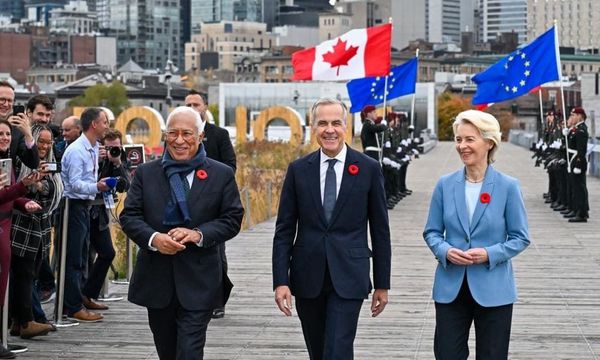
Prime Minister Mark Carney will travel November 11-19 to Ireland, the Philippines, Cambodia and China, attending four major international summits.
In Manila, Canada aims to finish both a Canada-ASEAN free trade agreement and negotiations on a separate Canada-Philippines deal. In Shenzhen, Carney will attend the APEC summit as Ottawa deepens a newly rebuilt economic relationship with China. And in Ireland, Canada will continue work toward what Ottawa and Brussels are calling "the deepest possible EU relationship short of membership" — potentially making Canada the EU’s first “Associate Member.”
The trip fits a larger Canadian strategy: more markets, more partners, and less reliance on any single country.
The military confrontation is continuing: the United States carried out limited strikes against Iran on November 2, part of a series of recent operations that were not publicly announced at the time.
But the midterms changed the domestic political environment around the war.
Democratic control of Congress will give lawmakers new leverage over funding, oversight and war-powers legislation. At the same time, China is publicly supporting negotiations between Washington and Tehran, while Qatar continues mediation over the Strait of Hormuz.
The military conflict hasn’t ended, but the political pressure to find an exit just increased considerably.
Venezuela: U.S. intelligence and drones reportedly helped Venezuela carry out an October 30 strike against the Colombian ELN armed group — another sign of rapidly expanding security cooperation between Washington and Caracas.
Yemen: Yemen’s internationally recognized government reshuffled its cabinet as Houthi forces continue advancing toward Aden.
Canada-U.S.: Carney says Washington is now “asking less” and “offering more” in renewed trade talks after negotiations collapsed earlier this year.
Washington: Attention now shifts from who won to what Democratic control of Congress actually changes — particularly on Iran, Ukraine, federal spending and investigations of the Trump administration.
Israel: Herzog’s coalition consultations will determine who gets the first opportunity to try to form a government.
Canada: Carney begins his four-country diplomatic tour November 11, followed by the APEC leaders’ meeting in Shenzhen on November 18-19.
That’s what mattered today.
— Olga