China’s Quiet Role in the Middle East War

– 11 min read

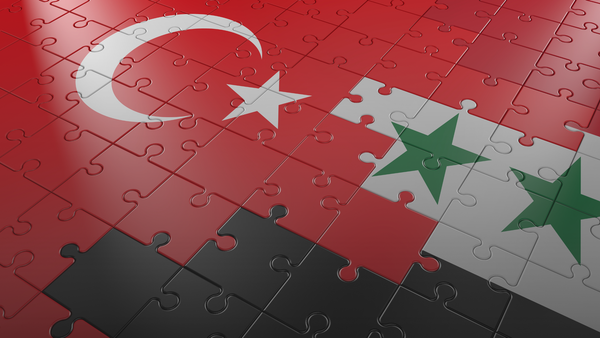
Türkiye is moving into Syria’s oil and gas sector.
Turkish Energy Minister Alparslan Bayraktar said on August 19 that Ankara is ready to cooperate with Damascus on oil and gas exploration, adding another layer to Türkiye’s rapidly expanding role in post-Assad Syria.
At first glance, this is a story about Syria.
It is not.
It is part of a much larger contest over energy, infrastructure, trade routes and influence across a Middle East being reshaped by war.
Türkiye is moving directly.
Gulf states are investing.
Western companies are looking at infrastructure and energy opportunities.
China is moving more cautiously. That does not mean Beijing is uninterested.
It may mean China sees a much bigger game.
Syria’s own oil and gas reserves are important, particularly for a country trying to rebuild an economy devastated by more than a decade of war.
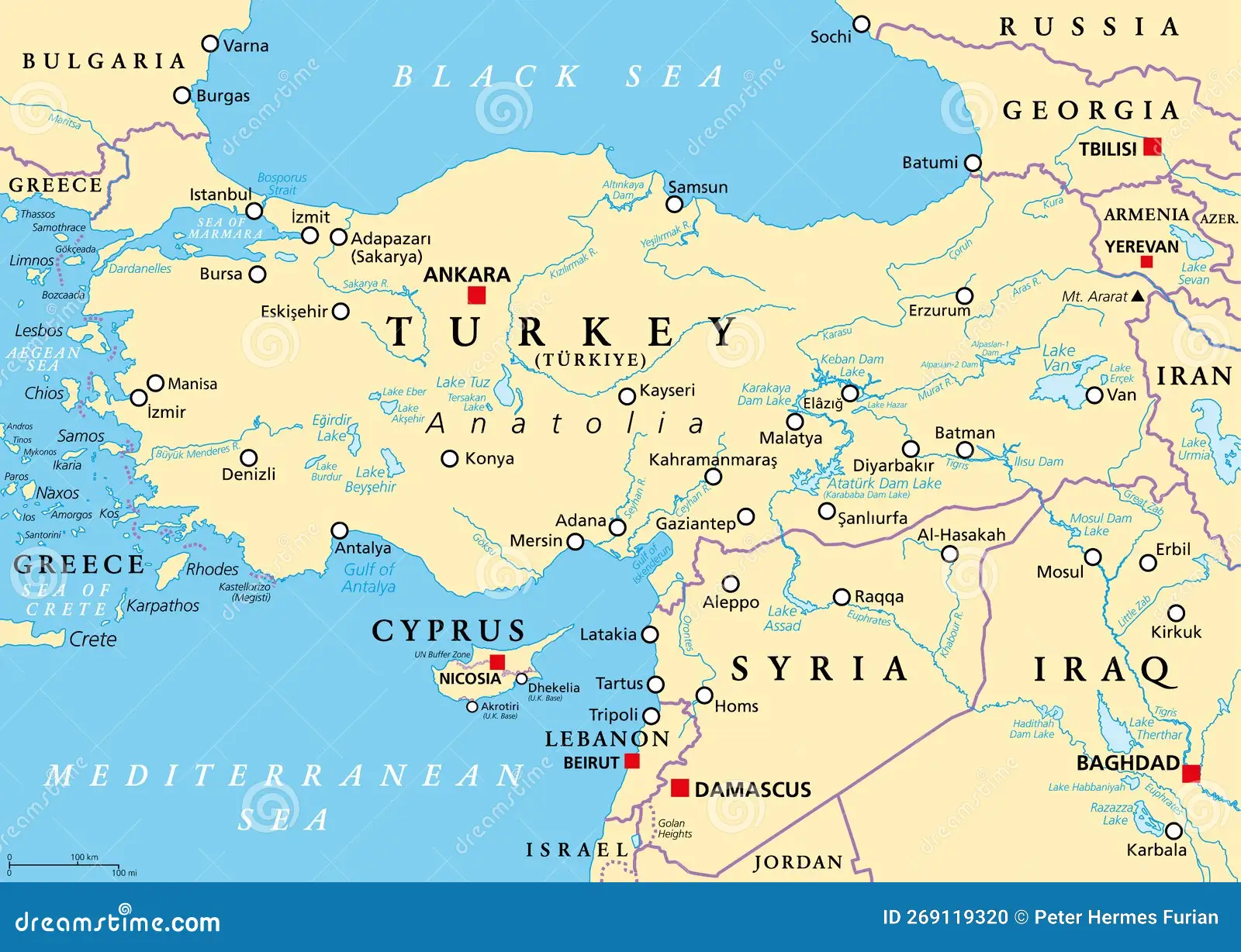
But Syria’s greater strategic value may eventually come from its location.
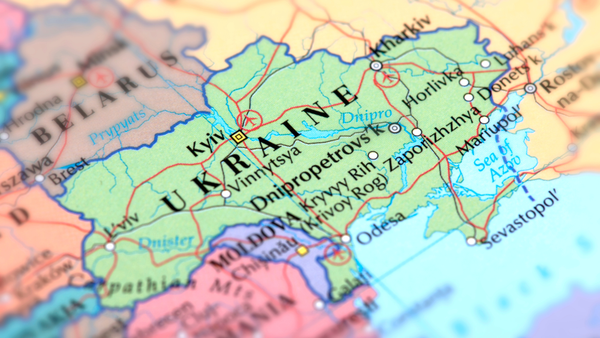
It sits between Iraq, Türkiye and the Mediterranean.
That makes it potentially valuable not only as an energy producer, but as an energy corridor.
And the current confrontation with Iran has made one thing painfully clear:
routes matter almost as much as resources.
The Strait of Hormuz remains one of the most consequential energy chokepoints in the world. The latest escalation has sharply reduced tanker traffic through the strait and raised fears that disruption is becoming a prolonged feature of the conflict rather than a temporary shock.
That creates enormous value in pipelines, ports and loading facilities capable of moving crude without relying on Hormuz.
China understands this, but Beijing does not necessarily need to own the Syrian oil field or build the first pipeline to benefit.
It needs access.
China has the companies, capital and experience to pursue aggressive energy development in Syria if Beijing decides the risk is worth taking. So far, it has not rushed to do so.
That restraint makes sense.
Syria remains politically fragile. Türkiye and Israel are already colliding over Ankara’s growing military footprint there, with Israel striking a Syrian airbase after a Turkish military delegation visited it.
Why absorb that political and security risk immediately if other countries are willing to take it first?
China can sell machinery.
It can provide electrical infrastructure.
It can sell solar equipment, batteries and industrial technology.
It can participate later in ports, logistics, manufacturing or reconstruction.
It can buy commodities produced by infrastructure someone else helped finance.
And it can wait until Syria’s new political order becomes clearer.
That increasingly resembles Beijing’s wider strategy:
China does not have to control every asset. It needs enough relationships and enough alternative routes that no single actor can easily cut it out.
It is oil.
China remains the world’s largest importer of crude.
In 2025, it imported a record 11.6 million barrels per day.
Then the Iran conflict disrupted flows through the Strait of Hormuz.
Chinese imports fell to just 8.1 million barrels per day in the second quarter of 2026 — down 32 percent from the previous quarter. In May and June, imports dropped below 8 million barrels per day for the first time since 2016.
That is a major vulnerability.
It is also a reminder of what China has spent years preparing for.
Before the current war intensified, Beijing had accumulated enormous oil reserves.
The U.S. Energy Information Administration estimates that China held roughly 1.49 billion barrels of strategic oil inventories at the end of the second quarter of 2026.
The equivalent U.S. figure was roughly 321 million barrels.
The comparison is imperfect. China’s estimate includes government and strategically directed commercial inventories, while countries structure their reserves differently.
But the strategic lesson is obvious: Beijing deliberately accumulated energy depth.
When imports fell faster than Chinese refinery activity, China drew down stocks rather than allowing the external shock to translate immediately into equivalent domestic disruption.
This is not simply commercial oil storage, it is insurance.
And it forms part of a much broader effort to make China harder to economically strangle during a crisis.
It is also electrification.
For decades, Chinese strategists have worried about dependence on maritime energy routes that could become vulnerable during confrontation with the United States.
Beijing’s answer has been diversification.
More Russian oil and gas.
More pipelines from Central Asia.
More domestic production.
More storage.
More nuclear power.
More electric vehicles.
More batteries.
And vast amounts of wind and solar generation.
The Iran war has effectively stress-tested that strategy.
The Financial Times recently described the conflict as vindicating Beijing’s long effort to reduce its exposure to oil-supply shocks through domestic energy, electrification, overland pipelines and strategic reserves.
This does not mean China is independent of imported oil.
Far from it.
Shipping, aviation, petrochemicals, heavy industry and military operations remain heavily dependent on fossil fuels.
But every source of domestic electricity and every vehicle shifted away from gasoline reduces part of the vulnerability.
China’s green energy buildup is therefore not simply climate policy.
It is industrial policy.
It is trade policy.
And it is national security policy.
This is where the comparison becomes uncomfortable.
There is no evidence that China created the Iran war.
There is no evidence Beijing controls Tehran’s military decisions.
And because China depends heavily upon Middle Eastern energy, an uncontrolled regional war can seriously damage Chinese interests.
So saying simply that “the war is good for China” would be wrong.
But it is equally wrong to ignore the strategic benefits China can derive from some of its consequences.
The United States is spending money.
It is consuming missiles.
It is cycling ships and aircraft through another prolonged theater.
And it is doing so while simultaneously identifying China as its principal long-term military competitor.
This week, total U.S. federal debt surpassed $40 trillion for the first time. Interest payments are already one of the federal government’s largest expenditures.
Debt alone does not determine military power.
But wars do not take place independently of fiscal capacity, industrial production or opportunity cost.
And that is where the missile problem becomes much more serious.
America does not have “30 percent of its weapons left.”
The real situation is more specific.
And potentially more consequential.
The Iran campaign has heavily depleted several classes of sophisticated weapons that would also be required in a conflict in the Western Pacific.
CSIS estimates that after the initial 39-day Iran air campaign, the United States may have expended more than half of its prewar inventory in four of seven key missile categories examined.
Rebuilding those stocks will take between one and four years, and building enough inventory for a prolonged peer conflict would take longer still.
By late July, Patriot stocks had fallen below an estimated 1,000 interceptors and THAAD inventories to roughly 250.
These are not abstract weapons.
They are precisely the kinds of systems that would be needed to protect American forces, bases and allies during a major Indo-Pacific conflict.
And critically, American inventories were already considered insufficient for a prolonged war with China before the Iran war began.
The clearest symbol of strategic overstretch is not sitting in a missile warehouse.
It is sailing out of Asia.
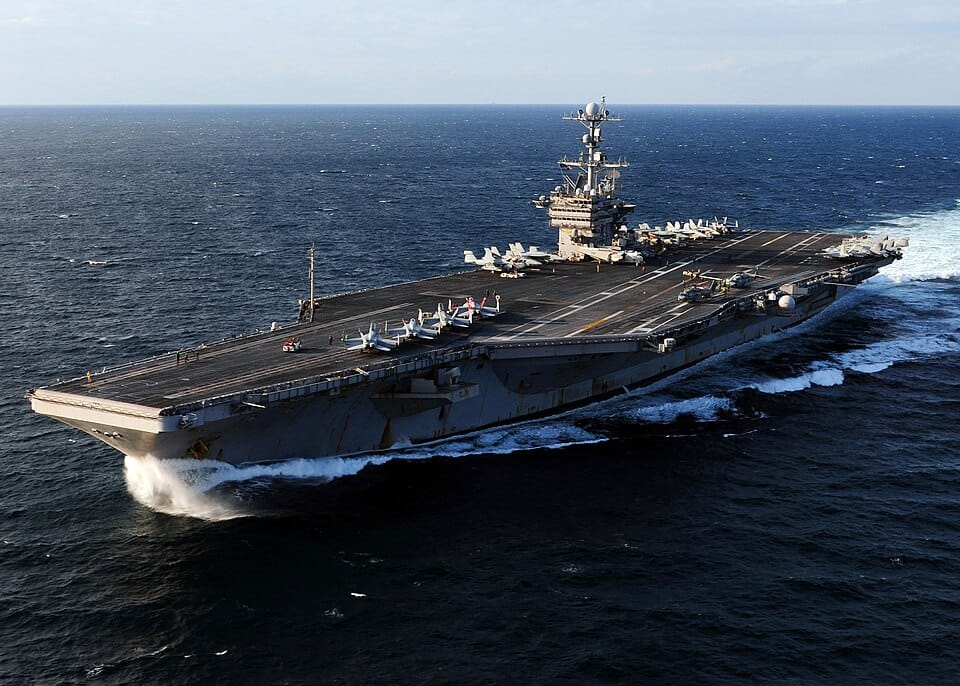
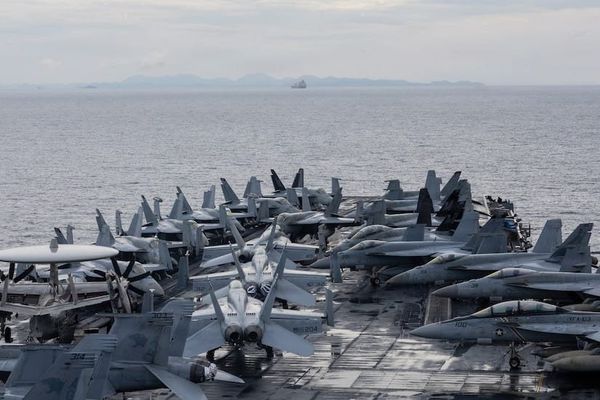
The United States is sending the USS George Washington from the Western Pacific toward the Middle East to relieve the USS Abraham Lincoln, whose deployment has been extended dramatically by the Iran conflict.
George Washington is not simply another carrier.
It is America’s forward-deployed carrier based in Japan.
Its departure leaves the Western Pacific without a U.S. aircraft carrier.
That gap is routinely described as temporary.
But “temporary” can become an analytical comfort blanket.
There is currently no clear public endpoint to the Iran conflict.
The Lincoln has already spent more than 240 days at sea amid scrutiny of supply problems, maintenance strain and crew welfare.
So the more precise description is this:
The United States is removing its forward-deployed carrier from the Western Pacific to sustain a Middle Eastern operation, with no clear public timetable for when normal carrier coverage in Asia will be restored.
That makes Taiwan impossible to separate from Iran.
This does not mean the United States could no longer defend Taiwan.
That would be a major overstatement.
American deterrence includes submarines, bombers, fighters, nuclear forces, land-based systems, bases throughout the region and allies including Japan and Australia.
A Chinese attack on Taiwan would still be extraordinarily dangerous, expensive and uncertain.
But deterrence depends partly upon what Beijing believes Washington can sustain.
And Beijing can count.
It can track American carrier movements.
It can estimate missile expenditures.
It can study production rates.
It can identify maintenance backlogs.
It can watch which systems are being transferred between theaters.
And it can see that weapons designed for high-end warfare are being consumed significantly faster than the United States can replace some of them.
CSIS has described the resulting situation explicitly as a window of vulnerability for a potential Western Pacific conflict.
That phrase matters.
The question is no longer simply whether America possesses more military power than Iran.
Of course it does.
The question is whether America possesses sufficient military depth to fight one prolonged war while simultaneously deterring another much stronger adversary thousands of miles away.
Those are very different tests.
It benefits when America has to be everywhere at once.
Another Patriot fired in the Middle East is one fewer in storage.
Another Tomahawk launched is another missile that must be replaced.
Another destroyer retained in CENTCOM is another vessel unavailable elsewhere.
Another carrier deployment extended creates another maintenance and readiness burden later.
Another billion dollars spent adds to a federal balance sheet already carrying more than $40 trillion in debt.
None of those individually changes the global balance of power.
Together, they affect endurance.
And endurance is increasingly what this competition is about.
There is another uncomfortable part of this equation.
Iran can continue fighting only if it retains economic oxygen.
Oil remains central to that.
Kharg Island — Iran’s principal oil-export hub — began loading crude again this month after a prolonged period of inactivity.
On August 12, satellite imagery showed Kharg’s western terminal active for the first time in 25 days, with a dark VLCC-class tanker berthed and loading.
There is no evidence that China ordered that tanker to load.
Nor do we know that every cargo leaving Kharg is immediately destined for China.
But we do know who overwhelmingly buys Iran’s sanctioned crude.
China.
Chinese buyers purchased more than $30 billion in Iranian oil last year, according to reporting based on U.S. intelligence and industry data. Independent Chinese refiners have become essential customers for discounted Iranian barrels transported through opaque shipping networks designed to evade sanctions.
That relationship gives Tehran something enormously important.
Revenue.
And revenue provides endurance.
China therefore does not need to direct Iran’s military strategy to affect Iran’s ability to withstand American pressure.
It only needs to remain a market.
This is one of the most revealing aspects of Beijing’s current behavior.
China wants Middle Eastern oil, but it does not want Chinese ships trapped inside the military risk surrounding Hormuz.
Saudi Arabia is already adapting.
Saudi Aramco has sold at least 4 million barrels of crude to Chinese buyers for loading from locations outside the Strait of Hormuz, allowing some supplies to bypass the chokepoint altogether.
This is exactly what energy security looks like in practice.
Not eliminating dependence overnight.
Creating alternatives.
Different suppliers.
Different routes.
Strategic inventories.
Pipelines.
Ship-to-ship transfers.
Electrification.
Domestic energy.
And the ability to shift quickly when one route becomes dangerous.
That strategy extends well beyond oil.
During the first six months of 2026, Chinese Belt and Road investment and construction engagement reached roughly $126.4 billion, the highest first-half total since the initiative began.
Energy accounted for approximately $36.3 billion.
More than half of that energy engagement was green.
At the same time, the Middle East became the largest region for Chinese BRI construction engagement, at roughly $36.5 billion.
This combination matters.
China is not choosing between fossil fuels and renewable energy.
It is pursuing both.
Oil provides immediate energy security.
Pipelines diversify supply.
Solar, batteries and electrification reduce future oil dependence.
Infrastructure creates political and commercial relationships.
Mining secures access to the materials required for the next energy system.
China is building redundancy on a geopolitical scale.
China may eventually invest heavily there, or it may not.
But Beijing does not need Syrian oil today for Syria to matter strategically.
If Türkiye develops Syrian energy infrastructure, China can potentially trade with the resulting economy.
If Gulf states finance reconstruction, Chinese companies can sell equipment into it.
If new pipelines connect Iraq with the Mediterranean, Chinese buyers may ultimately gain access to a more diversified oil export system.
If Syrian reconstruction becomes commercially viable, Beijing can enter later after other countries have absorbed the initial political and security risks.
This is why focusing only on who owns a particular oil field can obscure the bigger picture. China often does not need exclusive ownership, it needs optionality.
The evidence does not support saying that.
A prolonged Gulf war carries serious costs for China.
It disrupts the energy flows China depends upon, raises shipping and insurance costs, threatens trade, and introduces instability into a region in which Beijing has invested heavily.
An uncontrolled collapse of Gulf energy production would be enormously damaging to China.
But states can be harmed by one aspect of a conflict while benefiting from another.
And from Beijing’s perspective, several consequences of prolonged American military engagement are plainly advantageous.
The United States is consuming scarce high end munitions.
It is moving naval assets away from Asia.
It is accumulating additional fiscal costs.
Its defense industrial base is being asked to replenish weapons faster than some production lines historically allowed.
Its attention is divided among Iran, Europe, Ukraine, Israel, the Korean Peninsula and the Indo-Pacific.
Meanwhile China is drawing upon energy reserves accumulated in advance, diversifying supply routes, rapidly expanding domestic electrification and continuing to invest in infrastructure throughout the developing world.
Beijing does not have to engineer that divergence to benefit from it.
Military power is not simply the number of ships, aircraft or missiles a country possesses today.
It is the ability to keep producing them tomorrow.
Energy security is not simply the amount of oil a country imports.
It is the number of alternatives available when one supplier or route disappears.
Economic power is not simply GDP.
It is the capacity to finance prolonged disruption without losing strategic freedom.
That is why an Iranian tanker loading at Kharg matters.
Why a Chinese oil reserve matters.
Why Syrian pipelines matter.
Why renewable capacity matters.
Why American missile production matters.
And why the USS George Washington leaving Asia matters.
The strategic competition between the United States and China is increasingly becoming a competition over depth.
Energy depth. Industrial depth. Financial depth. Military depth.
And ultimately, endurance.
China still has enormous vulnerabilities.
It remains heavily dependent upon international trade.
It remains the world’s largest importer of crude.
Its economy would suffer severely in any major conflict that disrupted global shipping.
Its own military has never fought the kind of large-scale modern war the United States has repeatedly experienced.
Nothing about the current situation guarantees Chinese success.
But Beijing has spent years preparing for a world in which access to energy, markets and supply routes could suddenly become contested.
Washington is now discovering another side of the same problem:
having the strongest military in the world is not the same thing as having unlimited capacity to deploy it everywhere indefinitely.
China does not have to defeat the United States everywhere.
It benefits when the United States has to be everywhere at once.
Follow China’s Money. A New Global Order Is Taking Shape.
From ports and mines to railways, power grids, factories and critical minerals, mapping where China is investing, building and financing in 2026 — and what Beijing’s expanding footprint reveals about the global balance of power.