MARCH 6: Middle East War Expands, Trump Reshapes Cabinet, EU–Canada Talks Begin
War in the Middle East intensifies as the U.S. expands strikes on Iran, President Trump removes Homeland Security Secretary Kristi Noem, and the EU launches digital trade negotiations with Canada.
Middle East war expands: U.S. intensifies strikes across Iran while regional attacks spread to multiple countries and shipping routes. U.S. domestic shift: President Trump removes Homeland Security Secretary Kristi Noem, the first cabinet dismissal of his second term. Global economy warning: Qatar’s energy minister warns the war could “bring down the economies of the world.” Canada–EU cooperation: The European Union launches negotiations with Canada on a new Digital Trade Agreement.
Numbers to Watch
• 1,000+ estimated deaths in Iran since the war began • $891M per day estimated cost of the U.S. operation in Iran • 90% drop in Iranian ballistic missile launches after U.S. strikes • 230,000 displaced across the Middle East conflict zone • 7% increase in China’s defense spending
CANADA
The European Union has formally launched negotiations with Canada on a Digital Trade Agreement, a move aimed at simplifying cross-border digital commerce and strengthening protections for consumers operating online.
European officials say the agreement is designed to make it easier and safer for businesses and consumers in both markets to operate digitally across borders, while also establishing clearer rules for data flows and digital services.
The talks come at a time when governments across advanced economies are trying to establish common standards for digital trade as global commerce becomes increasingly platform-driven.
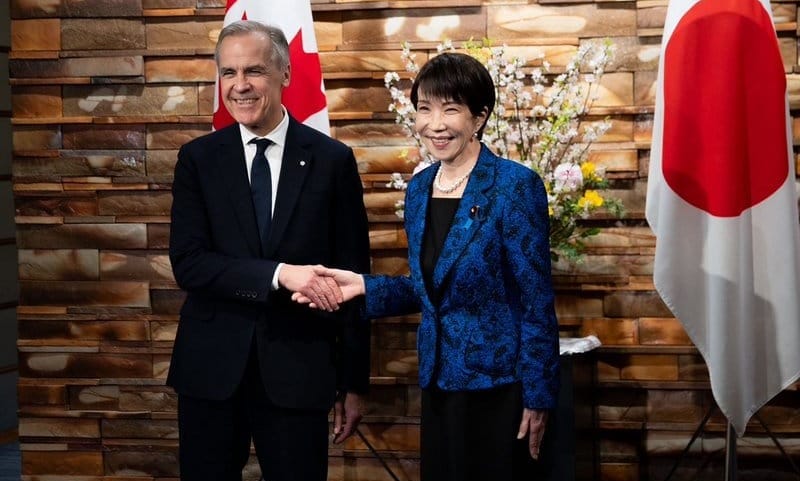
Canadian Prime Minister Mark Carney recently completed a diplomatic tour across India, Australia, and Japan, securing agreements worth billions of dollars in areas including energy, artificial intelligence, defense cooperation, and supply-chain resilience.
The trip reflects Canada’s broader strategy to diversify economic partnerships as geopolitical tensions and tariff disputes reshape global trade.
Why this matters: The conflict is beginning to affect global shipping routes, energy markets, and military alliances, raising the risk of wider economic disruption far beyond the Middle East.
The war between the United States, Israel, and Iran continued to intensify today, with new military operations, political statements, and growing international concern about the conflict’s global implications.
President Trump: “They are calling to say how do we make a deal? And I said you're being a little bit late. We want to fight now more than they do.”
Trump also said he believes he should have a role in shaping Iran’s political future, including the selection of the country’s next supreme leader.
He specifically said that Mojtaba Khamenei, son of the slain Supreme Leader Ayatollah Ali Khamenei and widely viewed as a potential successor, would be an “unacceptable” choice.
President Of Iran Pezeshkian: "Some countries have begun mediation efforts. Let's be clear: we are committed to lasting peace in the region yet we have no hesitation in defending our nation's dignity & sovereignty. Mediation should address those who underestimated the Iranian people and ignited this conflict."
Meanwhile, the U.S. Congress declined to intervene in the war. Both the House of Representatives and the Senate voted down efforts to halt the military campaign and require the administration to seek formal congressional authorization.
Civilian casualties
Civilian casualties are continuing to emerge as the bombing campaign expands.
Iranian officials say a strike on an elementary school during the opening hours of the war killed at least 175 people, many of them children.
An investigation by The New York Times found evidence suggesting the United States was likely responsible for the strike.
Two additional schools in Iran also appear to have been damaged during the U.S. and Israeli bombing campaign.
Under international humanitarian law, intentional attacks on schools, hospitals, and other civilian structures constitute war crimes.
Escalation across the region
Iran’s daily missile launches have decreased since earlier this week after U.S. and Israeli strikes destroyed many of the country’s launch sites.
However, Iranian attacks continue across a wide geographic range, with increasing reliance on drones rather than ballistic missiles.
At the same time, the White House scheduled meetings with U.S. defense contractors to discuss expanding weapons production as the conflict continues.
Despite the death of Supreme Leader Ali Khamenei, the Iranian political system has not fractured, according to European and Arab officials cited by The Washington Post.
Iran’s Foreign Minister Abbas Araghchi told NBC News that Tehran remains ready to defend itself if the United States launches a ground invasion.
Regional spillover
The conflict has now affected multiple countries.
Iranian drones struck Azerbaijan’s Nakhchivan exclave, according to officials in Baku.
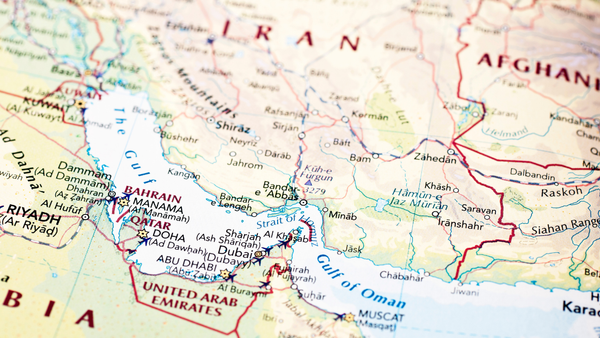
Across the region, the war has now killed people in at least six countries: Bahrain, Iran, Israel, Kuwait, Lebanon, and the United Arab Emirates.
Most of the casualties have occurred inside Iran, where the Iranian Red Crescent Society says the death toll has surpassed one thousand people.
Shipping crisis in the Gulf
Fighting near the Strait of Hormuz is beginning to disrupt global shipping.
The United Kingdom’s maritime security agency reported a large explosion on the side of an oil tanker near Kuwait, causing a spill.
Shipping giant Maersk has temporarily suspended cargo bookings for seven Gulf countries.
Insurance costs for shipping in the region have jumped twelve-fold, according to the Financial Times, despite President Trump’s proposal to secure maritime routes through discounted insurance and U.S. naval escorts.
The conflict may also impact global food production, as fertilizer prices in the Middle East and Europe have already surged.
The cost of war
The Defense Department has not disclosed the total cost of Operation Epic Fury, but the Center for Strategic and International Studies estimates the first four days of operations ran about $891 million per day, or roughly $3.7 billion in total, with some estimates placing daily spending closer to $1 billion depending on operational intensity. The high price tag reflects the scale of the opening strikes, which included roughly 2,000 precision munitions launched against Iranian targets.
U.S. expands air campaign
U.S. Central Command confirmed that air operations over Iran are being expanded.
“We’re not just hitting what they have,” CENTCOM commander Admiral Brad Cooper said. “We’re destroying their ability to rebuild.”
Over the past 72 hours, U.S. bombers have struck approximately 200 targets, including deeply buried missile launch facilities.
Aircraft involved in the operation include:
B-2 Spirit stealth bombers
B-1B Lancer bombers
B-52H Stratofortress bombers
Some strikes occurred near Tehran.
The United States has also destroyed an Iranian ship used to deploy drones.
According to CENTCOM, Iranian ballistic missile launches have fallen by roughly 90 percent since the start of the conflict.
Growing international involvement
Several allied countries have increased military cooperation with the United States.
Defense Secretary Pete Hegseth claimed Iran’s attacks on regional states have pushed many Gulf countries closer to Washington.
“If anything, what Iran is doing by targeting allied countries that would otherwise want to stay out of this, they’ve actually pulled them into the American orbit.”
Regional partners now working more closely with the Pentagon include the UAE, Qatar, Bahrain, Saudi Arabia, and Kuwait.
The United Kingdom has expanded its military presence in the region, and a Royal Air Force F-35B recently shot down a drone over Jordan.
CENTCOM described the current coalition defenses as “the most integrated air defense network in Middle East history.”
Separately, Israeli strikes have targeted Iranian airbases, with reports that aircraft and helicopters were destroyed on the ground. Some widely circulated images of damaged planes appear to include decoys — including aircraft drawings painted directly onto runways — making the true scale of losses difficult to verify.
Russia enters the picture
New intelligence suggests Russia may be providing assistance to Iran.
According to The Washington Post, Moscow is supplying targeting information to help Iranian forces strike American positions in the region.
Asked about reports that Russia may be providing intelligence to Iran about U.S. forces, Defense Secretary Pete Hegseth said "the Pentagon was monitoring the situation closely".
“We’re tracking everything. Our commanders are aware of everything. We have the best intelligence in the world. We’re aware of who’s talking to who, why they’re talking to them, how accurate that information might be, and how we factor that into our battle plans.”
He added that "U.S. commanders and the president were aware of the situation and factoring it into operational planning".
“President Trump has an incredible relationship with a lot of world leaders. He can get things done that other presidents, certainly Joe Biden, could never have.”
Hegseth also warned Iran directly, saying:
“The only ones that need to be worried right now are Iranians that think they’re going to live.”
Iran threatens Europe
Iran has also warned European governments against entering the conflict.
“If Europe intervenes in the conflict, EU countries will become legitimate targets for Iran,” said Iran’s deputy foreign minister.
Earlier in the conflict, Iranian forces attacked a French base in the UAE and British bases in Cyprus.
Energy markets at risk
Qatar’s Energy Minister Saad al-Kaabi warned that continued escalation could trigger a global economic shock.
He said a prolonged war could force Gulf energy exporters to shut down production within weeks, which he warned could “bring down the economies of the world.”
In a recent ONEST Deep Dive, we explained the wider global implications of the Iran war using a layered “cake” model — showing how energy, shipping, and geopolitics stack together. Read it here.
UN warning
United Nations Secretary-General António Guterres urged an immediate diplomatic effort to stop the conflict.
“All the unlawful attacks in the Middle East and beyond are causing tremendous suffering and harm to civilians throughout the region – and pose a grave risk to the global economy, particularly to the most vulnerable people. The situation could spiral beyond anyone’s control. It is time to stop the fighting and get to serious diplomatic negotiations. The stakes could not be higher.”
LEBANON
Israel launched heavy strikes on the southern suburbs of Beirut after ordering more than half a million residents to evacuate the area.
The attacks targeted Hezbollah positions, according to Israeli officials.
Lebanese Prime Minister Nawaf Salam appealed for international intervention to halt the offensive.
Across the Middle East, the United Nations estimates that at least 230,000 people have been displaced by the war, including more than 100,000 inside Lebanon alone.
France announced it will send armored vehicles and humanitarian assistance to Lebanon.
President Emmanuel Macron also urged both Israel and Hezbollah to avoid further escalation.
NATO
NATO’s North Atlantic Council held an emergency meeting on March 5 to assess the evolving security situation.
Allies condemned Iran’s missile attack toward Türkiye and expressed solidarity with Ankara.
NATO has increased missile defense readiness but does not currently plan to trigger Article 5, the alliance’s collective defense clause.
UNITED STATES
The U.S. labor market showed signs of weakening.
A February employment report revealed 92,000 fewer jobs than expected, while the unemployment rate rose to 4.4 percent.
Treasury Secretary Scott Bessent said the administration may soon increase the 10 percent global tariffs introduced earlier this year to 15 percent.
He said the White House believes it has legal pathways to restore tariffs to levels that existed before the Supreme Court struck down earlier trade measures.
Cabinet shake-up
President Trump has fired Homeland Security Secretary Kristi Noem, making her the first cabinet official dismissed during his second term.
Trump said he plans to nominate Senator Markwayne Mullin to replace her.
The decision appears to have followed contentious congressional hearings in which lawmakers questioned Noem about a multimillion-dollar advertising campaign featuring the secretary.
Noem testified that the campaign had been approved by the president, but Trump later told Reuters that was not the case.
UKRAINE
Ukraine’s air defenses faced a critical shortage late last year when supplies of interceptor missiles from Western partners temporarily ran out.
According to three sources familiar with the situation, Ukrainian F-16 fighter jets lacked sufficient missiles for more than three weeks as Russia prepared a large winter air campaign.
The episode highlights the continued dependence of Ukraine’s air defense system on Western supply chains.
Meanwhile, the Zaporizhzhya Nuclear Power Plant has been reconnected to a backup power line following repairs carried out under a local ceasefire coordinated by the International Atomic Energy Agency.
The European Union also approved eight new reconstruction programs worth €1.5 billion, which are expected to unlock €3.4 billion in investment across sectors including energy, agriculture, education, and infrastructure.
RUSSIA–UKRAINE
Russia and Ukraine completed a major prisoner exchange, with each side releasing 500 detainees over two days.
Some Ukrainian prisoners had been held since 2022.
Despite ongoing indirect negotiations, Ukrainian President Volodymyr Zelenskyy said planned peace talks have been postponed due to the escalating war in the Middle East.
EUROPEAN UNION
The European Union proposed a strategy to expand its manufacturing sector to 20 percent of GDP by 2035, up from 14.3 percent in 2024.
The proposal would require that certain goods purchased with EU funds be manufactured in Europe or in partner countries such as the United Kingdom or Japan.
The plan still requires approval from the European Parliament and EU member states.
CHINA
China announced its economic growth target for 2026 will fall between 4.5 and 5 percent, the lowest target set since 1991.
Premier Li Qiang cited a “sluggish global economy” as a major factor behind the reduced expectations.
China will also increase defense spending by about 7 percent this year, continuing a long-term military modernization effort.
Beijing also announced a new climate target, aiming to reduce carbon emissions per unit of GDP by 17 percent by 2030.
INDONESIA
Indonesia has suspended its participation in the Board of Peace initiative, citing the rapidly escalating conflict in the Middle East.
Separately, the government announced a new law banning children under 16 from holding social media accounts on platforms including Instagram, TikTok, and X.
Authorities say the move is intended to protect minors from cyberbullying, fraud, addiction, and other online threats.
UNITED KINGDOM
Great British Energy – Nuclear has received an electricity generation license from the UK energy regulator Ofgem.
The approval is considered a major step toward building Europe’s first Small Modular Reactor program.
Meanwhile, British police detained three individuals suspected of spying for China, including a former Labour Party adviser.
All three were later released on bail.
China’s embassy in London condemned the case, accusing authorities of attempting to “fabricate facts.”
ICELAND
Iceland has moved its referendum on joining the European Union forward to 29 August.
Although Iceland already participates in the European Economic Area and follows many EU rules, membership would give the country voting power in shaping those laws.
CUBA
Millions of people in western Cuba lost power after a failure at a major power plant.
The country’s aging electrical grid has been struggling for months, and the government says it may take up to seventy-two hours to fully restore electricity.
Recent U.S. restrictions on fuel imports have also worsened the situation.
HUMANITY
Actor Daniel Radcliffe declined to try on Olympic figure skater Alysa Liu’s medal, explaining that doing so felt disrespectful to the effort required to earn it.
0:00
/0:48
“I can’t do it. It’s too much. Even holding it feels like I’m trespassing on a decade of hard work. Wearing it feels like stolen valor.”
Radcliffe said he understands the physical and personal sacrifices required to reach the Olympic level and did not want to treat the medal as a prop for a photo.
Olga Nesterova is a journalist and founder of ONEST Network, a reader-supported platform covering U.S. and global affairs. A former White House correspondent and UN diplomat, she focuses on international security and geopolitical strategy.
Comments
Canadian Prime Minister Mark Carney meets Japanese Prime Minister Sanae Takaichi in Tokyo during his Indo-Pacific tour, where the two countries elevated their relationship to a Comprehensive Strategic Partnership | Photo shared by Carney on X