The U.S. Senate has overwhelmingly approved one of Washington’s most aggressive Russia sanctions packages in years.
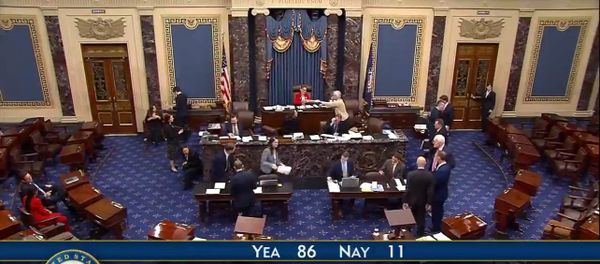
The Lindsey O. Graham Sanctioning Russia and Iran Act of 2026 passed the Senate 86–11 on August 7.
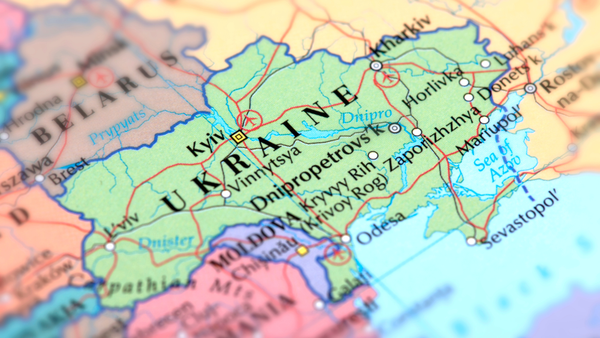
Its stated objective is straightforward: increase economic pressure on Moscow and reduce the revenue Russia can use to finance its war against Ukraine.
But the legislation does something considerably bigger than imposing another round of sanctions on Russia.
It attempts to make other countries participate in those sanctions — by threatening their access to the American market if they continue buying large quantities of Russian energy.
And that distinction matters.
YES, IT SANCTIONS RUSSIA
First, the obvious point.
This really is a Russia sanctions bill.
The legislation targets senior Russian political and military officials, oligarchs, financial institutions, Russia’s defense-industrial base, energy projects and sanctions evasion networks.
It also targets vessels associated with Russia’s so-called shadow fleet, restricts investment and sovereign debt transactions and expands pressure on companies helping Russia circumvent existing restrictions.
Those are conventional sanctions.
Washington identifies Russian individuals, companies, banks or economic sectors and restricts their ability to interact with the United States and the international financial system.
But then the bill goes considerably further.
THE BIGGER WEAPON TARGETS THE BUYERS
Section 113 is called:
“Duties on countries that purchase Russian-origin crude oil or natural gas or facilitate sanctions evasion.”
Read that again.
Not duties on Russia.
Duties on countries purchasing from Russia.
Under the Senate legislation, the United States could impose tariffs of up to 100% on goods imported from countries identified as among the largest purchasers of Russian crude oil or natural gas.
And this isn’t necessarily a tariff on the Russian oil transaction itself.
It can hit goods that country sells to America.
Suppose India buys Russian crude.
The penalty isn’t simply imposed on that barrel of Russian oil.
Indian products entering the United States could face dramatically higher tariffs.
The message is essentially:
You are free to buy from Russia. But doing so could cost you access to the U.S. market.
That is secondary economic pressure — and potentially a far more powerful weapon than adding another Russian official to a sanctions list.
NO, THE TARIFF ISN’T 500% ANYMORE
This is important because the Graham legislation is still frequently described as threatening 500% tariffs.
That was the original proposal.
Earlier versions contemplated tariffs of at least 500% on imports from countries purchasing Russian oil, gas, uranium and other energy products.
A tariff that high would effectively make many products commercially impossible to sell in the United States.
But the Senate compromise substantially changed the legislation.
The current bill lowers the potential tariff to up to 100%, narrows the universe of targeted countries and concentrates the mechanism primarily on the largest purchasers of Russian crude oil and natural gas.
That is a major retreat from the original proposal.
But a potential 100% tariff on goods from a major U.S. trading partner is hardly symbolic.
WHO ACTUALLY BUYS RUSSIAN ENERGY?
This is where the political narrative becomes considerably messier.
China and India overwhelmingly dominate purchases of Russian crude.
Since Western oil sanctions took effect, China has accounted for roughly half of Russian crude exports and India approximately another 36%.
Türkiye is another significant buyer.
So if Washington’s objective is to squeeze Russia’s oil revenues, China and India are obvious targets.
But Russia doesn’t only export crude oil.
The buyers change dramatically depending on the product.
Russian crude oil: China dominates, followed by India, with Türkiye another significant customer.
Russian petroleum products: Türkiye is the largest buyer, followed by countries including China and Brazil.
Russian coal: China is the largest buyer, with India, Türkiye and South Korea also significant customers.
And then there is natural gas.
That’s where things get uncomfortable for Western governments.
THE EU IS STILL A MAJOR RUSSIAN ENERGY CUSTOMER
The European Union remains the largest destination for Russian LNG, accounting for roughly half of Russian LNG exports in recent data.
It also remains one of Russia’s biggest markets for pipeline gas.
In June 2026 alone, EU countries purchased approximately €1.9 billion in Russian fossil fuels.
Hungary continued purchasing Russian pipeline gas and crude oil.
France remained a major purchaser of Russian LNG.
Spain imported Russian LNG.
Belgium has also remained an important LNG destination.
Japan is another significant Russian LNG customer.
So the world cannot neatly be divided into countries “financing Putin’s war” and countries enforcing sanctions against him.
Some of Ukraine’s closest allies continue purchasing Russian energy too.
And Europe’s latest sanctions package provides an unusually clear illustration of how complicated this becomes.
EUROPE JUST CREATED ITS OWN RUSSIAN LNG EXCEPTION
In July, the European Union negotiated another package of sanctions intended to increase pressure on Moscow.
Greece objected to restrictions affecting Russian LNG shipping.
A compromise followed.
The final regime included an exemption allowing certain Russian LNG covered by legacy contracts to continue being transferred to customers outside the European Union, subject to conditions and reporting requirements.
Greek shipping interests — including Dynagas — were among those affected by the restrictions.
This distinction is important.
Greece itself isn’t simply buying Russian LNG and reselling it.
Greek companies provide part of the shipping infrastructure that allows Russian LNG to reach customers elsewhere.
So Europe can simultaneously say it is tightening restrictions on Russian energy while allowing an EU-based intermediary to continue earning money transporting some Russian LNG to third countries.
That doesn’t mean the sanctions are meaningless.
It demonstrates something more fundamental about sanctions:
Exceptions tend to appear when enforcing them begins colliding with the sanctioning countries’ own economic interests.
And Washington faces exactly the same problem.
WHY TARGET RUSSIA’S CUSTOMERS AT ALL?
There is a serious strategic argument behind the Graham bill.
Russia has spent years adapting to Western sanctions.
Oil that once went to Europe was redirected toward China, India and other markets.
Tankers migrated into opaque ownership structures.
Alternative payment mechanisms expanded.
Russian crude could be sold at discounts while still generating enormous revenue.
That creates a fundamental problem for traditional sanctions.
You can sanction the seller.
But if somebody remains willing to buy the product, money continues flowing.
Secondary sanctions attack the other side of the transaction.
Instead of merely telling Moscow:
You can’t sell this to us.
Washington tells everyone else:
Buying it from Moscow may jeopardize your economic relationship with us.
The United States can make that threat because access to the American consumer market and financial system remains enormously valuable.
The Graham legislation attempts to turn that advantage into geopolitical leverage.
BUT WHO ACTUALLY PAYS A 100% TARIFF?
This is where describing the measure simply as “punishing countries buying Russian oil” becomes misleading.
Tariffs are collected at the American border from U.S. importers.
If Washington imposes a 100% tariff on products from a targeted country, that government doesn’t simply write the U.S. Treasury a check.
American importers face the tariff.
What happens afterward depends on the market.
The American company can absorb some of the cost.
It can demand that its foreign supplier lower prices.
It can find another supplier.
Or it can pass some of the additional cost to American consumers.
The purpose is to hurt the exporting country’s competitiveness enough that its government changes policy.
But the pressure isn’t cost-free for the United States.
And the larger the targeted country’s trade relationship with America, the larger those potential domestic consequences become.
That is particularly important when talking about China and India.
THIS COULD BECOME A VERY LARGE PRESIDENTIAL POWER
There is another dimension to the bill that deserves more attention.
Congress would create the sanctions architecture.
But the executive branch would have considerable influence over how aggressively it operates.
The tariff can reach up to 100%.
Countries can move in and out of the targeted categories as Russian energy purchases change.
There are exemptions.
There are mechanisms for modifying duties.
And most importantly, there is a presidential waiver.
The legislation allows the president to waive sanctions, restrictions or duties when the administration determines that doing so is in the national interest of the United States and reports its reasoning to Congress.
So Congress isn’t simply constructing an automatic economic wall around Russia.
It is potentially giving the White House an enormous negotiating instrument.
Reduce your Russian purchases and pressure can fall.
Increase them and pressure can rise.
Cooperate with Washington and circumstances may change.
And if enforcing the sanctions becomes contrary to American interests, the president can seek to waive them.
WE HAVE ALREADY SEEN WHY THAT MATTERS
Energy sanctions sound straightforward until the world needs the energy.
Washington wants to reduce Russian revenue.
Washington also wants enough oil available on global markets to prevent shortages and price spikes.
Those objectives can collide.
The current Middle East disruption has already demonstrated the problem.
As instability constrained supplies and raised concerns about global energy availability, Washington used existing sanctions authorities to temporarily permit transactions that otherwise would have faced restrictions.
The Treasury Department’s Office of Foreign Assets Control routinely administers sanctions through general and specific licenses allowing transactions that would otherwise be prohibited.
Those OFAC licenses are legally distinct from the presidential waiver contained in the Graham bill, and exactly how Treasury could use its licensing authority would depend on the final legislation.
But the larger point remains:
Sanctions regimes contain escape valves.
And the Graham bill explicitly creates one of its own.
When punishing countries for buying Russian energy benefits U.S. interests, Washington has an incentive to enforce the sanctions.
When it doesn’t, it has an incentive to waive them.
That is the fundamental flexibility built into sanctions policy.
AND NONE OF THIS IS LAW YET
There is one more rather important detail.
The Graham bill hasn’t become law.
The Senate passed it.
The House has not.
The legislation must now clear the House of Representatives, where lawmakers have raised concerns about both its tariff provisions and the economic authority it would give the executive branch.
If the House changes the legislation, the chambers must ultimately agree on identical text.
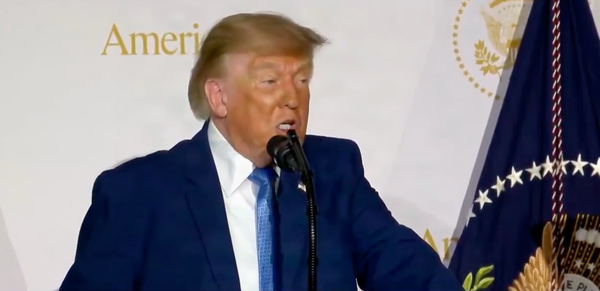
Then it goes to President Trump.
He still has to sign it.
So headlines describing the United States as having imposed these new sanctions are premature.
Congress has taken a major step toward doing so.
It hasn’t finished.
And even if the legislation survives the House and receives Trump’s signature, implementation will still depend heavily on decisions made by the executive branch.
SO WHAT IS THE GRAHAM BILL REALLY DOING?
It is a Russia sanctions bill.
But that description doesn’t capture its most consequential idea.
Traditional sanctions say:
Russia cannot do certain business with us.
The Graham bill adds:
And if you continue doing certain business with Russia, doing business with us may become considerably more expensive for you too.
That could reduce Russian energy revenues.
But it also gives Washington another powerful instrument of economic leverage over other countries.
And that distinction matters.
The EU remains a major purchaser of Russian LNG.
Some of Ukraine’s closest allies continue purchasing Russian energy.
Europe has created exceptions protecting some European commercial involvement in moving Russian LNG.
The United States itself relaxes sanctions when energy security calculations change.
And the Graham bill gives the president authority to waive its restrictions when U.S. “national interests” require it.
So perhaps the most important question isn’t:
Who still buys Russian energy?
It is:
Whose purchases is Washington actually willing to punish — and when?
Because the answer does not depend solely on what benefits Ukraine or hurts Russia.
It also depends on what benefits the United States.
When punishing countries for buying Russian energy serves U.S. interests, Washington has an incentive to enforce the sanctions.
When it doesn’t, it has an incentive to waive them.
That makes the Graham bill more than another attempt to economically isolate Russia.
If enacted, it would give Washington another tool to pressure governments around the world — raising or lowering the economic cost of their relationship with Russia according to broader U.S. interests.
The war in Ukraine provides the justification for that power.
How Washington chooses to use it is a different question entirely.
AND WHAT ABOUT IRAN?
Despite its full name — the Lindsey O. Graham Sanctioning Russia and Iran Act of 2026 — the bill does not create an equivalent new sanctions regime for Iran.
Nearly all of the legislation’s new architecture is directed at Russia.
The Iran provision is much simpler.
Section 201 extends the existing Iran Sanctions Act of 1996 for another five years, moving its expiration from 2026 to 2031.
That law already provides authority to sanction certain investments and transactions supporting Iran’s energy sector and other activities, including weapons-related financing.
So in Iran’s case, Congress is primarily preserving sanctions authority that already exists.
In Russia’s case, Congress is creating a much broader new system — including secondary sanctions and potentially enormous tariffs on third countries.
The title therefore makes Russia and Iran sound like parallel targets.
They are not.
In this bill, Russia is the new sanctions project. Iran is largely an extension of the old one.
Support my independent reporting.